
By: Toh Han Shih
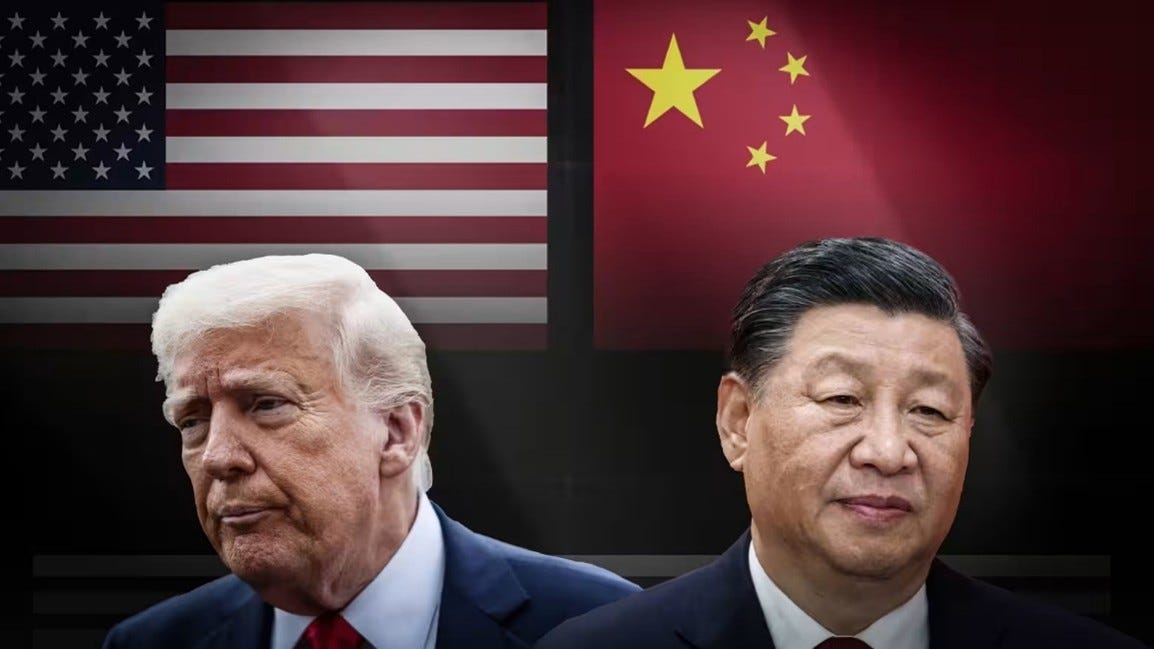
Despite strained relations stemming from US action against Iran, Venezuela and Cuba, which all have friendly relations with China, the meeting between US President Donald Trump and Chinese President Xi Jinping probably will proceed in Beijing from March 31 to April 2 out of mutual needs, according to analysts and Chinese Foreign Minister Wang Yi. Although the US and Israeli attacks on Iran have destroyed military and civilian targets and killed Iranian supreme leader Ali Khamenei on February 28, China has remained largely muted other than criticizing the attacks and Khamenei’s targeted killing.
“The meeting is going to be mainly about optics of ‘stabilizing’ the relationship rather than lots of deals big or small,” said Jean-Marc Blanchard, executive director of the Mr & Mrs SH Wong Center for the Study of Multinational Corporations, a US think tank. “One reason is reported poor planning and preparations on the US side. The second reason is the Iran war, which will detract from preparations, but also take meeting time from other themes.”
Wang Yi seemed to confirm the get-together, hinting at a March 8 press conference in Beijing that Trump’s visit to Beijing will proceed and saying relations between Trump and Xi remain friendly.
“I am gratified that the two heads of state are personally taking part in maintaining excellent exchanges at the highest level, which provides an important strategic guarantee for the improvement of China-US relations,” Wang said. “The agenda of the high-level meeting is on our table. Now what is required is both sides make detailed preparations, foster a suitable environment, curb disagreements and eliminate unnecessary disturbances.”
Quid pro quo between Trump and Xi
China would want Trump to commit to the status quo on US tariffs on Chinese goods and more widely loosen US restrictions on Chinese foreign direct investment, the Wong Center’s Blanchard said. “Given recent fluctuations and apparent tightening of the US chip export policy, Beijing might ask for greater clarity on US policy.”
CK Hutchison’s loss of the Panama ports, US criticism of China’s presence in Chancay Port in Peru, and US pressure on Greece about its Chinese-operated port at Piraeus would be “good reason for Xi to push Trump to explain where his anti-China push is headed,” Blanchard added. On March 6, CK Hutchison, a Hong Kong-listed conglomerate controlled by Hong Kong tycoon Li Ka-shing, said it was escalating its legal fight against the Panamanian government, alleging the government acted unlawfully in seizing its two ports along the Panama Canal.
Trump will want China to buy Boeing jets, agricultural and perhaps energy goods from the US, Blanchard predicted. “Trump might also call for better market access and a level playing field for American companies and assurances that American companies will have access to Chinese rare earths.”
Trade detente?
Beijing would likely seek relaxation of trade tariffs and greater technology exchange between the US and China, Wheeler said. “I am hearing that this is the priority.”
What is not being highlighted by China, he said, “is their reliance on the US export markets. It is clear that China is prioritizing the success of the Trump visit over its concerns around Iran and Venezuela.”
The Israeli and US attack against Iran won’t affect China’s oil sector that much, because Iran accounts for only 14 percent of China’s oil imports and China has other oil import sources, notably Russia, Malaysia and the Gulf Cooperation Council countries, said Chi Lo, Asia Pacific senior market strategist of BNP Paribas Asset Management.
However, 50 percent of China’s oil imports are from the Middle East, Wheeler pointed out. China is in a vulnerable position, with Iran targeting oil assets in Saudi Arabia, Bahrain and countries essentially providing support to the US war effort, Wheeler said.
China setbacks
For all that, China has good reason to be seething. Iran’s 13.4 percent share of China’s total crude oil imports, while not crippling, is still troublesome. Beijing is also thought to supply Iran covertly with extensive defense technology focused on missile, drone and air defense systems.
There is also the January 3 raid on Venezuela, which previously was almost China’s client state, and the abduction of its president, Nicolas Maduro, and his wife to the US. Trump probably will force Venezuela to switch from the yuan to the US dollar in its oil exports. On March 9, he told reporters the US may possibly take over Cuba, another friend of China in the Caribbean, saying, “It may be a friendly takeover, it may not be a friendly takeover.”
The US president is thus reducing Chinese influence across a wide swath of global geography including not only in Iran but also in Panama, Venezuela and Cuba.
“He wants Xi to know who is really the boss,” an ex-banker said.
It’s likely that if a pro-US government is installed in Iran, Iran will likely switch from using the yuan back to the dollar in its oil trade, as will Venezuela, putting a serious crimp in Beijing’s aspirations to make the yuan a dominant trading currency.
Jimmy Lai to be freed?
There is speculation on social media that, as a quid pro quo, Beijing might induce the Hong Kong government to free Jimmy Lai, the former proprietor of Apple Daily, a defunct Hong Kong newspaper that was generally anti-Beijing. In February, a Hong Kong court sentenced the 78-year-old businessman to 20 years in prison for violating national security laws.
Toh Han Shih is a Singaporean writer in Hong Kong and a regular contributor to Asia Sentinel.
That is the key, isn't it -- that the Chinese are more, not less, dependent on the vast US market for their exports, and not just for their el-cheapo manufactures but also low and medium end technology exports?
All this shows is that China's re-orientation of its export dependence within the region following Trump's first -- and totally stupid -- tariffs policy isn't really working for Beijing and many of its struggling, labor-intensive industries.
That's because even Southeast Asian economies have pushed back against China knowing that if, in the face of Trump's idiotic tariffs, their own manufacturing sectors could either come under severe competitive strain or crushed.
What keeps labor wages low in these countries, with the possible exception of Singapore, is home governments deliberate policies of containing a wages explosion. The co-called competitive advantage is therefore artificial for the most part, and has been this way for decades.
To keep this competitiveness going also requires formidable relation of US policy to allow these countries' exporters access to US consumer markets -- primarily. The hitch now is that Trump might be in a position to leverage these to open up their own state-protectionist markets while also purchasing more US goods and services, and allowing more US investments into those sectors of the economy that have been closed off to them for decades.
It makes complete nonsense of notions of laissez-faireism or "free trade" which has never existed, any more than the existence of free market economics that drive these economies to Pareto efficiency.
For years Asian student of economics and those in the West have been conned big time by the false compositions of Western economic theories and yet the purchase of these numbskull economics continues without question or debate, especially in Asia where students are ignorant and gullible enough to swallow whole all these falsehoods.
If anything, China does not, has never, will never subscribe to these theories and put them into practice, not when its entire economic future -- now staring in the face of major structural doldrums -- will have to continue as before given Emperor Xi really does not seem to have answers to the problems facing the Chinese economy and the Chinese people, especially Chinese workers.
Over the years we've been witnessing not the Ali Baba-ism of the Chinese economy so much as the greater Temu-ization of the Chinese economy -- rare earths or not.
China has Uncle Sam by the yarbles over rare earth minerals. 😬