
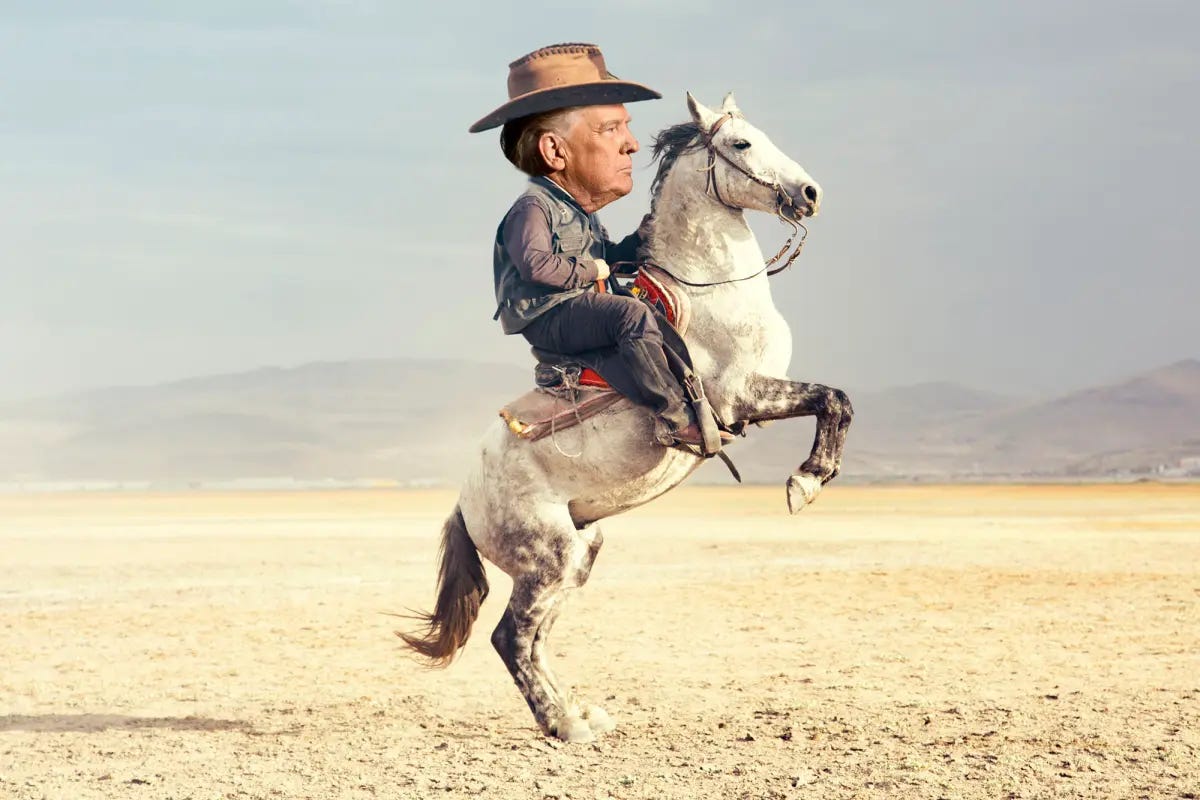
US President Donald Trump appears to have fallen in love – vainly so far – with a foreign policy in which the US reshapes hostile regimes without committing to prolonged military occupation or large-scale nation-building. Taken together, the mounting pressure on Venezuela, Iran and Cuba suggests a recognizable strategic pattern – the VIC triangle, policy as decapitation.
The January operation to remove Nicolás Maduro was the high point, a rapid, spectacularly successful decapitation that captured the Venezuelan leader and brought him into US custody with no US casualties and achieved the short-term objective of leaving a compliant leadership headed by former vice president Delcy Rodríguez in place, ready to do Washington’s bidding. The president appears to have expected the same outcome in Iran – nominal conflict followed by the collapse of the regime, overjoyed people dancing in the streets and a once-fearsome second string of revolutionary guards now ready to return Iran to pre-1979 loyalty to the west.
Trump “was risk-ready and caught up in a self-generated aura of military power and invincibility after taking President Nicolás Maduro from Venezuela,” wrote Daniel C. Kurtzer and Aaron David Miller for the Carnegie Endowment for International Peace. “He was poorly advised by a coterie of advisers unwilling to say anything to him other than yes— perhaps with the exception of Vice President JD Vance, who has backed Trump publicly but has expressed reservations in the past.”
He could have asked the Israelis, eho made assassination into government policy, or he could have learned from former President Barack Obama, who authorized 542 drone strikes that killed approximately 3,800 people including high-ranking leaders of Al-Qaeda and the Taliban such as Anwar al-Awlaki, the US-born cleric and operational leader of al-Qaeda in the Arabian Peninsula; Ahmed Farouq, an American citizen and al-Qaeda leader; Adam Gadahn, another American citizen who served as an al-Qaeda spokesman; Mullah Akhtar Mansour, the leader of the Afghan Taliban; Qari Hussain, a deputy commander of the Pakistani Taliban; and others to no discernable effect on leadership according to a tally by the Council on Foreign Relations…
This is a preview sent to free subscribers like you. The full content of this article is available exclusively to our paid subscribers. Read the full story here.
To enjoy the complete Asia Sentinel experience and access more in-depth, independent reporting, please consider subscribing for just US$10/month or US$100/year.
Support independent journalism. Subscribe today.