

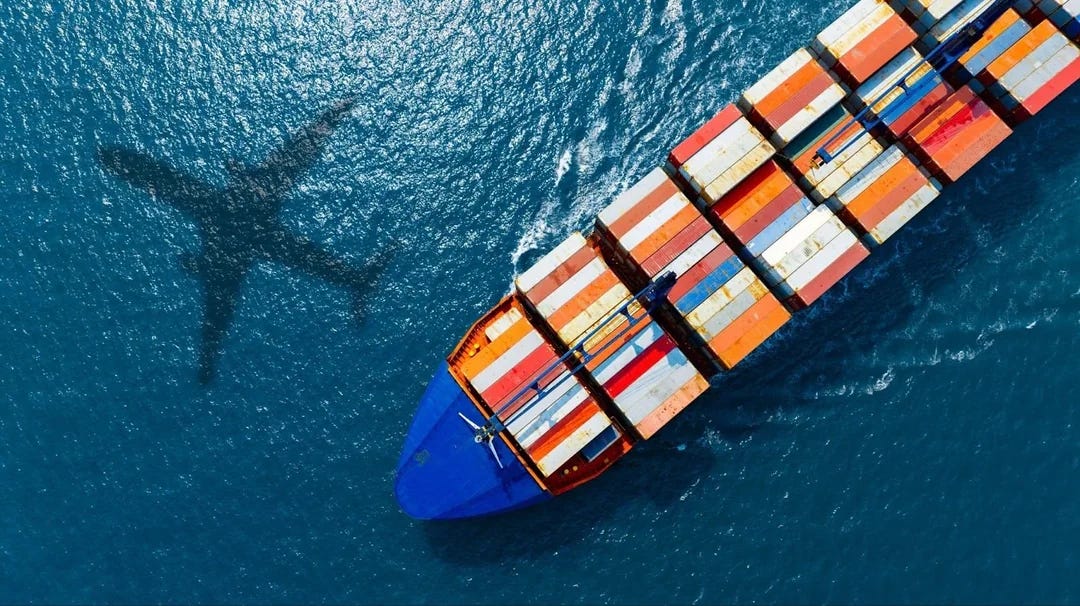
Waves from the disruption of global trade begun by US President Donald Trump in April are spreading and are likely to continue to spread. It may appear that the worst initial fears of Trump’s imperious demands on friends and foes alike had been modified by case-by-case agreements for lower than originally announced tariffs. But the greater damage is likely to be found on the secondary effects not of the tariffs themselves but of arbitrary application and contempt for a rules-based system. The World Trade Organization, established in 1995 as an intergovernmental organization to regulate and facilitate international trade, has been reduced to nothing more than a bureaucratic talking shop.
The most vivid example has recently come from a country which relies on the US market more than almost any other: Mexico. To try to head off suggestions that it provided a way around higher tariffs imposed on China and others, its President Gloria Sheinbaum has pushed through 50 percent penalties on a number of countries, notably China but including South Korea, Taiwan, India, Vietnam, and Brazil. In some cases, notably with China, there was probably a good domestic reason for protecting local US industries against floods of imports from Chinese manufacturers driven by a mix of overcapacity, subsidies, and a grossly undervalued currency. That is a familiar concern and is showing up in rising demands for protection in the EU, and the pain being suffered – so far mostly in silence – by Southeast Asian countries, the focus of a surge in exports from China in the wake of US tariffs.
Mexico’s trade position with the US is unique, serving as it does as a back door through the southern border. US-Mexico bilateral trade hit a record US$840 billion in 2024, making it the top US trading partner for the second year, driven by automotive goods, fuels, and electronics, with Mexico enjoying a record US$157.2 billion surplus due to stronger export growth, with US concerns over this gap and potential tariffs emerging. US Imports from Mexico were US$506 billion according to the US Trade Representative, with exports to Mexico of US$334 billion. For every dollar of manufactured goods Mexico exports to the US, however, roughly 30 cents of that value originates from US-produced content or materials exported for assembly by US manufacturers to take advantage of cheap labor. Chinese exports to Mexico in 2024 were US$90-$130 billion, with top categories electronics, machinery, vehicles, and plastics, most of it re-exported to the US with unknown value added via assembly.
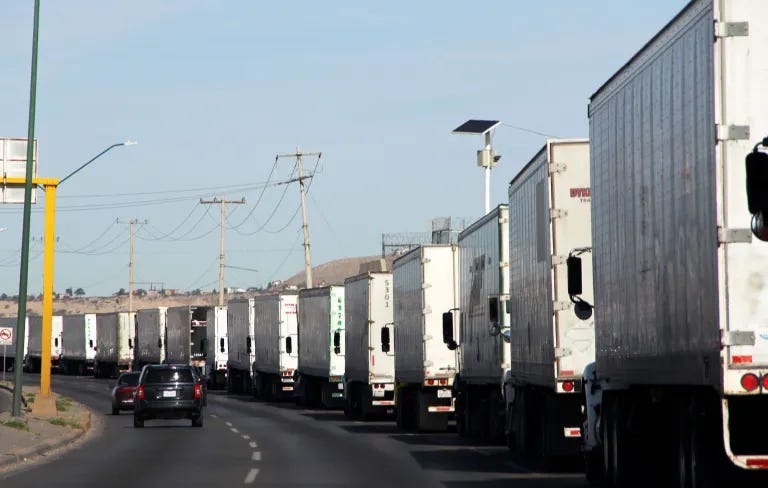
The bigger issue, as far as global trade is concerned, is that Sheinbaum’s move is more political than economic. It is to appease Trump and his MAGA operatives in the hope that they won’t entirely abandon the North American Free Trade Area, which links the US with Mexico and Canada. Given that the administration in Washington has contempt for treaties of any kind and, in particular, believes itself to be lord and master of all the Americas, salvaging some of NAFTA may seem forlorn. Yet such is the importance of US trade with Mexico, and so astute a political operator as is Sheinbaum that seems a rational choice for Mexico.
Unfortunately, the wider damage is incalculable. At a time when trade between growing middle-income countries should be expanding as a counter to both US tariffs and slow European economic growth, the Mexican moves disrupt just such trade with major trading economies. And it may not be long before others follow the Mexican lead or move to improve bilateral trade links with China. Where all this will lead to with the ASEAN trade agreements is anyone’s guess, but the auguries are not good. ASEAN countries have been responding, mostly meekly, to Trump’s economic aggression and certainly without coherence.
Mercosur in danger
Meanwhile, Europe may again be about to shoot itself in the foot again. It is supposed to sign a free trade deal with Mercosur – the trade group linking Brazil, Argentina, Bolivia, and Paraguay. But last-minute resistance from France, where a few farmers have power over a weak President Emmanuel Macron, may put it on hold. That in turn could lead to Brazil, as suggested by President Luiz Inácio Lula da Silva, abandoning the long-negotiated deal. Europe cannot claim to be a bastion of freer trade when it allows minor local interests to kill off developing closer links with South America while those with the North are so damaged by Trump. The lack of coherence in Brussels well serves the US strategic agenda laid out in its recent National Security Strategy, reported here and here by Asia Sentinel. It also limits opportunities for Europe to find new markets as the US becomes more restrictive and some EU exports, notably cars, are pressured by China.
More generally, all countries significantly reliant on trade need to take active measures to counter the Mexican Wave of tariffs and other barriers set off by Trump. Certainly, the tariffs are beginning to backfire as the global trading regime gradually reduces reliance on the US as a trading partner. Rather than suffering damage, China’s annual trade surplus as of November surpassed US$1 trillion for the first time, with December figures set to grow as Beijing found more salubrious trading partners. Because of Washington’s tariff regime, the world is finding new trading partners. There is pain, with projections suggesting more than US$1 trillion in costs for businesses and consumers due to new US tariffs, affecting key sectors like auto, steel, and wood products, significantly increasing effective rates for major partners like China and developing nations, and contributing to inflation and trade tension globally. But once nations acquire new trading partners, they are likely to become permanent, to the U S’s sorrow.
Philip, this analysis captures the chaos perfectly. But from a supply chain perspective, the 'secondary damage' you describe follows a strict physical law: The Hydraulic Effect.
Chinese industrial overcapacity—driven by domestic 'Neijuan'—is a force of high pressure. When Washington blocks the direct pipe, that pressure doesn't vanish; it blasts through the path of least resistance.
Mexico: President Sheinbaum isn't just 'appeasing' Trump; she is frantically trying to stop her country from becoming a mere 'Laundromat' for Chinese goods. We see this on the ground: components (CKD kits) flooding in, getting a 'Made in Mexico' sticker, and heading North.
ASEAN: As you noted, they are suffering in silence. They are the new 'overflow tanks' for the 'Deflationary Black Hole' that China has become.
The record $1 Trillion surplus proves that the goods are still moving—they are just taking a longer, more complex route. I call this 'The Great Re-Routing.'
It’s a game of 'Country of Origin Laundering' on a planetary scale. I recently published an autopsy of how this mechanism works in Mexico and Vietnam here:
[ 'The Great Re-Routing' article] https://chinarbitrageur.substack.com/p/the-great-re-routing-why-your-made?r=71ctq6
There are so many things wrong with this article that it's hard to know where to begin. The USA and China are in the middle of a cold war. Much of the blame for that situation - but not all - lies with the Chinese violating just about every rule in the book in their quest to achieve global economic domination. The WTO assisted China, often inadvertently, so it has become an irrelevant talking shop. The so-called rules-based order has failed, and lamenting its passing won't change anything.
For better or worse, America has a leader who is trying to reverse decades of gradual decline by putting his own country first. This approach will cause casualties around the world, but continuing with the same rules-based order will lead to even more casualties in the long run.
The EU has never been a bastion of free trade. Anyone who thinks it was anything even remotely in favour of free trade with non member countries is just plain nuts. The Mercosur free trade agreement was drawn up to weaken the power of European farmers who are beginning to present a serious challenge to the authority of the EU and its member governments. Mercosur is fiercely opposed by nearly all farmers in the EU. To suggest that resistance is down to "a few farmers (who) have power over a weak President Emmanuel Macron" is not just wrong, it is dishonest. And at that point, I suppose there is no point in even trying to convince the author of the error of his ways.