
By: Majid Maqbool
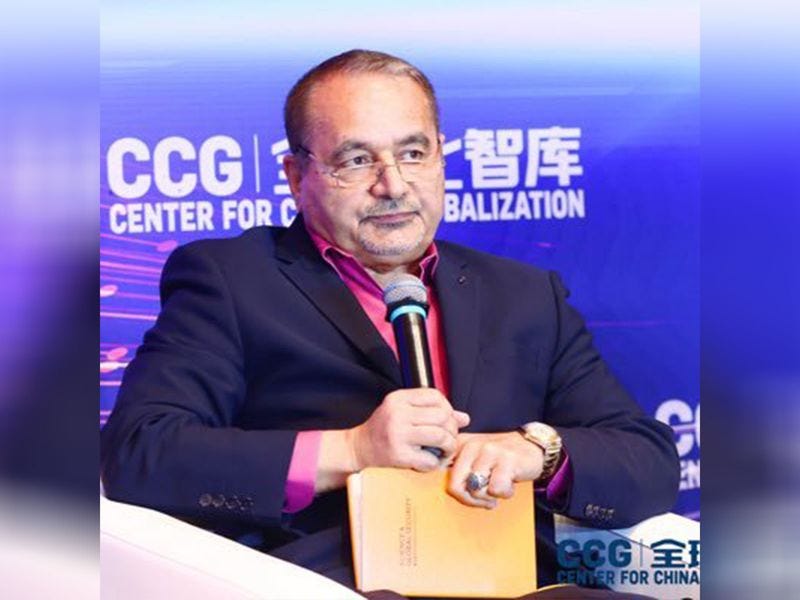
In this exclusive interview with Asia Sentinel, former Iranian diplomat Seyed Hossein Mousavian warns that the US and Israel have sent a dangerous message that security is better found through the nuclear-deterrence model of North Korea.
Mousavian is a former Iranian diplomat, Middle East specialist and a Visiting Research Collaborator with the Program on Science and Global Security at Princeton University. He served as Iran’s Ambassador to Germany (1990-1997) and was the spokesperson for Iran’s nuclear negotiating team during the early 2000s. He has also served as the Head of the Foreign Relations Committee of Iran’s National Security Council (1997-2005), spokesman for Iran in its nuclear negotiations with the international community (2003-2005), and Foreign Policy Advisor to the Secretary of the Supreme National Security Council (2005-2007).
Mousavian was previously the editor-in-chief of the English-language international newspaper Tehran Times (1980-1990). His work at Princeton focuses on regional security in the Persian Gulf, nuclear non-proliferation, and the complex relationship between the United States and Iran. Mousavian is widely recognized for his unique position as a scholar who understands the inner workings of the Iranian state while operating within the American academic establishment.
Mousavian frequently contributes op-eds in the New York Times, Foreign Policy, and The Guardian, and is the author of several influential books, including The Iranian Nuclear Crisis: A Memoir (2012) and Iran and the United States: An Insider’s View on the Failed Past and the Road to Peace (2014). He often emphasizes the need for a “Grand Bargain” and a regional security architecture incorporating all Persian Gulf players. He has also advocated the path of diplomacy, considering it the only viable path to long-term stability in the Middle East.
In this interview, Mousavian says that while the nuclear issue was the public pretext for war, the true strategic objectives were regime change and the control of Iran’s oil reserves. He argues that ultimately, military force can’t suppress intellectual capital, emphasizing that technical know-how cannot be bombed or destroyed…
This is a preview sent to free subscribers like you. The full content of this article is available exclusively to our paid subscribers. Read the full story here.
To enjoy the complete Asia Sentinel experience and access more in-depth, independent reporting, please consider subscribing for just US$10/month or US$100/year.
Support independent journalism. Subscribe today.