
Viets and Japan Upgrade Relations on Mutual Goals
No need for inconvenient concerns over human rights
By: Nguyễn Vũ
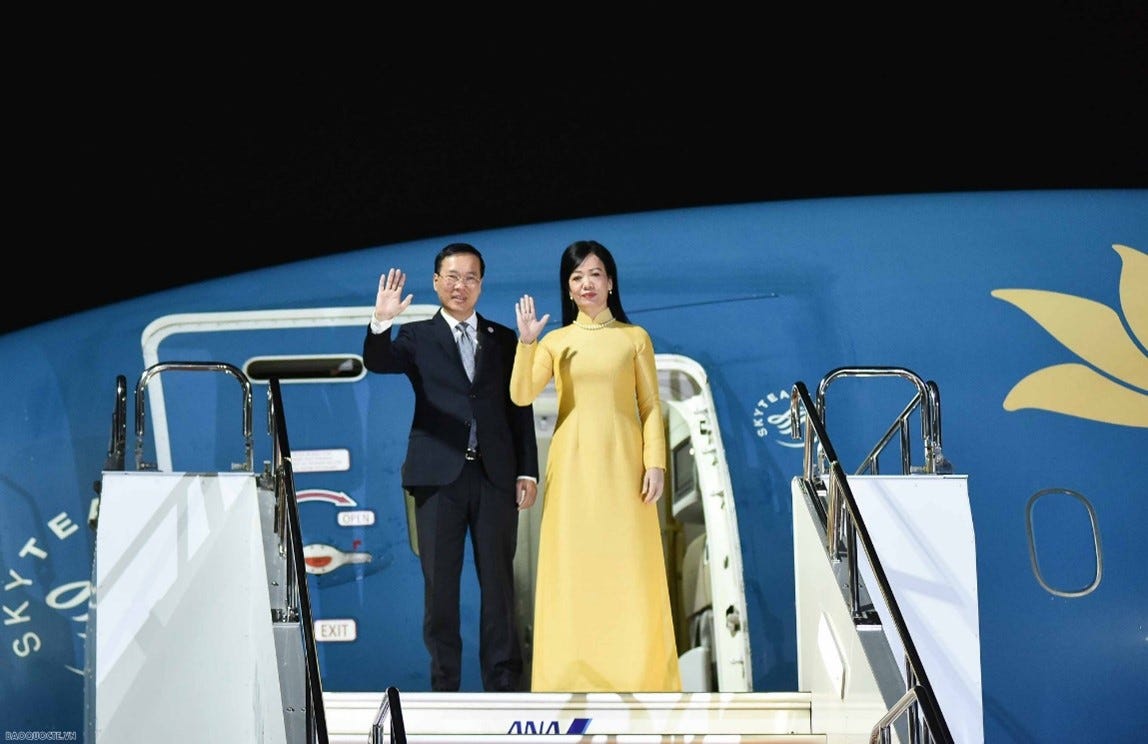
The announcement late last month that Japan and Vietnam have established a ‘comprehensive strategic partnership’ caps an always discreet 50-year courtship. It was no surprise. The visit to Tokyo by Vietnamese president Võ Văn Thưởng to sign the agreement marks an unsurprising development given the relatively problem-free and impressively multidimensional rapport between the two countries and the rising political temperature in the region, especially with Japan belatedly raising its political profile to match its standing as Asia’s second-biggest economy.
The diplomatic flurry does appear to have impelled Chinese Foreign Minister Wang Yi to fly to Hanoi shortly after to meet with Vietnamese leaders, including Thưởng and Communist Party chief Nguyễn Phú Trọng, to renew China’s own ties. Chinese President Xi Jinping is also visiting Hanoi this week in a prearranged sojourn, the third time since he came to power. Xi appears to be here to ensure that aside from China’s aggressiveness, the Communist brotherhood is there to stay.
Upgrading a relationship with an ally with the US in order to reduce dependence on China is not surprising, especially given Vietnam's increasingly important role in global supply chain links as companies relocate from China. For Hanoi, upgrading its tie with Washington’s number one Pacific ally is a logical complement to the ‘comprehensive strategic partner’ status it awarded the US during a brief visit by Joe Biden in September. It signals that Vietnam’s Communist regime regards its relationship with both the US and Japan as important as long-standing “close as lips and teeth” ties with China and Russia…