
By: Pham Phan Long
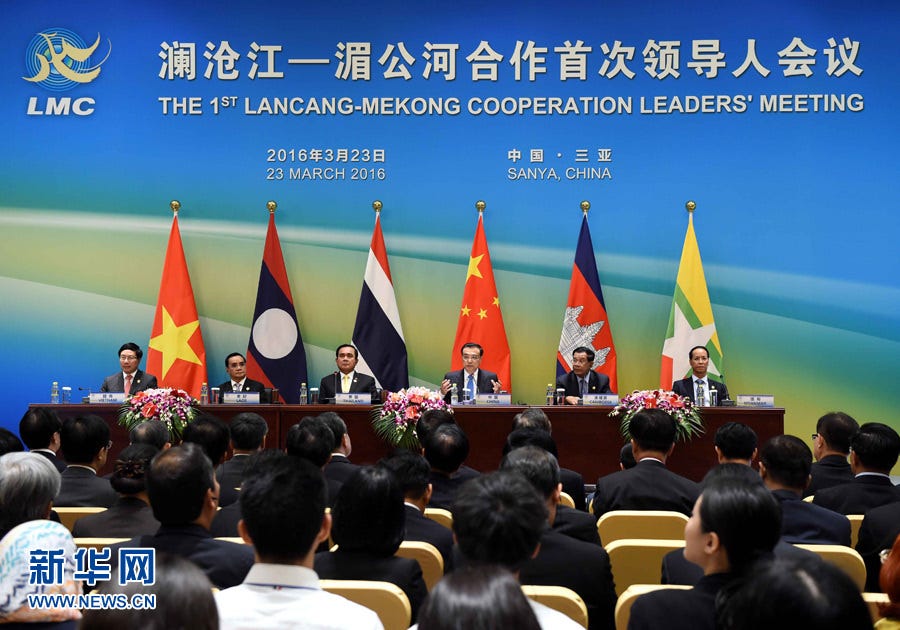
On paper, the Lancang-Mekong Cooperation (LMC) mechanism is a success. Since its launch in 2016, trade between China and Cambodia, Laos, Myanmar, Thailand and Vietnam has risen sharply, reaching a record $500.9 billion in 2025 – 150 percent above the level a decade earlier. Railways, roads, investment and people-to-people exchanges also have expanded, according to official Chinese figures.
That progress is real. But success measured mainly by trade, investment and infrastructure misses a more important question: what kind of relationship is being built?
China and its five Mekong partners are not equals. China is by far the largest economy, a major supplier of manufactured goods and industrial inputs, an important source of capital and infrastructure, and the upstream country on the Lancang. Its downstream partners provide markets, agricultural products, energy, minerals and other resources. All six countries benefit, but their economic scale and bargaining power differ greatly…
This is a preview sent to free subscribers like you. The full content of this article is available exclusively to our paid subscribers. View the full story here.
To enjoy the complete Asia Sentinel experience and access more in-depth, independent reporting, please consider subscribing for just US$10/month or US$100/year.
Support independent journalism. Subscribe today.