
Trump Goes To China a Supplicant Amid a Distrustful Asia
For many, China is now a more reliable partner

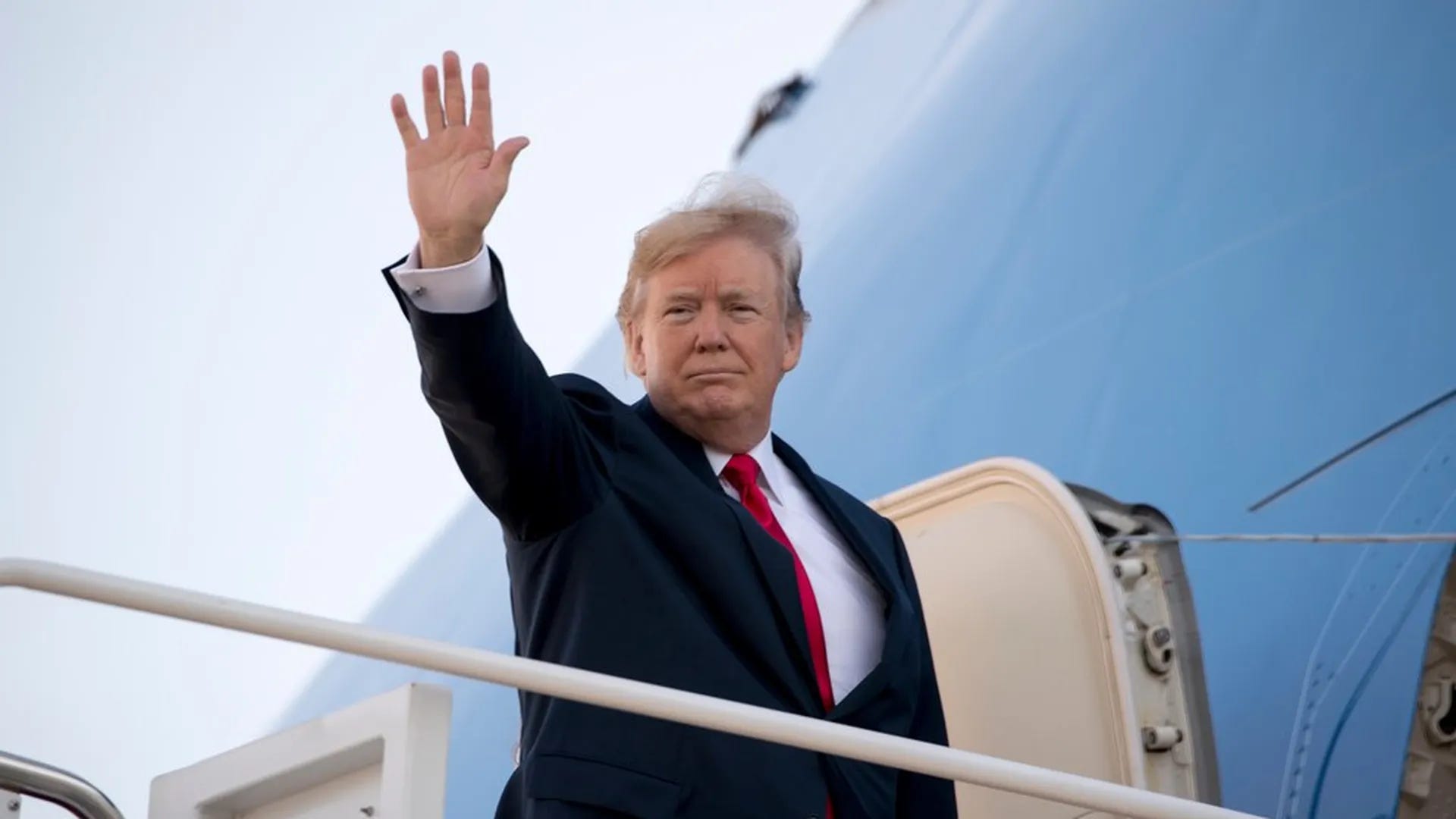
It is more in sorrow than anger that much of East and Southeast Asia perceives the US under Donald Trump to be drifting all too rapidly away. By default, the primary beneficiary is China, though there are some signs that disappointment with the US is strengthening other ties which are not necessarily to China’s advantage.
Trump arrives in China against a backdrop of a war he started but cannot yet finish. Most obviously, he started it without the support of any of the US’s allies and in conjunction with a state, Israel, recently accused of genocide in Gaza and currently engaged in illegal Jewish land grabs in the occupied West Bank. A war waged not only in the face of European opposition but the advice of allies in the Gulf States who immediately became the obvious target for Iranian retaliation. All this, and recent actions in and around Venezuela, have confirmed on a larger scale the contempt for previously agreed rules, procedures, and laws relating to international trade which Trump had shown last year with an ever-changing array of tariffs, sanctions, and other punitive measures as often as not aimed more at supposed allies than rivals. Indeed, he presented the US as a victim of Asian friends’ trade success while quickly succumbing to the rare-minerals counterpunches of the US’s main rival, China.
Instead of looking for support to address China’s massive overcapacity-driven trade surpluses which are hurting much of Asia more than the US, he took aim at weaker supposed friends bullied into signing trade agreements – some such as that forced on Malaysia but now disowned – heavily weighted to US commercial and mineral resource interests.
Given the massive news coverage that the US, and Trump in particular, receives overseas, foreigners had no trouble identifying the trends in the US towards illiberal democracy and the weakening of the balance of power concept between executive, legislature, and judiciary which had long been held up as an example to the world. Add in Trump’s narcissism reminiscent of caricature dictators, and the US presented an image entirely at odds with deeply embedded perceptions of America.
Even in the realm of technology. China’s achievements have rivaled and in some areas exceeded those of the US. While US names such as Google and Meta dominate communication and social media throughout non-Chinese Asia, their dominance has created resentments which have been further fueled by the arrogance of some of their Trump-supporting multi-billionaires.
For many, China is now a more reliable partner. Certainly, only by a slim majority, according to opinion surveys in Southeast Asia. This is not particularly because it is liked but because it is more predictable. The South China Sea remains high up on the list of regional concerns about China, but even on that, the US has lost some of its appeal. Trump’s rejection of international norms makes the rejection of China’s sea claims by the Permanent Court of Arbitration seem less exceptional. And Trump’s unwillingness to give full support to Ukraine’s defence creates doubts about his willingness to face anyone other than relatively weak targets, Venezuela, and, initially, Iran. Doubts about its Taiwan commitment have risen, giving an opening to China to talk more sweetly and persuade the Kuomintang leader to visit the mainland.
Trump also now goes to Beijing knowing that Chinese help is now needed if he is to get out of the Iran mess he has created, without plunging deeper into an unpopular war against an enemy with a high pain threshold.
Aspects of American “soft’ power have also taken a hit. The wholesale attack on immigrants hurts Asian pride as well as opportunities for advancement. The Immigration and Customs Enforcement (ICE) teams have caused more than 2 million people to leave the US, voluntarily or not. Although ICE activities have been mainly focused on Latinos, the arrest of many from Vietnam, Cambodia, and the Philippines has not gone unnoticed in those countries. Meanwhile, student and regular work visas have become harder to acquire. More generally, interest in the region by US academia appears to have withered, and suspicion of Muslims even from such secular countries as Indonesia and Bangladesh has risen, helped along by the self-proclaimed Christian zealots such as Defense Secretary Pete Hegseth, sometimes in alliance with advocates of a “white” America. It might be called the Icing of the melting pot.
That said, the erosion of faith in the reliability of the US does not necessarily mean an easy ride for China. South Korea and Japan have clearly come closer together. Japan’s new willingness under Prime Minister Sanae Takaichi to widen its defensive posture by taking part in exercises in the Philippines and an effort to sell defensive weapons to the region. China has responded with near hysterical commentaries about the “threat of revived Japanese militarism.” The energy crisis promoted by the Iran invasion has seen efforts by Korea, Australia, and Japan to cooperate in securing energy and rare mineral supplies, albeit from weak positions compared to China long committed to self-reliance. Generally, there has been a coming together of middle powers anxious to retain some freedom of political movement. Indonesia has even deviated a little from its historical non-alignment by enabling US overflights of its territory. Whatever they may say publicly, no ASEAN country is happy with the thought of China controlling Taiwan and its adjacent strait. While the US is politically and diplomatically obsessed with the Middle East, its military in the region remains focused on the seas and straits over which China seeks dominance.
Nor have America’s erstwhile friends and admirers given up on the hope that Trumpism is a passing phase, already meeting growing resistance by the courts and the voters. For sure, it will leave a permanent mark, but that could take the form of greater cohesion among the middle powers fearing Chinese domination. The Iran war will have exposed US weaknesses, but by the same token. As in Europe, raised regional consciousness of the need for cooperation to enhance self-reliance. Nor does a China ruled by an all-powerful leader backed by a Communist Party with tentacles everywhere and self-consciously mono-ethnic really have much appeal to countries, at least in Southeast Asia, with more plural histories and social arrangements.
For sure, Trump and his war of choice may be the mark of an America in decline. But equally, it may mark the peak of Chinese power as its many enemies search for common ground to blunt its trade power and expansionist goals.
china may be seen more opportunistically for short-term trades, now that the level of regional distrust is similar outside of SK and japan.
after trump cancelled his visit once for no advantage, this could possibly be the time for china to play its hand in any influence over iran. if china senses desperation, a personal bribe to the equally corrupt potus could yield outsized results.
regardless, rarely has a potus self-imposed such a weak and distracted negotiating position against its fiercest competitor and threat. i would rate 'no deal' an actual win for america's fool, unlike the daily complete and total victories in the gulf.
So many ertrors, or false statements in this short article that it's hard to decide where to start with pointing out what is wrong.
As usual, the author has his "bash the Jews" section. It is true that Israel has been accused of genocide in Gaza by a coalition of Muslims and treacherous left wingers, and the author of this article was among the accusers. The late Queen Elizabeth was accused of being an alien from outer space by people with a similar grasp of reality to the author. Using an unproven, and demonstrably false, accusation as part of a wider argument only highlights the flaws and lack of integrity of the people making that argument.
Perhaps the author could explain why the decision by the current American government to enforce its (perfectly reasonable) laws and prosecute the criminals breaking them should anger Asians (or anyone else). Why is defending America's borders wrong?
Since the 1979 Islamic takeover of Iran, the regime there has been nothing short of evil to its own people and the rest of the world. It has been a relentless sponsor of terrorism and subversion. The regime has a stockpile of around 450kg of weapons grade uranium that has no other at that purity use except for making nuclear weapons. Sooner or later, Iran will have its own nuclear arsenal, and then the regime will threaten the future of humanity.
Every American government since 1980 has tried to contain the evil Iranian regime and they have failed. President Trump decided to solve the issue once and for all. This is not a situation that can be resolved in just a few days, and Trump deserves criticism for his public pronouncements on the subject. Look at how long it took America to defeat the Soviet Union. Iran will be overcome much sooner than that, now that the nettle has finally be grasped.
The fact that European members of NATO have refused to help America in this conflict is part of a wider break within the alliance. These countries are not allies, but parasites, and it is no longer in America's interests to support them. If NATO can become an alliance of countries that are all pulling their weight then it should continue. If not, America is better off without them.
The Americans are right to be highly suspicious of Americans, although that suspicion urgently needs to be translated into mass expulsions if they want to avoid the fate of Europe. Out of interest, in what way is Bangladesh secular? Sumatra is leading the Islamification of Indonesia, so that's another poor example of Muslims from "acceptable" places.
The author has focussed on China's dominance of the world's rare earths supplies. That's a reasonable point to make. On the other hand, this year America has cut off two of China's main suppliers of oil. China has a large stockpile of oil, but that just cushions the blow for a few months. In the long term, China is now dependent on Russian oil. A change in Russia's abilityy or willingless to provide oil to China at discount rates would be disastrous for China.
In conclusion, America does not need China more than China needs America, so Trump is not a supplicant. It is hard to tell in this article at which point a lack of common sense gives way and dishonesty kicks in, but it is too flawed an article to be called an analysis of the situation. The author ahould either do much better, or try a different line of work.