
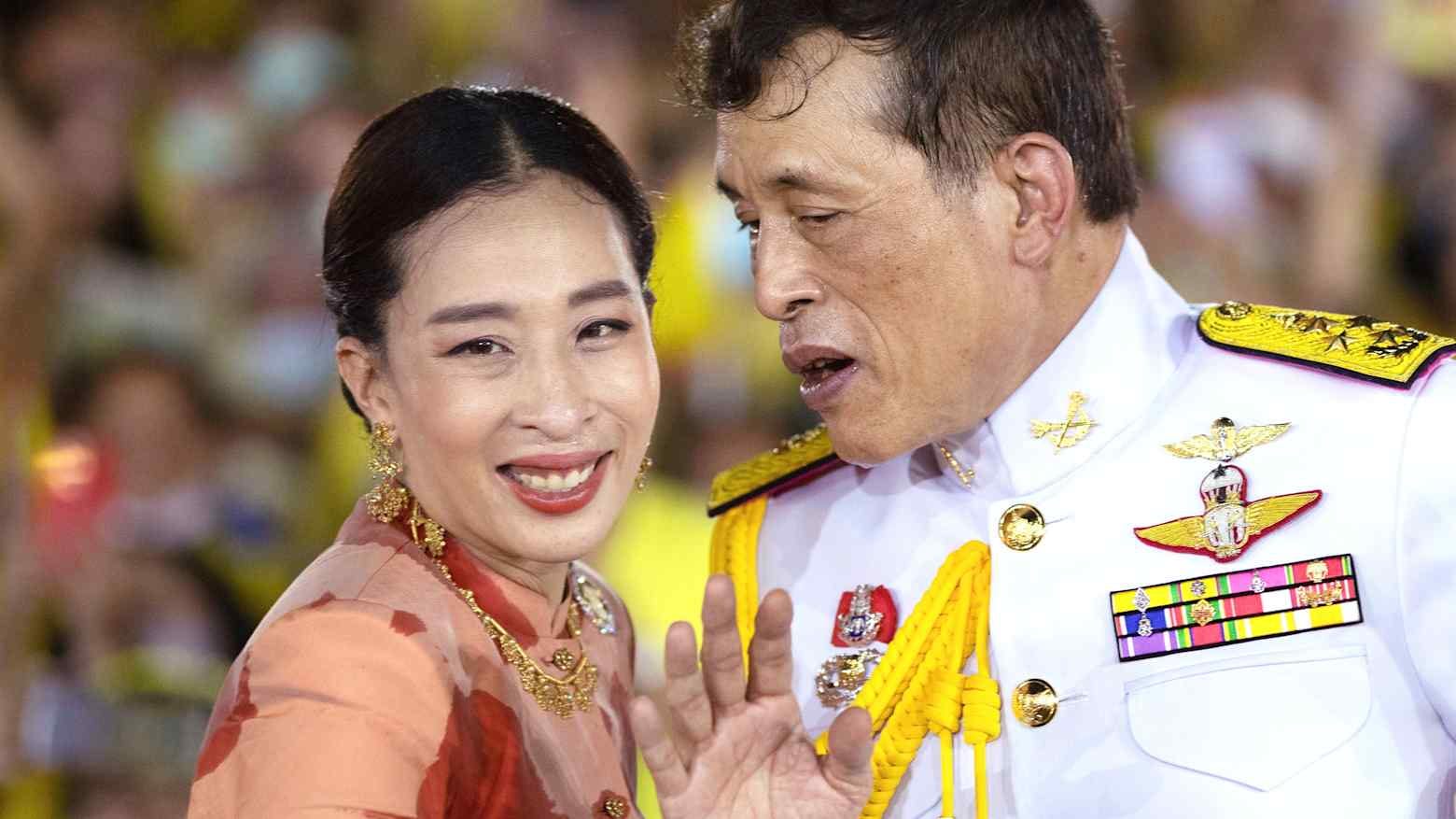
Princess Bajrakitiyabha Mahidol, the eldest daughter of Thai King Maha Vajiralongkorn, has died at age 47, the palace announced today, after having been kept alive artificially despite the fact that she apparently was clinically dead in December 2022 after she collapsed while walking her dogs.
Considered by many to be the king’s favorite among his seven children, the princess had been believed a possible heir to the throne despite the fact that Thailand’s rigid customs surrounding loyalty dictated that only a male could inherit the throne to lead one of the world’s richest kingdoms. As observers have widely, if cautiously, pointed out, the success of the monarchy depends on the ability to produce offspring. Bajrakitiyabha died childless. Having no designated heir will not guarantee the stability of the throne, nor the future of Thailand.
The death, while long expected, reawakens speculation over who will inherit the throne from Vajiralongkorn, who is now 73. The resumptive heir is Prince Dipangkorn Rasmijoti, now 21, although there have long been rumors about his health. Mentioning the youth’s health dares Thailand’s strict lese-majeste law. Dipangkorn is Vajiralongkorn’s son by his fourth wife Srirasmi Suwadee, whom he divorced in 2014, stripped of her titles and perks and sent her to live in exile in the straits far from Bangkok.
Vajiralongkorn’s delay in formally designating an heir apparent makes the succession line complex. According to one Bangkok source, Dipangkorn was raised to be close to Bajarakitiyabha, his elder sister, with the idea that she could serve as a sort of regent, advising and protecting him. With her lingering illness, that has obviously long nullified that plan.
Although funeral arrangements are certain to be ornate, the country is expected to remain open, with no suspension of business activity but with a period of half-mast flags and official observances, likely voluntary restraint from entertainment venues and event organizers, concentrated in the initial mourning window and with ministries slowing regular activities while they support funeral arrangements. Previous such mourning periods have cut into economic activity.
“The medical team provided the closest and most intensive care possible, but her condition continued to decline progressively,” the palace said in a statement. According to the announcement, Bajrakitiyabha passed away at 19:48 local time in King Chulalongkorn Memorial Hospital in Bangkok.
Her status as the king’s beloved eldest daughter and the deeply held wishes of the royal family kept her on life support for more than three years, not only for her heart but for her lungs and kidneys as well, an indication of how completely her body had shut down. In early May, the palace said her medical condition had worsened as a result of multiple infections in several organs and physicians were unable to stabilize her irregular heart rate. In April, according to reports, physicians discovered a stomach infection that led to inflammation in her intestines, causing her blood pressure to fall and her heartbeat to become irregular. Her kidney function and breathing had been supported through medical equipment, palace statements said.
It remains unclear why Princess Bajrakitiyabha was kept alive after reportedly being clinically dead in 2022. Doctors were ordered to keep her blood circulating and oxygenated outside her body. In Thailand, the death of a senior royal can bring the country nearly to a halt. Queen Sirikit, Vajiralongkorn’s mother and Thailand’s queen mother, died last October 24, prompting a yearlong mourning period that will continue through this October. As one of the most senior members of the royal family, Bajrakitiyabha’s death is expected to require another extended period of mourning. Because it occurred while the country is still mourning Queen Sirikit, it remains unclear how the royal family will proceed.
The princess, before her death, was not only regarded as the king’s favorite, but was well loved in her own right. A trained lawyer, she received her juris doctor degree from Cornell University in 2005. She worked briefly at the Thai Permanent Mission to the United Nations, in New York, before returning to Thailand. She later became an attorney in the Attorney General’s office in Bangkok and was later appointed the Thai ambassador to Austria. She was reportedly instrumental in prodding the Thai government to observe the rights of women incarcerated in a system built principally for men and was said to be a force in leading to the United Nations adoption of the “Bangkok Rules,” the first set of universal guidelines addressing the treatment of women in the justice system.
“Among the children of the King, Princess Bajrakitiyabha was the most genuine in her relations with the Thai people,” said a former Thai diplomat. “When she was a Thai ambassador to Austria, she was a good boss who listened to the embassy’s staff and never showed a condescending attitude. She was respectful to embassy personnel and the rules that governed the functioning of the embassy without adding extra layers to their responsibilities. She performed her royal duties well with passion and sincerity.”