
By: Nguyễn Vũ
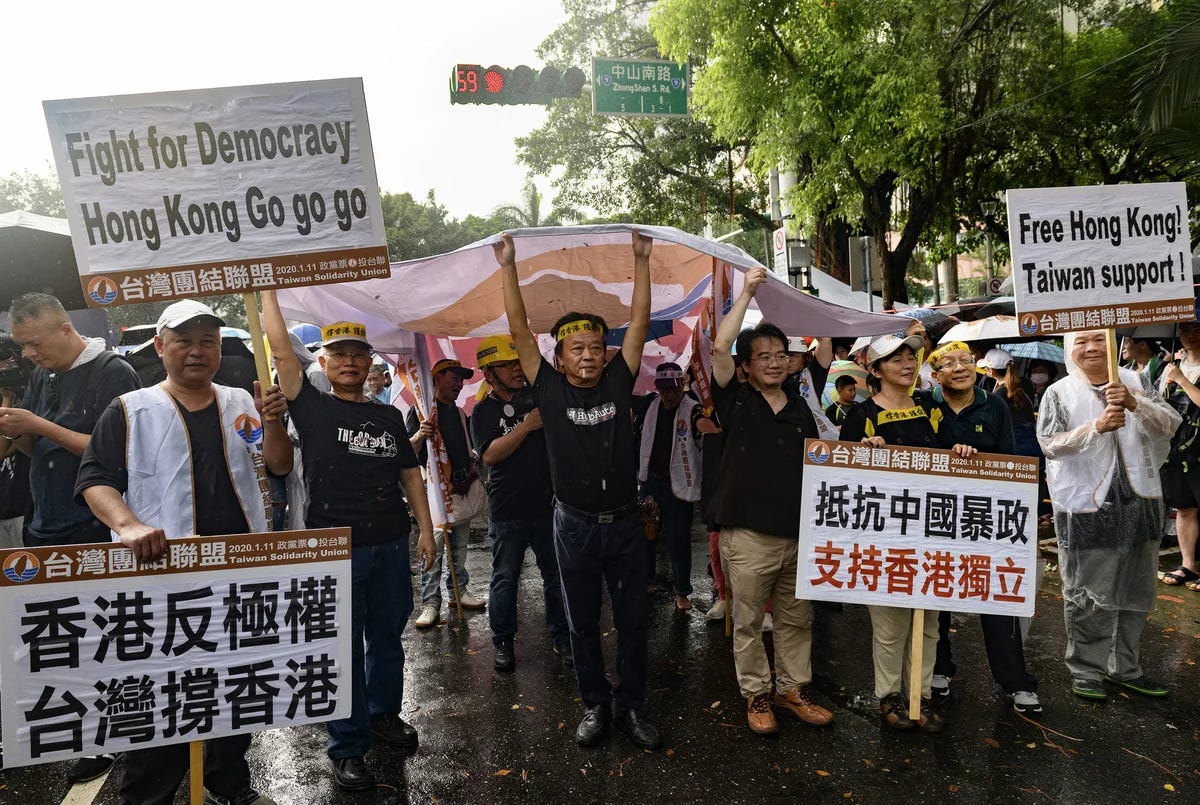
Taiwan, increasingly isolated by Beijing, which considers it a renegade province, has nonetheless become an unlikely sanctuary for thousands of political refugees, especially from Hong Kong, but also from China, Tibet, Turkey, Singapore, Myanmar, and other nations as far away as Egypt and Uganda.
The island’s unique status precludes it being a signatory to the 1951 United Nations Refugee Convention, so it is difficult to quantify the numbers and the government in Taipei maintains a cautious stance to avoid escalating tensions with China and to prevent national security risk, but its stance as a beacon of free thought serves as an international propaganda asset while undoubtedly irritating regional governments for harboring dissidents.
Tens of thousands of Hong Kong residents relocated beginning in 2019 as Beijing cracked down harshly on what had been one of Asia’s most liberal cities, with figures surging in 2020-2021, though exact total numbers are hard to pin down. Estimates suggest over 37,000 arrived by late 2022, making Taiwan a significant destination for those seeking democracy and freedom despite tightening Taiwanese residency rules.
While China is a major development sponsor and creditor to Southeast Asian governments, Taiwan, especially through the Taiwan Foundation for Democracy, funded by the island’s Ministry of Foreign Affairs with “international help,” has also subsidized democratic activities in the region. In its 2024 report, of 105 projects earmarked for its international grants, 24 were focused on Southeast Asia. Founded in 2018 as a supplement to the New Southbound Policy, one of the signature diplomatic legacies of former President Tsai, the Taiwan-Asia Exchange Foundation serves as the island’s first Southeast Asia-focused think tank. The organization executes events and publications aiming to strengthen Taiwan-Southeast Asia connections through NGO cooperation, civil society, and people-focused exchange.
Taiwan ranked 24th in the 2025 World Press Freedom Index released by Reporters Without Borders, first in East Asia and second in Asia Pacific. Although jailed democracy icon Jimmy Lai’s Apple Daily Taiwan (Apple Online) ceased operations on August 31, 2022 after the parent was closed in Hong Kong, Singaporean entrepreneur Joseph Phua established a new platform and hired almost all of the original Taiwan staff of 300-odd employees to join the new venture, Next Apple News. While the original Apple Daily brand is defunct, the core reporting team continues to operate in Taiwan under the Next Apple News banner, maintaining a similar tabloid-style digital presence.
One of those arrivals is Koko Thu, the son of a Myanmar junta officer during the 1988 Uprising who witnessed a schoolmate’s shooting, awakening him to the atrocities of the system that his father served. The then-21-year-old university student fled the embattled country, becoming both geographically and politically estranged from his father. He first landed in Thailand and shortly after leveraged his mother’s connections to reach Taiwan. Koko Thu has never left the island since.
“I remember learning to write the very first Chinese characters 谢谢 (Thank you)right after having landed in Taiwan in 1988,” he recalled. In 2021, the now 58-year-old rallied again in protests against the coup back home, hoping his father would forgive him in the netherworld. He continues to calls for international support for his compatriots. “I feel very safe in Taiwan,” he said.
Another to take advantage of is Trịnh Hữu Long, who began his activism for democracy in Vietnam first as an anti-China protester in 2011. He moved to the island in 2016. Since 2014, he has not returned to his home country, where the government has imprisoned his mentor and friend Phạm Đoan Trang since 2020 and branded him a “traitor’. He is now running an independent outlet Luật Khoa Tạp Chí in Vietnamese language and its English sister publication The Vietnamese from Taipei.
“I say ‘I love Taiwan’ as a way to express my gratitude to a country that offers me and my fellow exiled Vietnamese shelter, freedom, and kindness,” says Trịnh in his 2025 interview with independent Taiwan-based media New Bloom. “And after nine years of living in Taiwan, I am certain I made one of the best decisions of my life relocating to this country.”
An LGBTIAQ-friendly hub
For those who belong to communities including Lesbian, Gay, Bisexual, Transgender, Queer/Questioning, Intersex, and Asexual/Ally, Taiwan offers a friendlier environment than their home countries, annually featuring Taiwan Pride, the largest such gay event in East Asia, usually on the last Saturday of October and featuring massive crowds. Roy Ngerng is a Singaporean blogger found liable for defaming Prime Minister Lee Hsien Loong in a post alleging Lee mismanaged Singapore’s Central Provident Fund (CPF) savings in 2015 and was ordered to pay damages of S$150,000. In 2021, he paid off the outstanding obligation through a crowdfunding campaign in just nine days. He used excess funds to support another Singaporean blogger, Leong Sze Hian, who was also sued by the PM in a separate case. Openly gay, Ngerng is currently living with his partner in Taiwan.
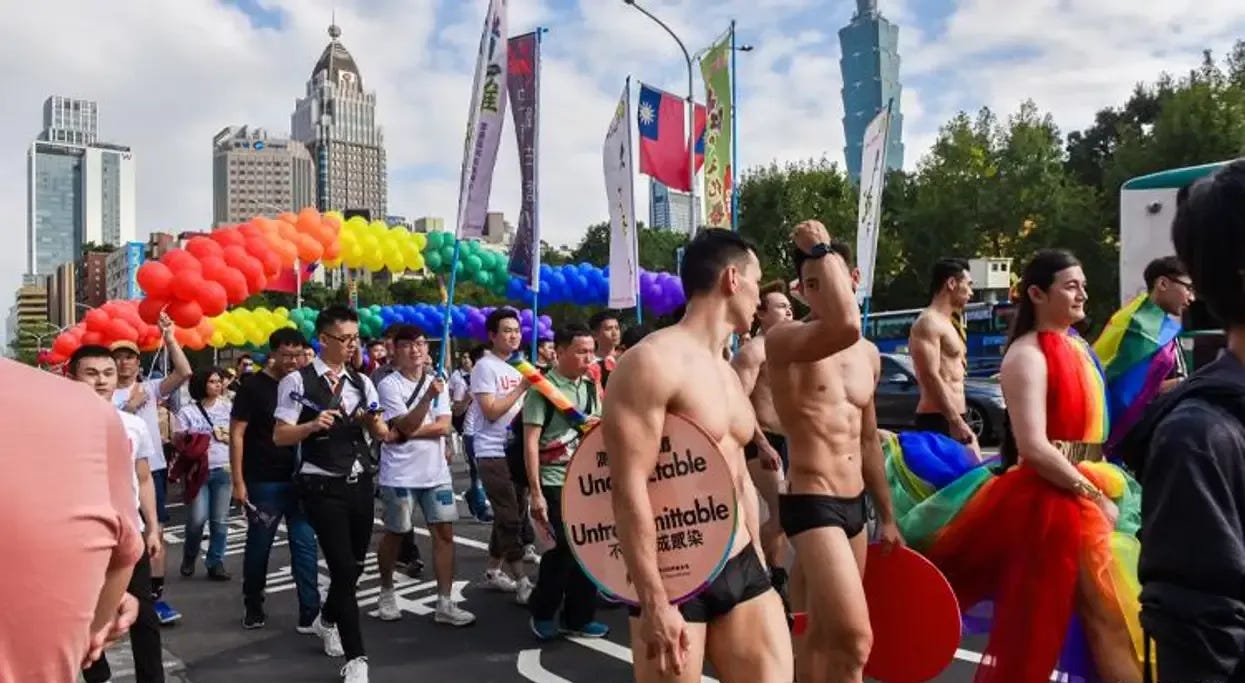
“When I moved to Taiwan, it was because I needed to find a job, but it was also very useful for me, because I was undergoing depression,” Ngerng said. “And being in Taiwan helped me recuperate. There was also a time when I wasn’t writing and I was taking time to explore the place, the rivers and parks, which helped me get better. Moving to Taiwan thus feels like moving to another place, and moving along with life?”
A Malaysian activist who identified only as Kin said he believes that he wouldn’t be able to find a welcoming environment in his home country as a gay man. His Taiwanese partner would not be able to secure Malaysian spouse visa, and their marriage would not be recognized back home.
“Ten years ago, when I searched for words like “gay” and “boys like boys,” the information I got on the internet was extremely negative, so I only learned to hate myself when I was growing up,” Kin wrote. In his recent posts on Thread, he expressed his dismay when coming across homophobic comments on social media back home, especially from religious groups in Malaysia. In response, he wrote in Malay: “Sexual orientation is innate, please stop criminalizing LGBT+.”
Room for more sustainable soft power
Yet it remains to be seen whether Taiwan can walk its talk on democracy and human rights in Southeast Asia although soft power has its domestic limitations. While educated dissidents are welcome, low-skilled workers face rampant discrimination. Observers say protections for migrant workers was conspicuously absent in the signature New Southbound Policy launched by former President Tsai in 2017. About one in 33 employed in Taiwan are foreign workers, 90 percent of whom come from Southeast Asia.
Racism permeates migrant worker policy. Filipino workers in semiconductor factories in Taiwan are reportedly subjected to abysmal working conditions. In 2024, Taiwan fell short of agreeing to demands from Indonesian union members. In 2019, Kaoxiong Mayor had to publicly apologize for his slip of the tongue referring to Filipinos teachers as “marias,” considered demeaning, discriminatory, and politically incorrect. In recent years, many Taiwanese universities have been reportedly sending Southeast Asian students to work illegally in factories.
While Taiwan is known for being a champion of women’s rights, domestic violence has been known by Taiwanese male partners against their Southeast Asian spouses. Since the 1990s, immigrant women arriving in Taiwan from Southeast Asia through commercially brokered marriages have represented a growing group that now accounts for 2.4 percent of the population. The test of its soft power as a bastion of democracy lies in its treatment of the most vulnerable groups, particularly low-skilled workers, who have been left behind by their home countries and pin their hopes on a better future on the island.