

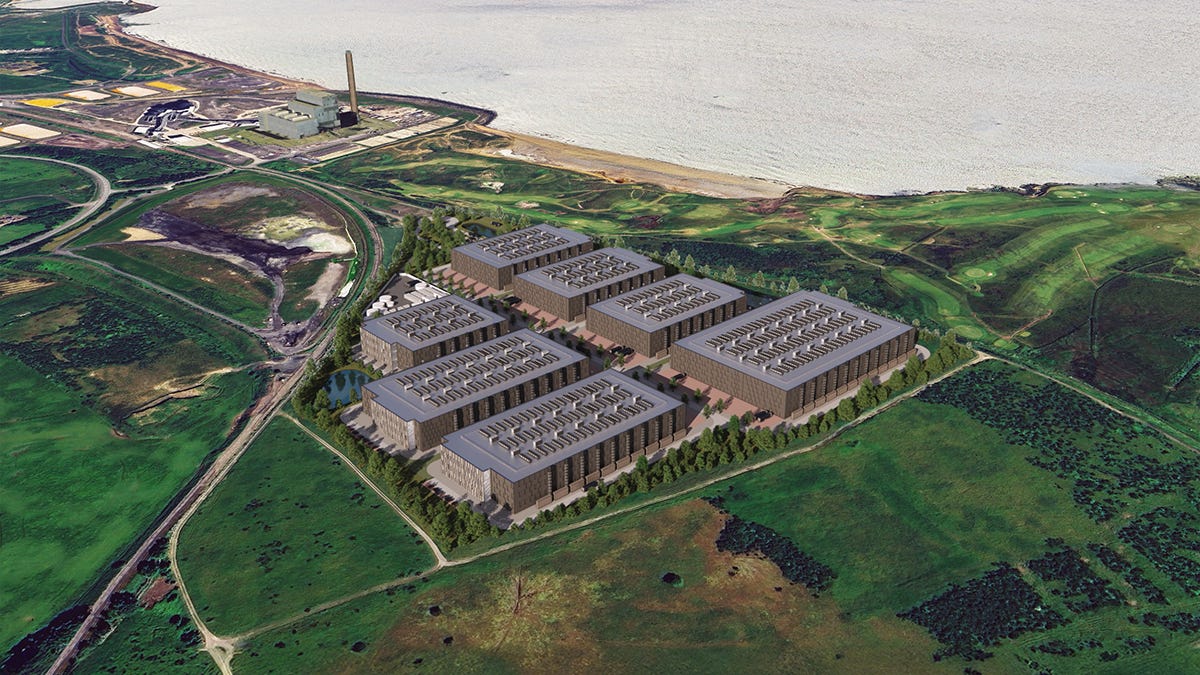
On March 3, the Malaysian government was forced to slow the development of data server farms, the facilities housing networked computer servers that act as the backbone of digital services, cloud computing and websites. By 2030, they are expected to account for 39 percent to 60 percent of Peninsular Malaysia’s peak power demand, according to Fulcrum, published by the ISEAS – Yusof Ishak Institute think tank in Singapore, straining both electricity grids and water supplies needed for cooling in key areas like the southernmost state of Johor.
It is a story being written across Southeast Asia, with Singapore already having placed a moratorium and strict constraints on land and power, pushing expansion demand to Johor in Malaysia and Batam in Indonesia, a country already facing AI-driven expansion which has created significant stress on the power grid, particularly in the Java-Madura-Bali region. Vietnam has experienced power shortages during peak months, which could pose challenges for its growing data center industry. Thailand’s Board of Investment reportedly approved 36 data center projects worth about US$23 billion in 2025 alone, followed by at least seven more valued at US$3.1 billion in January this year.
Cambodian cyber scam operations, many of which continue to operate despite police raids earlier this year, rely on industrial-scale digital infrastructure housed within heavily guarded compounds. Server power is believed to be at the very top in Asia, involving thousands of forced workers using, at a minimum, thousands of computers, high-speed internet gateways, and large-scale data storage for managing personal data, phishing sites, and cryptocurrency laundering. Scam server farms are believed to soak up well over half of Cambodia’s power supply.
That has played a role in making energy security a common priority for the region, with coal-fired power remaining a significant component of Southeast Asia’s energy mix according to the International Energy Agency, which reports that investment in coal “has risen steadily throughout the past 20 years, reaching 121 GW of installed capacity in 2025,” and universally disrupting plans to meet 2030 climate goals agreed by the United Nations sustainable development goals. The UN warning that a climate cataclysm is looming, with rising temperatures escalating hazards further, is largely being overlooked across the region.
“In the last few years, the Malaysian government rushed into data center approvals, with no detailed study done on the effects on environment, power and resource consumption, etc.,” emailed a Malaysian businessman who asked not to be named. “The government wanted to show investors had confidence in the new Anwar-led government and were willing to invest billions of dollars. With the Middle East war started by the Americans and Israelis, the truth has sunk in. Going forward, it is likely that Malaysia is going to slow down on data centers and AI-related investments. But how much or how little? As of today, they are grappling to formulate a policy.
Nonetheless, Southeast Asian countries appear to be in a race to see which can build fastest to capture a market estimated by the Sydney-based Lowy think tank to grow by 150 percent to reach US$30.47 billion by 2030, growing at a compound annual rate of 14.24 percent.
“ Artificial intelligence is fueling an unprecedented surge in data demand – and Southeast Asia is not yet ready to meet this challenge,” according to an October 25, 2024 report by the Big Four accounting firm Deloitte Touche Tohmatsu Ltd. “Across industries such as manufacturing, mobility, and logistics, next-generation AI applications are starting to replace traditional sensors with high-resolution images, videos, and other data-intensive inputs. These visual applications require immense computing power and low latency networks to work in real time. As a result, the region is seeing a massive spike in data capacity requirements, far beyond what its existing infrastructure can support.”
How much energy these server farms require is astonishing. In the US, OpenAI has announced plans for facilities requiring more than 30 gigawatts of power in total – more than the largest recorded demand for all of New England. ChatGPT alone, which revolutionized the world of artificial intelligence and made it accessible to anyone with a smartphone, is expected to reach 1.2-1.5 billion monthly users this month.
The research team at BestBrokers, which features detailed guides on key financial instruments, recently looked at what that would cost at the average US commercial electricity rate of $0.136 per kWh as of last December. Slovenia, Kenya, Costa Rica, Estonia, and Luxembourg separately consume less energy annually than the amount ChatGPT uses solely to process user queries, according to BestBrokers. ChatGPT’s yearly energy usage to handle prompts could power Brazil, which consumed 760.83 terra-watt-hours in 2024, for more than 10 days.
That is enough to satisfy the electricity demands of South Korea or Canada for almost 13 days, or even those of the United States for 44 hours. For China, the world’s largest electricity consumer, it would mean that the power drained by ChatGPT for prompts alone could keep the lights on for 19 hours straight.
That is just one LLM company. Among the thousands of companies that have exploded into existence, there are eight to 10 major LLM developers—defined by those with the computational resources, capital, and talent to build foundational models – chewing up equivalent to ChatGPT. Data server farms operated by each swallow the equivalent energy used by “Slovenia, Kenya, Costa Rica, Estonia, and Luxembourg separately.”
In Southeast Asia over the past 10 years, energy demand has increased by more than 35 percent according to the International Energy Agency’s World Investment Report 2025, with electricity demand alone rising by more than 60 percent.
“Historically, this rising energy demand has been met by fossil fuels, making up 60 percent of total energy investment in the past decade,” the IEA reports. “Coal was the main beneficiary, growing from 20 percent to 30 percent of the region’s energy mix, with US$110 billion invested since 2015, concentrated in Indonesia and Vietnam. However, fossil fuel investment decreased from US$70 billion in 2015 to US$50 billion in 2025 while clean energy investment reached US$47 billion, up from 30 billion in 2015.”
It appears a Hobson’s choice. “National governments, local telecommunications and energy players, and investors must recognize data centers and other AI infrastructure as critical assets of tomorrow – and move now, and move quickly, to build these assets on their shores,” the Deloitte report notes.
The region’s digitization push requires infrastructure to support local services and data storage. Governments recognize that hosting data centers drives development, creates jobs and boosts GDP despite the strain on resource and the environment. As data becomes a strategic asset, Indonesia has led the push to onshore data, with nearly 200 centers of varying sizes already operating across the country. Microsoft is building a new 48-megawatt center at the Karawang International Industrial City in West Java, part of the company’s US$1.7 billion investment in Indonesia. Microsoft plans three more facilities at the Karawang site housing five data centers and forming a major regional cluster.
For the major nations that make up ASEAN, Southeast Asia is a prime regional hub positioned to serve not only local markets but also nearby economies like Australia, China, and India. Data from the Deloitte report notes that the ability to store, process, and secure data onshore is critical. While environmental groups fear the danger from increased energy and water usage, the sector is regarded as a key driver of economic growth. Better to build and reckon the environmental costs later.