
By: Tita C. Valderama

With the Philippine presidential sweepstakes little more than two years off, the country is now mired in what many analysts describe as a pre-emptive war, with impeachment motions, Senate intrigue, and corruption probes serving as tools to shape the electoral dialogue in advance. Charges against President Ferdinand Marcos Jr. and his deeply estranged running mate, Vice President Sara Duterte, underscore how constitutional processes are increasingly being used as tools for political positioning. In the meantime, a clutch of prospective 2028 candidates are dusting off their bona fides.
Within days of each other earlier this month, the House of Representatives dismissed two impeachment complaints against Marcos, demonstrating his sway over the lower chamber, while a third was filed against Duterte, highlighting the sharply uneven political terrain facing the country’s two highest-ranking officials.
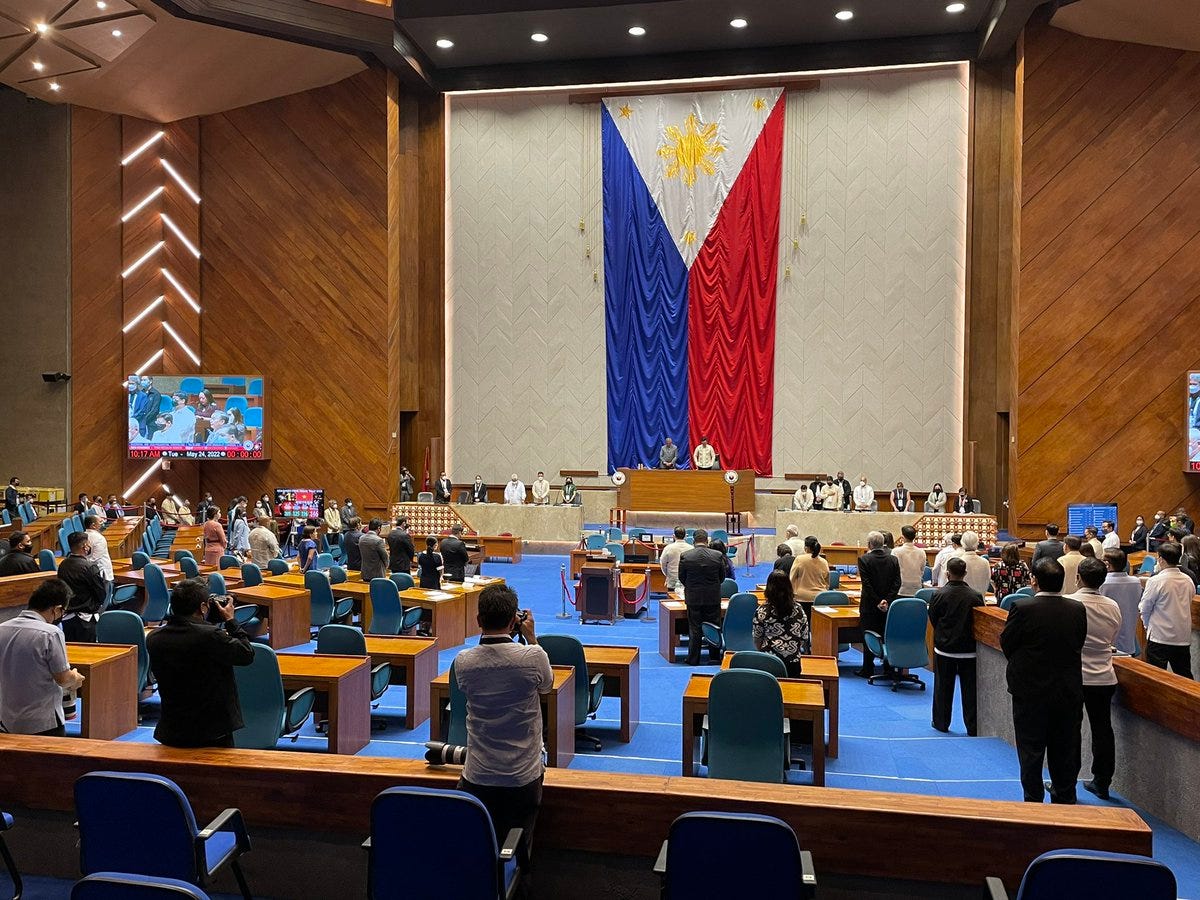
The February 10 dismissal against Marcos by the House Committee on Justice triggered a constitutional one-year bar that prevents any new impeachment complaint until 2027. The following day, the full House overwhelmingly upheld the committee report, voting 284–8, with four abstentions. The outcome was widely expected, given the administration’s dominance.
Despite the collapse of the brief onetime Marcos-Duterte alliance, the dismissal reaffirmed Marcos’s control of the chamber. Historically, presidents with strong House backing are nearly impossible to impeach, making the complaints little more than a political nuisance.
Duterte clan facing headwinds
The situation for Vice President Duterte is markedly different. This is the third impeachment complaint against her, adding to allegations of misuse of confidential funds, graft, betrayal of public trust, and controversial remarks about “assassination plots.” The proceedings are expected to stretch on for months, if not years, as the Marcos forces maneuver to unearth any possible stratagem keep the 47-year-old daughter of former President Rodrigo Duterte, arguably the most potent political force in the country after her jailed father’s absence, from being able to mount a presidential campaign.
The Duterte clan has maintained a landslide level of influence even though the 80-year-old patriarch is sitting in an International Criminal Court cell in The Hague over charges relating to his murderous six-year war on drugs. The image of a father on trial abroad and a fille dévouée facing impeachment at home underscores a dynasty under strain, an image that benefits rivals advocating a return to the rule of law.

Duterte has dismissed the complaints as “scraps of paper without evidence” and has declined to respond directly. Instead, she has accused the photogenic 57-year-old Senator Risa Hontiveros, a potential 2028 rival, of political harassment and grandstanding, a strategy appearing to aim at reframing the narrative from accountability to persecution. She has continued an onslaught of “Free Duterte Now” public rallies and speeches to voice opposition to the current administration and defiance against ongoing legal and political challenges.
The complaints against Duterte allege irregularities in the use of ₱612.5 million in confidential funds available to her as vice president, discrepancies in her asset declarations, remarks interpreted as threatening, and failure to address Chinese incursions in the West Philippine Sea. Legal experts warn that even without conviction, sustained impeachment proceedings can exact a heavy political toll. In the Philippines, the process, it is said, is the punishment.
Senate stability tested
Attention is now shifting to the Senate, which would sit as an impeachment court if the House transmits articles of impeachment against Sarah. Senator Bong Go, a longtime aide of the former president, has reportedly semaphored openness to joining the Senate majority amid rumors that loyalty to the elder Duterte doesn’t extend to his daughter, a move that would distance him from Senators Francis “Chiz” Escudero, Joel Villanueva and Jinggoy Estrada, all of whom have been implicated in an investigation into alleged flood control fund irregularities, the scandal du jour involving billions of stolen pesos from projects trying to keep the tropical downpours at bay.
Senator Panfilo Lacson, a tenacious watchdog of the national budget, said the Senate Blue Ribbon Committee would recommend referring the three senators to the Office of the Ombudsman for investigation, rather than immediately recommending criminal charges. Senate sources said the move reflects a compromise intended to preserve institutional stability amid concerns over a possible leadership challenge in which Senate President Vicente “Tito” Sotto III, who shares a longstanding political and personal relationship with the elder Duterte, batted back a challenge from acolytes of four-term environmentalist and reformer Loren Legarda. Legarda ultimately chose to remain with the majority and the reported effort fizzled after discussions of a power-sharing arrangement, including the possibility she would assume the presidency before the 2028 end of the 20th Congress.
The episode exposed internal fault lines at a time when the Senate leadership, which the Marcos forces also appear to control, could shape the fate of any impeachment trial. If the articles reach the upper house, its leadership will largely determine the pace, scope, and tone of the proceedings. A neutral Senate president could allow a full trial. A Duterte-aligned leadership could delay or blunt the process. For now, however, the majority has succeeded in preventing a leadership shakeup.
The Constitution’s one-year bar on impeachment filings, originally designed to prevent harassment, has become a central political instrument. An earlier impeachment complaint against Duterte was halted in 2025 after the Supreme Court ruled that the House had violated the one-year rule. That protection expired on Feb. 6, prompting the immediate filing of new complaints. Analysts say impeachment has become less about guilt or innocence and more about timing.
The real cost of the circus
A conviction, which the Marcos forces are plainly trying to engineer at the risk of turning her into a powerful martyr, would permanently bar Duterte from public office. Even without a verdict, they are wagering, prolonged proceedings could damage her standing and open space for an administration-backed alternative, leaving the Marcos forces with additional running room to replace the president’s cast-off cousin and once-anointed heir, former House Speaker Martin Romualdez, who was caught up in the flood control scandal and reports of ownership of multiple baronial houses including a 16-room villa in Spain.
Among those watching the Marcos-Duterte forces slug it out while polishing their presidential précises are several hopefuls including Interior and Local Government Secretary Jonvic Remulla, a member of the warlord clan that has dominated Cavite province politics for decades, and who could inherit the Marcos kapa. He has upped his cred by reporting he had turned down a P1 billion (US$17.2 million) bribe to quash the flood control charges. He is reportedly being floated as a potential standard-bearer.
Others are Sen. Raffy Tulfo, 65 a former broadcast journalist and media personality elected in 2022 who is positioning himself as a results-driven outsider; Hontiveros, also a onetime broadcast journalist casting herself as the face of principled accountability; Bam Aquino, 48, a member of the powerful Aquino clan (Aunt Corazon, president 1986-1992, cousin Benigno III, president 2010-2016, etc); and former Vice President Leni Robredo, who lost to Rodrigo Duterte in 2016.
The current impeachment cycle is less about justice than political survival. Marcos remains secure behind his congressional shield despite his family’s decades-old reputation for having looted the public purse, while Duterte confronts mounting legal and political risks including her father’s detention despite her undeniable charisma. As the carousel spins faster, public patience may wear thin. As voters grow weary of political spectacle, it may be the quieter, steadier figures—those standing outside the circus—who gain ground heading into 2028.