
By: Nava Thakuria
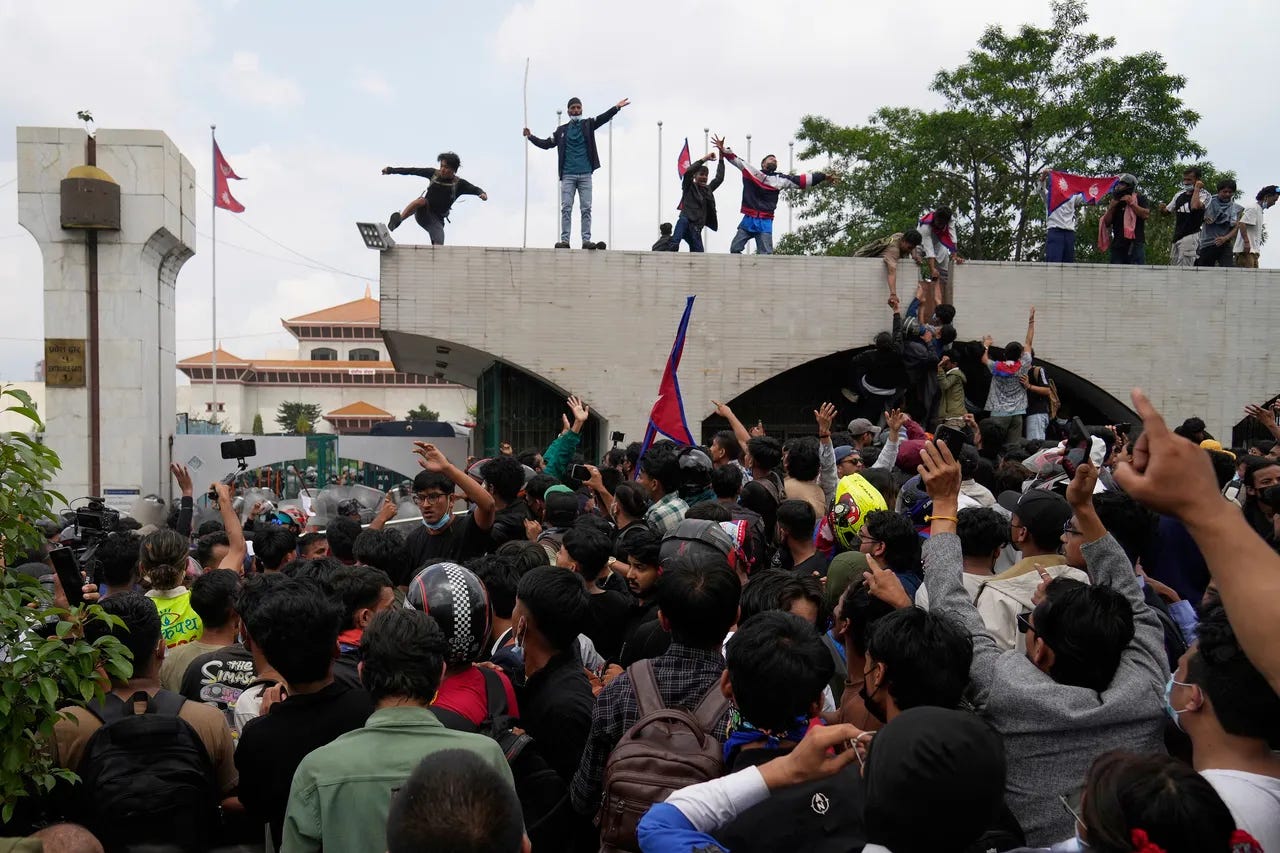
The battered Himalayan country of Nepal is preparing for March 5 national elections, dictated by the government’s collapse last September amid mass anti-corruption riots and destruction of government institutions led by Gen-Z protesters that culminated in the killing of dozens of agitators and injuries to hundreds by authorities.
The new government will be the 27th since the restoration of democracy in 1990, each averaging barely a year in office. The country, its 240-year-old monarchy dethroned by Maoists in 2006, emerged as a multi-party federal democratic republic led by Pushpa Kamal Dahal, known as Prachanda, as prime minister in 2008. But the newfound political system resulted in a revolving door of corrupt and ineffective governments.
Sandwiched between giants India and China, the government has readied arrangements for single-day polling under the protection of nearly 350,000 uneasy security personnel with additional armed forces kept ready for emergencies. There is reason for such a massive security presence.
Stunning wave of violence
The government was driven from office last September in an unprecedented spate of violence triggered by widespread corruption, economic distress and mass unemployment. A total of 79 youthful protesters died as mobs burned the 122-year-old palace housing the prime minister’s office as well as the Home, Finance and Health ministries, the Parliament, the Supreme Court, other lower courts, the anti-corruption commission and the offices of the Communist Party of Nepal (Unified Marxist–Leninist, or UML), the Nepali Congress and the Maoists. Even the Kathmandu Hilton went up in flames.
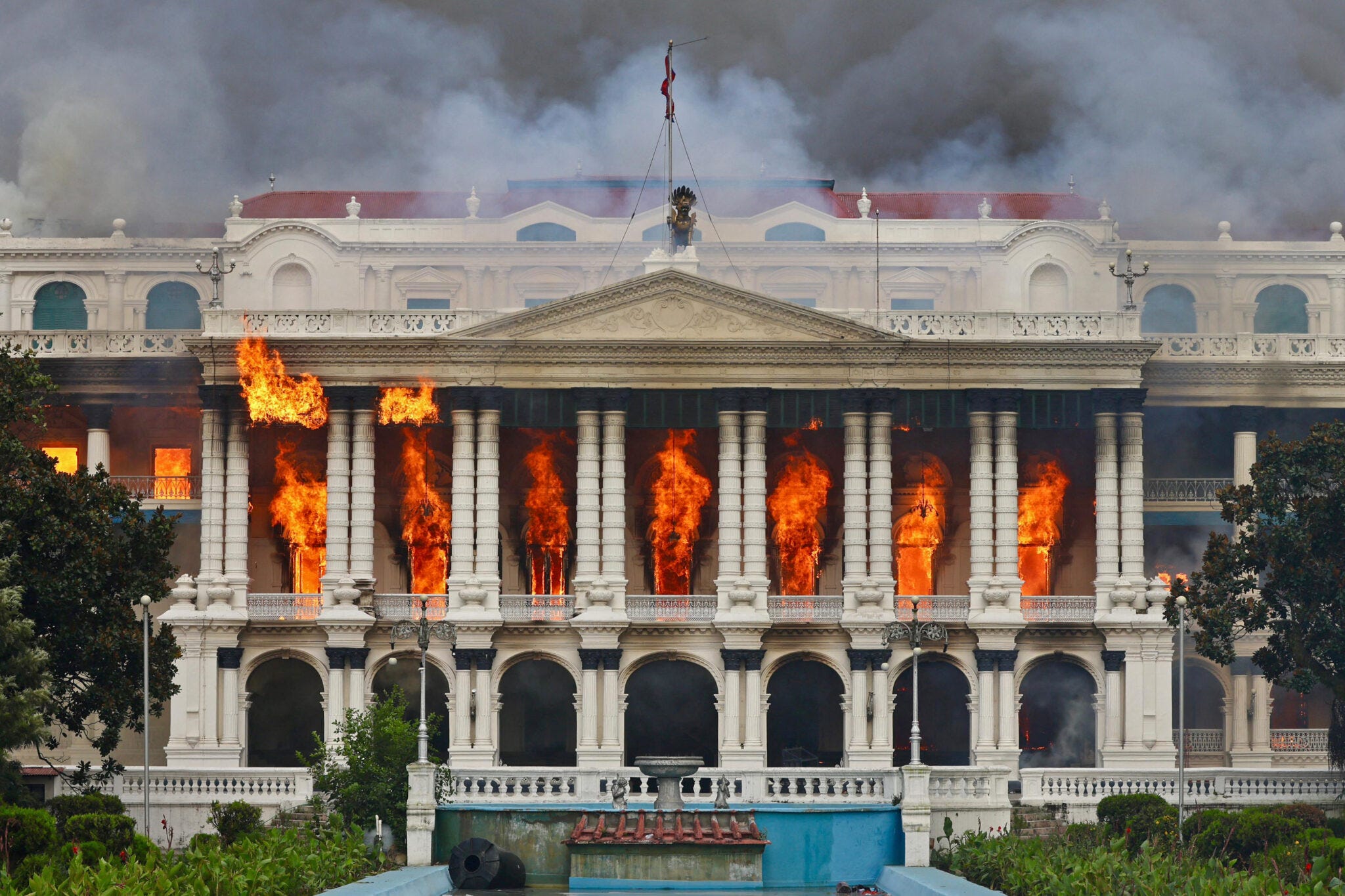
According to news reports, protesters across the country outside the capital Kathmandu torched municipal, tax and district administration offices, provincial assemblies, customs offices, private homes and businesses, breaking into prisons and freeing prisoners.
In fewer than 48 hours, the state machinery utterly collapsed, ousting the prime minister, veteran communist leader Khadga Prasad Sharma Oli. Former Chief Justice Sushila Karki was sworn in to head a caretaker government by young Nepalis who cast their votes on a “Youths Against Corruption” Discord channel, “perhaps the first time in history that a prime minister had been chosen via an online vote,” according to a study by the US-based Carnegie Endowment Russia-Eurasia Center. Some 56 percent of the population are below age 30, with the ousted geriatric leadership’s average age 70 and woefully out of touch, according to the report.
Although the political spasm has produced a demand for revision of the electoral rolls, the Nepali diaspora, estimated at 5 to 6 million people representing 17 to 20 percent of Nepal’s 30 million-odd population, will continue to be left out. Immediate priorities are to investigate corruption and to determine responsibility for the arson and looting during the protests.
Plethora of aspirants
A massive 3,484 candidates representing 68 political parties and independent contestants are vying for 275 seats in the House of Representatives to replace the interim government led by Karki, who promised a general election within six months. Nepal follows a mixed electoral system guided by the 2015 Constitution, with the electorate picking candidates of their choice in first-past-the-post direct voting to elect 165 parliamentarians. The second ballot mandates proportional representation for 110 seats to minorities and smaller parties.
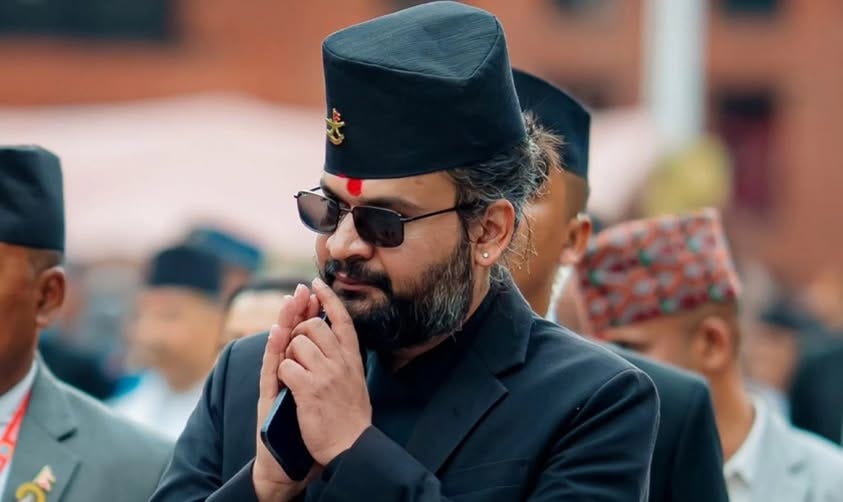
A 35-year-old structural engineer-turned-rapper-turned-politician named Balendra Shah, popularly known as Balen, has emerged as a national force, enjoying enormous popularity among the young social media users behind the revolution. He resigned recently as Kathmandu’s mayor to join the Rashtriya Swatantra Party, or National Independence Party, which has emerged as an alternative to the three major parties. Although opinion polls are restricted, the general mood has anointed Balen as the frontrunner to become premier.
Balen has received widespread acclaim as Kathmandu mayor for initiatives to expand roads, maintain efficient garbage management and push for overall cleanliness drives across the picturesque city, promising to create 1.2 million jobs to prevent the exodus of Nepali youth to foreign lands. He has drawn international media attention for recently discarding a mega-industrial project under China’s Belt and Road Initiative from his election manifesto. Adjacent to the narrow, strategically sensitive Siliguri corridor, known as the Chicken’s neck that connects India’s eastern Assam Province to the rest of the country over Bangladesh, the BRI’s proposed Damak industrial park has remained a headache for New Delhi since its foundation was laid five years ago.
In addition to Balen, two prime ministerial candidates are in the electoral fray, veteran communist leader KP Sharma Oli, who was forced to resign following the agitation, and Gagan Kumar Thapa, the new president of the Nepali Congress, the country’s oldest political party, an ally to the collapsed Oli-led government.
Thapa, 50, replaced five-time prime minister Sher Bahadur Deuba, 79. Deuba and Jhala Nath Khanal, another former prime minister and leader of the Nepal Communist Party quit after being targeted by agitators during the protests. Prachanda, who leads a leftist alliance under the banner of the Nepali Communist Party, also hopes to revive his popularity, allying with yet another former premier, Madhav Kumar Nepal.
Hardcore Hindu nationalists are demanding the restoration of the monarchy as ceremonial head of the country in place of the president, with at least one mainstream party, the right-wing Rastriya Prajatantra Party, or National Democratic Party, backing the move, organizing public rallies supporting the last Nepal king, Gyanendra Shah, who now lives privately in Kathmandu.
Gyanendra himself issued a stunning statement expressing his dissatisfaction with the political situation and the behavior of the existing political leadership, questioning the necessity of elections without resolving national problems through broad national consensus. If the election is pushed ignoring widespread disagreement and protests, he said, there will be no lasting solution to the crisis.
“In a democracy,” he said, “it is appropriate for the state system and processes to function according to constitutional principles. While periodic elections to select representatives are a natural process in a democratic system, the current public sentiment is that it would be more appropriate to proceed toward the electoral process only after first solving the national problems.” He added that “in the present situation, a tendency to seek rights without considering duties has been flourishing. Only a system and structure suited to Nepal’s geography and the nature of its society can yield sustainable and positive results.”
Gyanendra called for a system to safeguard Nepali identity on the global stage. There is considerable corresponding pro-royal sentiment, with Gyanendra’s visits to rural areas drawing pro-monarchists waving national flags, placards and chanting slogans in favor of the septuagenarian royal. But the likelihood of his re-emergence as a ruling monarch remains slim.
Given the massive outburst of violence last year, the Nepal human rights commission is urging everyone to make the election free, fair and clean, stating that voters should be able to choose their representatives impartially without being misled. The election authority has asked all political parties and candidates to comply with election codes of conduct.
The authority has assured that the outcome will be declared as early as possible. Once the 7 am to 5 pm polling concludes, ballot boxes will be immediately shifted to Kathmandu with the result of direct voting hopefully declared within 24 hours, with the remainer under proportional representation announced within two to three days.