
By: John Elliott
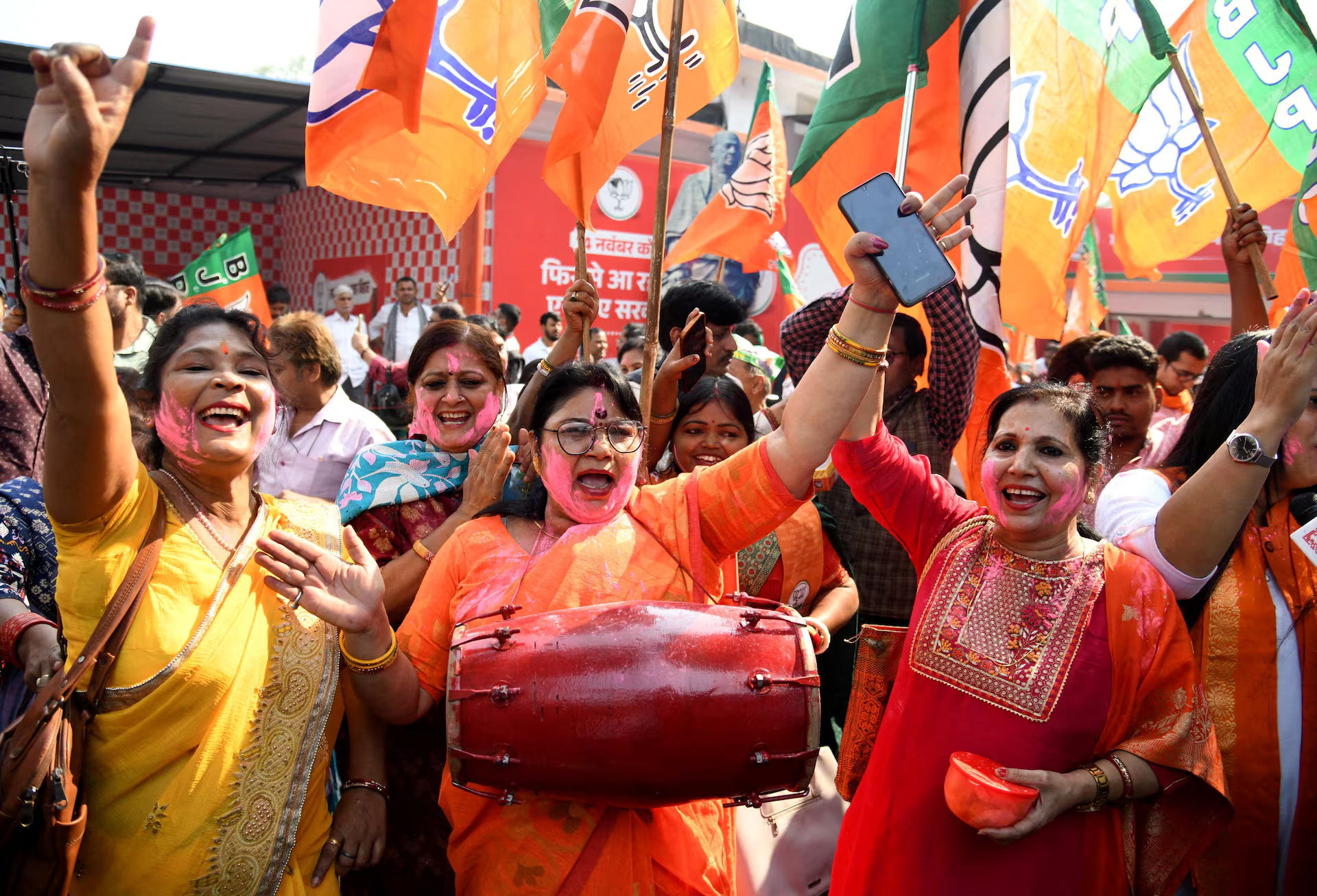
Narendra Modi’s authority as India’s prime minister has been significantly strengthened by an unexpectedly massive win for his Bharatiya Janata Party’s coalition in Bihar state elections at a time when he has to deal with relations with Pakistan that are at a tense and terror-related pivotal moment.
Modi’s National Democratic Alliance won 202 of the Bihar assembly’s 243 seats, up from just 125 in 2020 in results announced on November 14. The BJP topped the polls with 89 seats followed by the state-based Janta Dal (United) with 85. Nitish Kumar, the widely respected but ailing 74-year old leader of the JDU, who has been chief minister of this desperately poor state almost continuously since 2005, is expected to remain in the post.
The significance of this victory is that Modi doesn’t need to distract attention and restore support for the BJP. It could have been different if his authority had been weakened by a defeat or marginal result in Bihar.
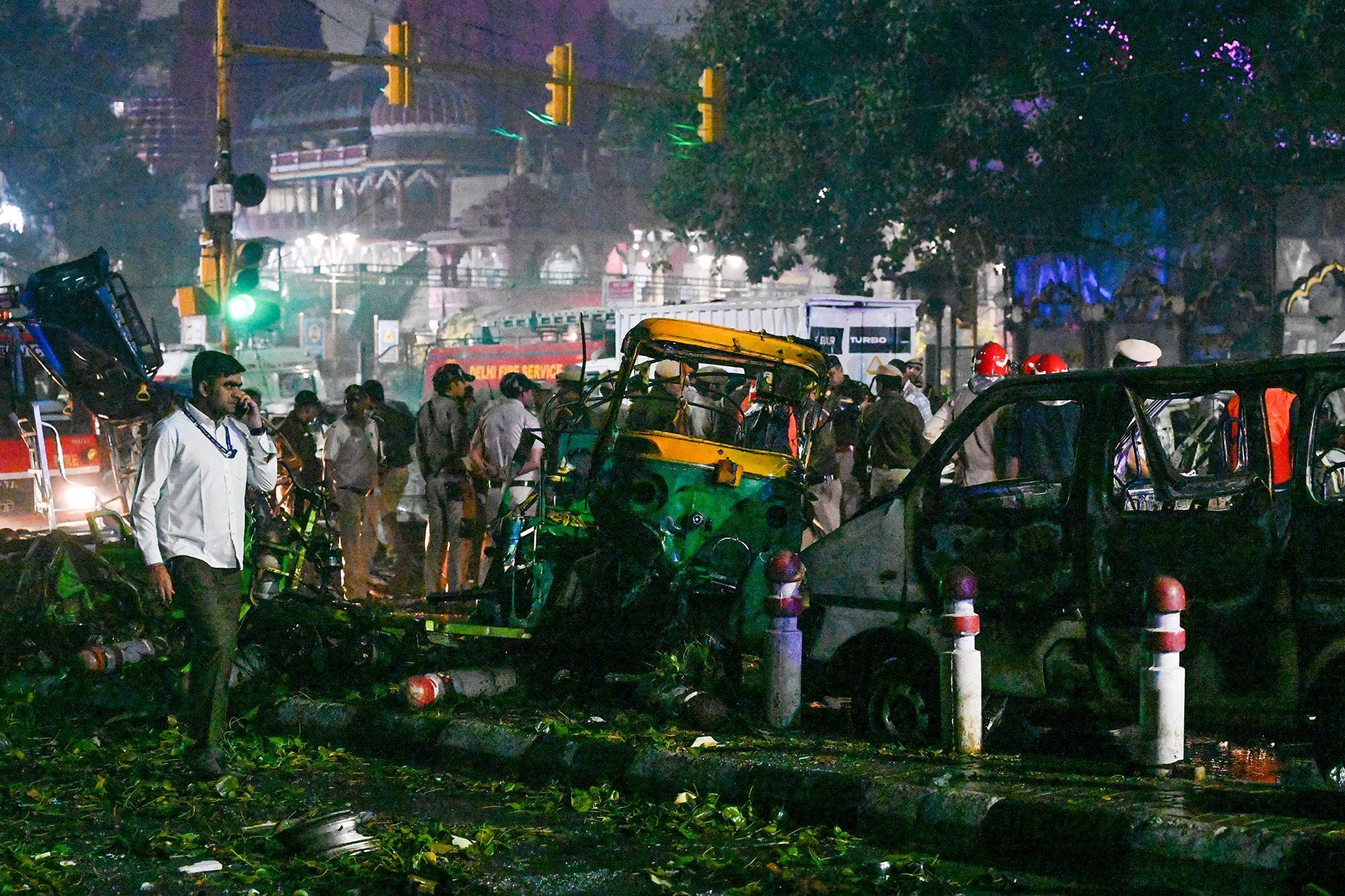
Modi is grappling with how to respond to a car bomb explosion near the Red Fort in old Delhi on November 10 that killed 13 people. Earlier this year in April, after a Pakistan-linked terrorist attack at Pahalgam in Kashmir that slaughtered 26 tourists and led to four days of air-borne battles between the two countries, Modi said any future terror-induced incident would be treated as “an act of war.”
Modi and his National Investigation Agency (NIA) now have to decide whether the November 10 explosion was instigated, encouraged or facilitated by Pakistan. No organization has claimed responsibility and Pakistan denies involvement, but Indian security sources are pointing to the Pakistan-based Jaish-e-Mohammed (JeM) that has close ties to the Pakistan military and the ISI security agency.
At the same time, Pakistan is accusing India of staging “state terrorism” with a suicide bombing that killed at least 12 people in the capital of Islamabad a day after the Delhi blast. India denies responsibility but the link stems from officials blaming the Pakistani Taliban (TTP), which is allied to the Afghanistan’s Taliban government at a time when it has been growing close to India.
The Indian government has confirmed it is treating the Delhi blast as a “terror incident” perpetrated by “anti-national forces.” Modi has described it as a “conspiracy” and Amit Shah, the home minister, said he would “hunt down each and every culprit behind this incident.”
This is complicated however because, unlike the earlier terror attackers who came from Pakistan, last week’s explosion involved Indian nationals from Kashmir. Claimed by Pakistan, Kashmir has suffered varying degrees of internally and externally instigated insurgency and terrorism since India’s independence in 1947.
Indian investigators have linked the blast to what they describe as “an interstate and transnational terror module” that they started tracking last month when posters promoting the JeM appeared in Nowgam, a village south of Srinagar that is at the center of the disputed Kashmir territory.
Seven people were arrested including two Kashmiri doctors working in other Indian states. Police said they had uncovered 2,900kg of explosives equipment and assault rifles in Faridabad near Delhi, which they now believe were being readied by the doctors and their accomplices for attacks on various targets. They have described the network as a “white-collar ecosystem involving radicalized professionals and students in contact with foreign handlers operating from Pakistan and other countries.”
The apparent emergence of such a terror group comprising professionals, and especially doctors who are widely trusted in security situations, has caused serious concern, though the radicalization of white-collar groups has been seen before in Kashmir and elsewhere.
Complicating the investigation, the explosives seized in Faridabad were controversially transported 800 km by mini-trucks to the police station in Nowgam for forensic examination. During handling, some of the materials exploded on the night of November 14, killing nine people including police and forensic staff. Officials say this was an accident, not an attack.
While the evidence may seem to point to Pakistan’s involvement, Modi has other considerations to consider, notably a change in the triangular India-US-Pakistan relationship. In the past, India could assume that it would broadly have tacit US support for an attack on Pakistan after a terrorist incident, but that is no longer certain.
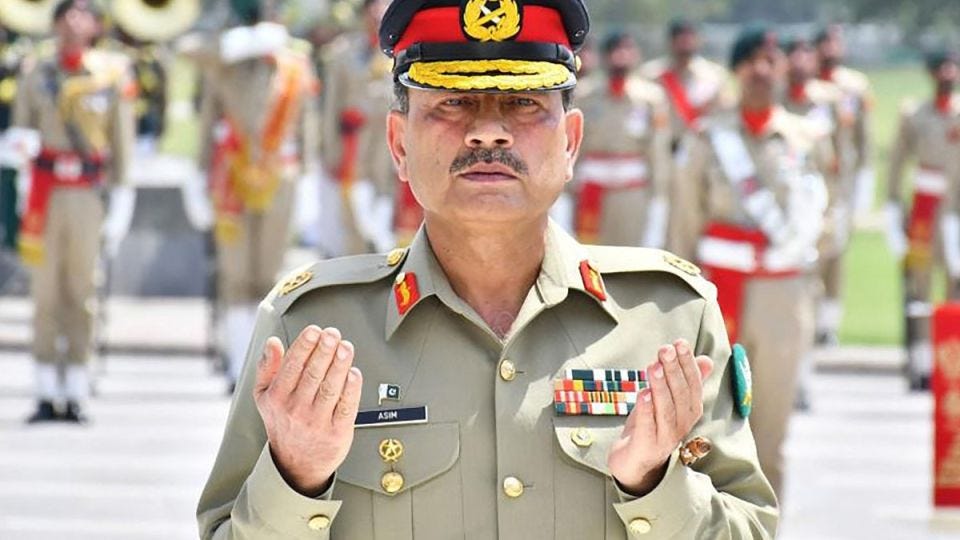
US President Donald Trump has become close to Pakistan’s army chief, Field Marshal Asim Munir (above), who is being given additional charge of the navy, air force and security forces. This seems to involve powers approaching those of a military dictator, albeit within a (army-dominated) parliamentary system. On November 11, Munir was also granted life-long legal immunity by the parliament.
Trump has entertained Munir twice at the White House and described him as “my favorite field marshal.” This coincided with Trump’s previous close relations with Modi being upset by the Indian prime minister rejecting his claims that he brokered the end of the April four-day battle between the two nuclear powers. India is never willing to accept outside interference in its relations with Pakistan and Modi has repeatedly rejected Trump’s claims.
Trump also imposed 50 percent tariffs on India after talks on a trade deal floundered, and India continued to be a major buyer of Russian oil despite the Ukraine war. Those issues have now eased, with Trump saying the oil purchases have declined and a trade deal is near.
Trump continues to call Modi a “great friend,” and relations between the two countries remain stable across a range of issues. But if he were to consider an attack on Pakistan, Modi would have to be wary of Trump’s reactions and be ready for the American president to be swayed by Munir.
NDA win expected
In Bihar, it always seemed likely that Modi’s NDA would win, but not by such a massive majority, routing the opposition including the Indian National Congress that won only five seats. The result is significantly due to the charisma and political experience of Nitish Kumar as well as the BJP’s pull.
That is despite what a visiting American commentator has written in the FT , maybe unfairly, about Kumar’s “more obvious infirmities than Biden.” An Indian Express columnist has written that “the NDA’s landslide win in Bihar was, above all, about Nitish Kumar and Biharis’ ‘sahanubhuti (sympathy)’ for their leader and what many said was ‘shraddha (respect)’ for his stewardship over the last two decades.”
The BJP’s success is the latest in a series of significant state assembly victories. Together with its NDA allies, it is in power in 21 of India’s 31 states and union territories. Modi has said his next target, early in 2026, is West Bengal where the BJP has previously failed to oust the state-based Trinamool Congress.
John Elliott is Asia Sentinel’s South Asa correspondent. He blogs at Riding the Elephant.
The article almost exclusively frames a major state election (Bihar) through the lens of Modi's personal authority and geopolitical security. While tensions with Pakistan and the impact of the Delhi bomb blast are critical, this approach significantly ignores fundamental socio-economic issues that drive voter behavior in states like Bihar.
The singular focus on Modi's charisma and terror risks missing the real issues on the ground such as pervasive unemployment, chronic poverty, and the vast, unaddressed migration crisis. In fact, I think JDU's Nitish Kumar should resign from his post, having miserably failed the people of Bihar, especially the down-and-out folk.
The overwhelming majority for the National Democratic Alliance (NDA) suggests a mandate far more complex than just nationalism; it likely reflects the success of targeted welfare schemes (like the Mahila Rozgar Yojna mentioned in the search results) or the failure of the opposition to counter the incumbent's governance narrative -- issues that are barely covered in the article.
Furthermore, by reducing the result to a strengthening of Modi's authority is deterministic. The article sidelines growing democratic integrity concerns, not just in Bihar but throughout India under Modi authoritarian streak and throughout the subcontinent, including in pakistan where a despotic military dictatorship is once more arising.
There are in the Bihar elections that the writer has plainly ignored, such the heavy centralization of campaign messaging, allegations of political opposition targeting, and the polarizing, often communal, rhetoric used during election campaigning — factors that shape the competitive field far more than cross-border terrorism. I suppose it is sexier to draw out the geopolitics than. to focus with a balance on other attendant issues that may have played a role in the elections.
The article risks presenting a narrow, top-down view of Indian politics that overlooks the complex, domestic realities of daily life and democratic health, especially the misery of Indian people decades after 78 years of independence from Britain.
Thank you, John, for this wonderful piece.