
By: Tita C. Valderama
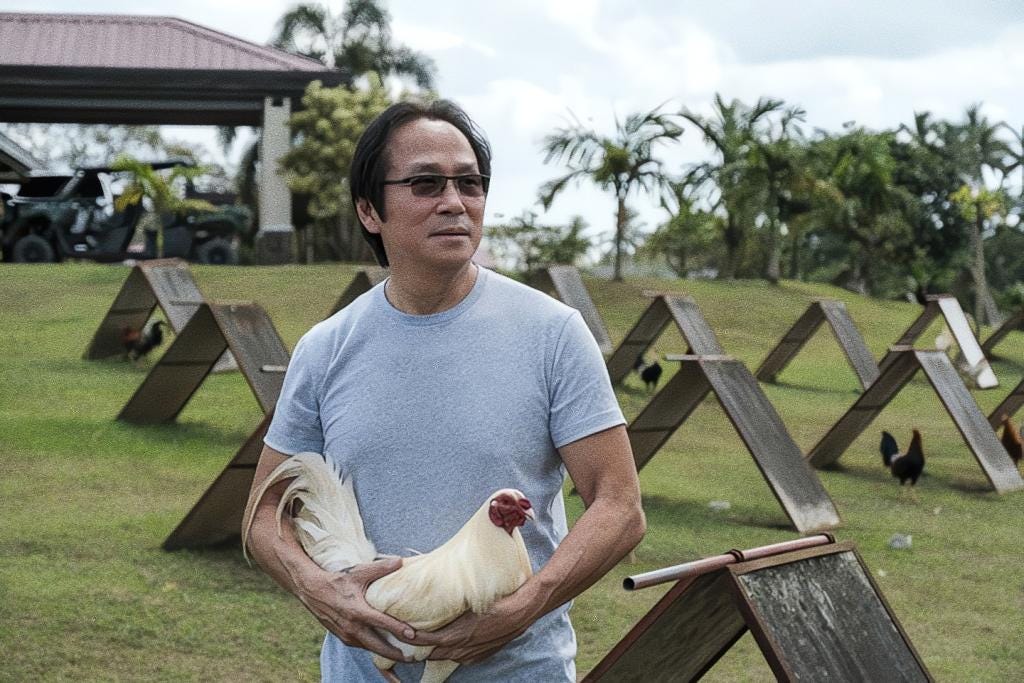
Billionaire Filipino-Chinese gambling tycoon Charlie Tiu Hay Sy “Atong” Ang, is on the run, reportedly with the help of former and active law enforcement officers from the same agencies now hunting him over the macabre disappearances of scores of cockfighting afficionados between 2021 and 2022. They reportedly ended up in sacks at the bottom of the scenic volcanic Lake Taal 70 km south of Manila, around which movie stars, tycoons and politicians have built luxurious homes.
The 68-year-old Ang, often seen in the company of actresses and beauty queens, may already have fled the country, witnesses say. He is considered one of the most powerful criminal figures in the country, with connections that go to the very top of the political, judicial and law enforcement hierarchies that have long kept him from justice. The victims’ families have urged authorities to further examine the possible involvement of a broader “Alpha Group,” which they believe provided him with political and logistical protection. Those named include semi-retired actress and Ang’s business partner Gretchen Barretto, retired Lt. Gen. Jonnel Estomo, Ang’s children who allegedly held administrative roles, and a mysterious figure believed to be a front used for certain transactions involving the group’s “share” of the profits.
This time, the deaths of scores of devotees of cockfighting, or sabong, mostly gamblers known as sabungeros, may be too big to ignore, although many are betting his connections mean he will never see the inside of a jail cell. It has been five months since charges were filed by relatives of the dead, an indication of how gingerly authorities are treating the case.
Regional courts issue warrants
Regional trial courts in Santa Cruz. Laguna and Lipa City, Batangas have finally issued warrants for Ang’s arrest for 10 counts of kidnapping with homicide and 16 counts of kidnapping and serious illegal detention—non-bailable offenses under Philippine law, meaning he will be detained indefinitely if captured.
Ang has skipped the country before, however. He was a key figure and co-accused in the 2001 impeachment trial for plunder and corruption of former President Joseph Estrada but fled to the United States, where he lived until he was arrested and extradited in 2006. The following year, he pleaded guilty to indirect bribery and escaped with just two years in prison.
For relatives of the missing sabungeros, the issuance of arrest warrants represents the first major step toward accountability. Earlier media reports placed the number of missing at 34. However, the cases filed against Ang and his 21 co-accused account for only 26 victims. His former chief security aide has cited as many as 108 disappearances of victims suspected of cheating in the online cockfighting, or e-sabong, events that he controlled.
Ang’s influence is deep-rooted. Before the warrants were issued, critics widely perceived him as a figure with significant political and law enforcement protection, owing to his longstanding presence in the gaming industry and past interactions with government agencies and officials. Media and political commentators often described him as “untouchable”—a belief reinforced by how long investigations into the disappearances dragged on without resolution.
‘e-sabong’ a goldmine
Ang built his fortune primarily through gaming, betting and cockfighting ventures, with online gambling on cockfighting, a Filipino national obsession, a particular goldmine. His net worth was estimated at around US$900 million as of 2024, with Lucky 8 Star Quest Inc. involved in massive, high-volume betting operations. During a 2022 Senate inquiry, Ang said his firm Pitmasters Live (Lucky 8 Star Quest), handled roughly ₱60 billion in monthly bets, generating about ₱3 billion (US$50 million) in gross monthly income with a 5 percent commission—yet remitted only a fraction in taxes, raising questions about regulation and oversight of the online gambling industry. At the peak of e-sabong, Ang’s network reportedly earned up to ₱1 billion a day, enabling him to retain top-tier legal defense and potentially sustain life as a fugitive.
To underscore the seriousness of the manhunt, the Department of the Interior and Local Government has offered a ₱10 million reward for information leading to Ang’s arrest, branding him the country’s “No. 1 most wanted” and a fugitive who “travels with no less than 20 bodyguards.”
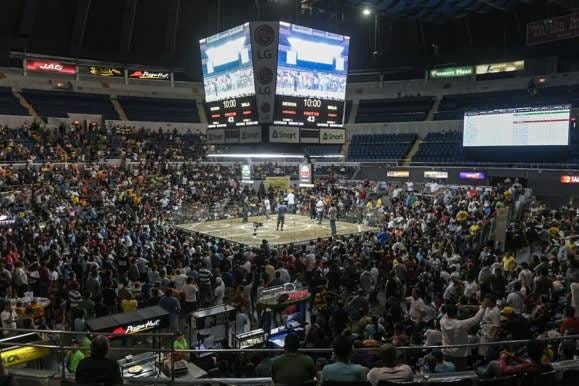
“He’s used to facing authority and solving problems with aggressiveness. So we consider him armed and dangerous,” Interior Secretary Jonvic Remulla said, warning Ang not to trust his own security detail, as “one of them may sell him out.”
The Philippine National Police have revoked permits for six firearms issued to Ang and tightened monitoring at airports and seaports nationwide. Tracker teams and intelligence units have been mobilized, while the Criminal Investigation and Detection Group has sought an Interpol red notice, potentially making Ang a wanted man in 196 countries.
Many already in custody
Authorities say all 21 of Ang’s co-accused—13 police officers and eight civilians—are already in custody. Only Ang remains at large. The National Police Commission has dismissed the police officers from service, stripping them of retirement benefits and barring them permanently from public office. Remulla has also confirmed that four retired police generals are under investigation for alleged links to Ang.
Despite raids on at least 10 properties linked to Ang, the National Bureau of Investigation has acknowledged difficulty locating him, though it maintains there is a “high chance” of arrest. Immigration records suggest Ang hasn’t left the Philippines, but whistleblower Julie Patidongan insists his former boss may have slipped the country in December before the warrants were issued. The Philippines’ porous thousands of islands, some not far from ther Malaysian state of Sabah, make escape relatively easy.
The Department of Justice says it has established evidence with a reasonable certainty of conviction, largely based on testimonies of former security aides Julie, Elakim, and Jose Patidongan, now under the state witness protection program. Julie Patidongan, Ang’s former security chief, claimed that sabungeros were abducted and that police personnel were bribed with significant monthly payouts, including claims of millions of pesos to a senior police officer and smaller amounts to others. In his most recent interview on radio last January 17, Patidongan revealed more gruesome details, alleging that victims were strangled with wire before being dumped in Taal Lake. Elakim, on the other hand, allegedly witnessed the killing of 10 missing cockfighting enthusiasts.
Ang’s lawyers have denied all allegations, asserting that the Patidongan brothers were unreliable and that the DOJ resolution was “flawed and unfair,” prompting motions for reconsideration. Lawyer Gabriel Villareal has challenged the integrity of the prosecution’s case and highlighted gaps in evidence. They are pursuing all available legal remedies, including motions for reconsideration and constitutional challenges to the arrest warrants, which could delay enforcement and trial proceedings. His legal team has dismissed the allegations as flawed and politically motivated.
Ang earlier filed countercharges against Patidongan and Alan Bantiles, another whistleblower, for alleged extortion, intimidation and slander, asserting the accusations of related to the missing sabungeros were motivated by financial disputes. The Mandaluyong City Prosecutor’s Office dismissed all five criminal complaints — robbery with violence or intimidation, grave threats, grave coercion, slander and cyber libel—in October for lack of factual details and insufficient evidence.
Significant obstacles remain, including possible evasion of arrest, vigorous legal defense, and challenges in securing reliable evidence. Combined with the historical difficulty of prosecuting powerful figures in the Philippines, these factors could mean that justice for the missing sabungeros’ families will require persistence, transparency and sustained institutional commitment.
Whistleblowers have alleged that Ang’s camp offered as much as ₱300 million (roughly US$5 million) to recant testimonies, and there are ongoing concerns regarding his ability to influence local courts.
Once captured, Ang faces the most severe penalties under Philippine law: multiple life sentences. Authorities have begun moving to revoke licenses and freeze assets linked to alleged crimes. With or without his arrest, DOJ officials say trial proceedings will move forward for those already in custody. Preliminary hearings for those already in custody are expected to begin within the first week of February.
Whether Ang’s apparent untouchability proves real or temporary will test the Philippine justice system. His case has become a litmus test of the country’s capacity to enforce the rule of law against powerful figures—and a potential watershed moment for accountability if justice ultimately prevails.