

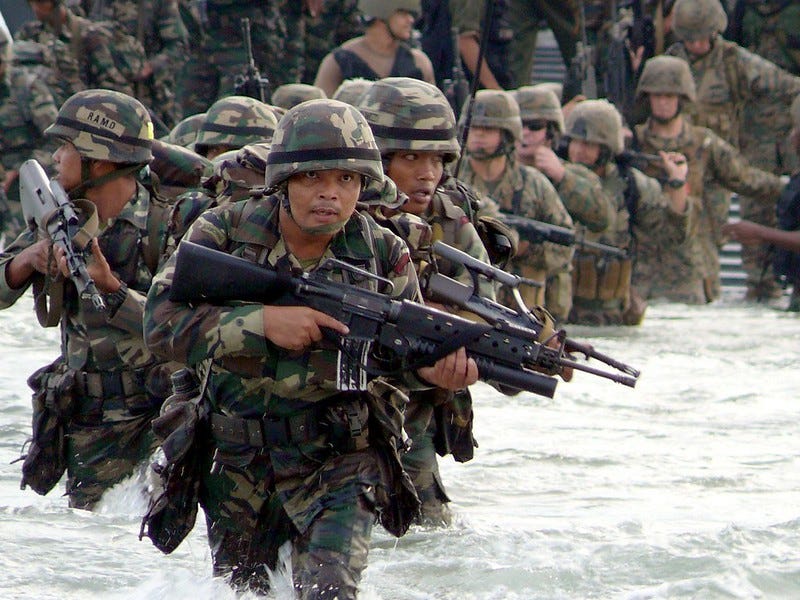
The Malaysian government, which has been riddled with some of Asia’s biggest scandals including the multibillion dollar 1MDB issue, has been saddled with a new one since December, a massive affair dealing with military procurement projects over the period 2023 to 2025 as well as what has become known as the armed forces “ye-ye” culture – booze and hookers in officers’ messes, supposedly outlawed nearly three decades ago in a Malay Muslim culture. The Royal Malaysian Air Force has confirmed that 20 officers were directly involved and will face severe disciplinary action.
The hijinks have infuriated Malaysia’s king, Sultan Ibrahim Iskandar, particularly those related to procurement corruption and the purchase of old or unsuitable equipment. He has issued stern warnings and forced the cancellation of some deals, calling the practices “nonsensical” and a risk to national sovereignty. He and his family have long been involved in business including bidding for government contracts and projects. The King’s classmate and long-time friend, Khaled Noordin, is Defense Minister.
That equation has set tongues wagging in Kuala Lumpur’s chattering classes and has raised speculation that there is more to the exposure of the top army brass than meets the eye. The king’s chief adviser on defense matters, Abdul Razak Baginda, is a very close friend and associate of now-jailed former prime minister and defense minister Nazib Razak, who steered €140 million to the United Malays National Organization as “commission” on USS$1 billion of French-made Scorpene submarines which Malaysia bought in the 1990s but which were impractical in Malaysia’s shallow coastal waters and were later disposed of.
As Asia Sentinel reported in a prize-winning 2012 series of stories, the deal caused a scandal when an attractive Mongolian party girl and translator, Altantuya Shaariibuu, who had an affair with Baginda, was murdered, her body blown to pieces by Najib’s bodyguards using military C4 explosives.
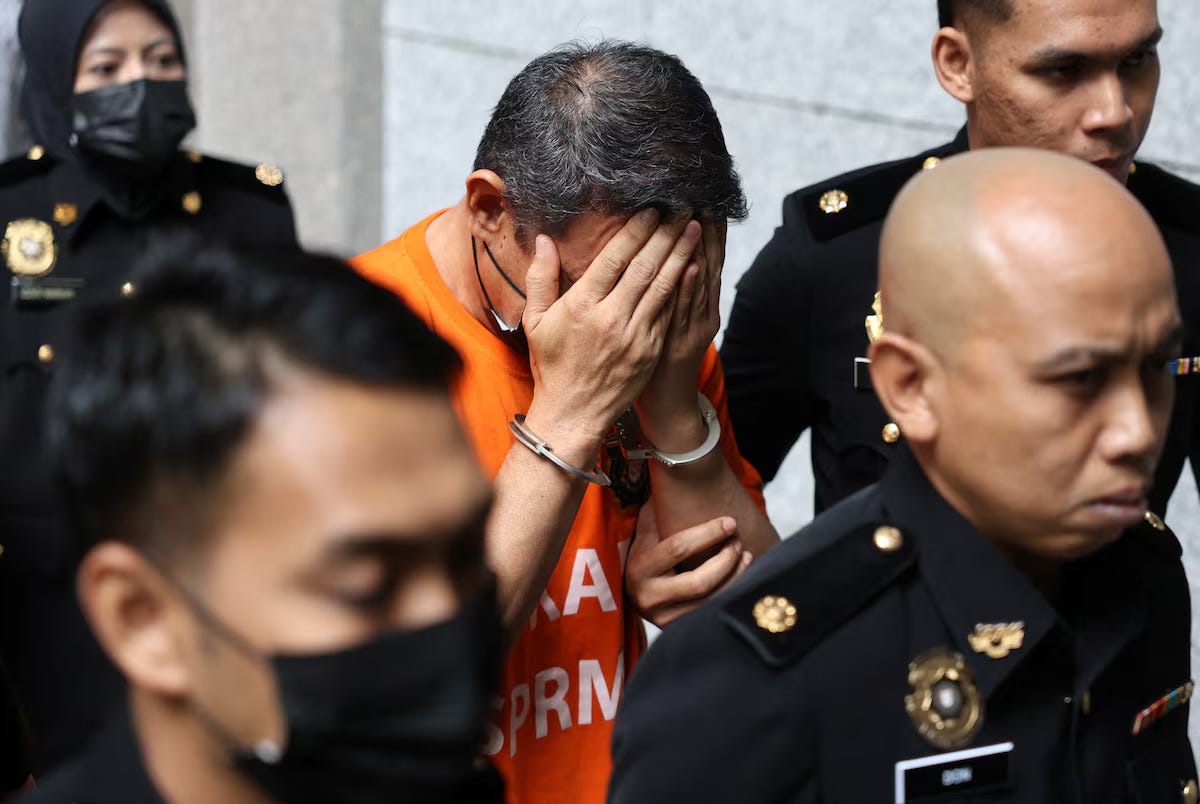
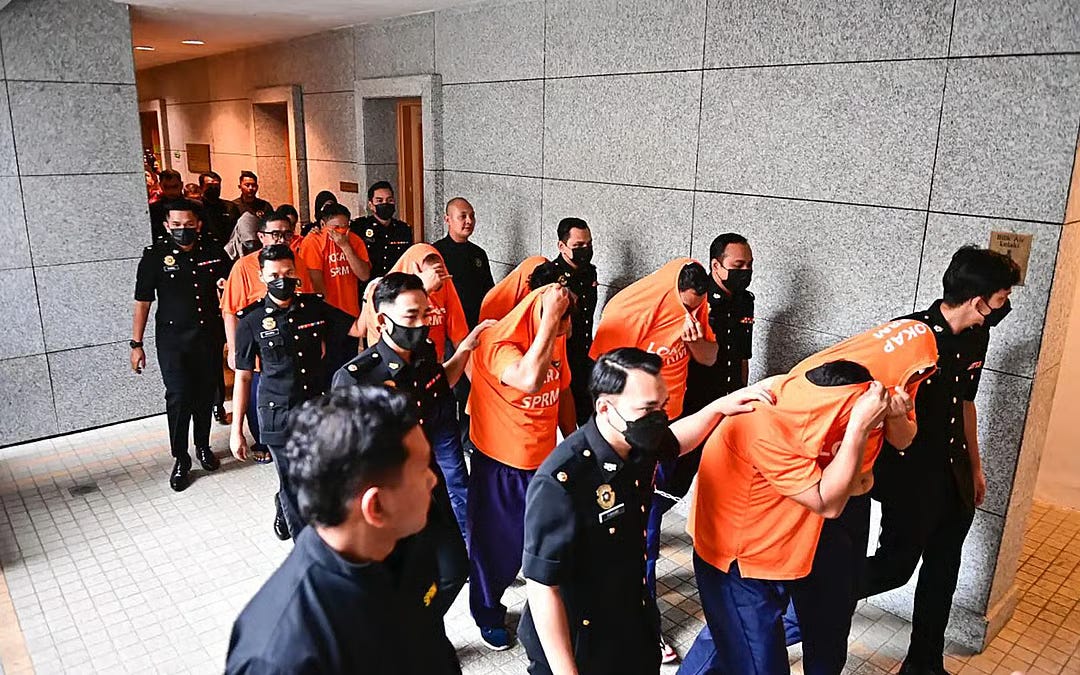
So far, the Army Chief, General Tan Sri Muhammad Hafizuddeain Jantan, has been forced into early retirement. His predecessor, the former army chief, and his two wives have been arrested by the Malaysian Anti-Corruption Commission in connection with an alleged cartel that was rigging military procurement tenders. The investigation is said to center on a suspected 26-company cartel that allegedly bribed senior officers to secure high-value supply and maintenance contracts.
The MACC has raided firms, frozen bank accounts and seized tens of millions of ringgit in cash and luxury items including Rolex watches, likely only the tip of the iceberg. The probe is said to cover 158 projects, each valued above RM500,000, and more than 4,500 smaller projects.
Another unnamed high-ranking officer was reportedly detained earlier this week. MACC chief Azam Baki, who told reporters, “Based on the rank involved, this issue is indeed big,” is not ruling out the possibility that more officers would be identified and called to assist in the investigation as it continues.
But the fact is that astonishingly deep corruption has dogged the Malaysian military and its parent defense ministry for decades – much of it producing gravy for the now out-of-power Barisan Nasional coalition – as defense analyst BA Hamzah reported in Asia Sentinel in 2023, contributing to an armed forces establishment that is “among the region’s weakest, riddled with corruption, poor planning and interference by political leaders in procurement, no longer a potent force even in managing low-level intensity conflict.”
White Paper apparently ignored
In 2020, the Defense Ministry produced a 104-page White Paper outlining a multi-pronged approach focused on improving governance, modernizing capabilities and ensuring the welfare of its personnel. Key areas included sweeping reforms aimed at eradicating corruption and rebuilding public trust, calling on Parliament to establish special select committees to scrutinize large-scale arms purchases and making competitive tendering mandatory. It proposed full budgetary transparency and independent external audits to prevent misappropriation of funds and promoted strong protection for internal whistleblowers. The ministry might as well have put the paper on a little boat and sailed it off the end of the earth.
Just five months ago, five intelligence officers of the Malaysian Defense Intelligence Organization, its elite secret security safeguard, were arrested along with several others in a smuggling operation dubbed by one observer as “kind of a Walmart of contraband” that had been operating for as long as five years, selling operational data and in effect telling smugglers where the military wasn’t to allow them to land safely. Arrested was Colonel Muhammad Haris Asmuni, the director of the Counter-Intelligence Security Detachment along with his comrades after allegedly amassing as much as RM3 million (US$714,000) in bribes.
The country is once again actively trying to elevate armed forces readiness by focusing on high-tech assets and strategic needs, but it faces significant hurdles from past underinvestment and purchases of substandard kit. While strong in specific areas like peacekeeping and jungle warfare, overall capability and modernization remain a work in progress. Past attempts at modernization appear to have regularly been regarded as an opportunity for ministers and military leaders to enrich themselves.
Parade of disastrous contracts
In August 2022, for instance, it was discovered that after the Royal Navy had signed RM9 billion contract with Boustead Naval Shipyard for six littoral combat ships, none were ever delivered despite RM6 billion in payments to Boustead. The scandal highlighted significant mismanagement, a lack of oversight and the fact that the Navy’s preferred design was changed without their knowledge.
A former Navy chief was charged with criminal breach of trust in connection with the case. On January 12, Zamrose Zain, another ex-army chief, suddenly quit as Boustead director “to pursue other interests.” That was after allegations surfaced on social media that he was involved in contracts when he headed the army.
That followed a 2015 contract to purchase six MD530G light scout attack helicopters manufactured by MD Helicopters LLC, an American aerospace manufacturer based in Mesa, Arizona, paid for with RM112.65 million, 35 percent of the RM300 million total. The helicopters were never delivered, prompting Mindef to file a complaint with the MACC in 2019, suspecting mismanagement and corruption.
That in turn followed the purchase of 88 decommissioned Vietnam War era US Navy A-4 Skyhawk jets in the 1980s.Only 40 were upgraded and entered service with the Royal Malaysian Air Force (RMAF), with the rest intended for spares. The Skyhawks were largely unused, leading to operational issues, a high accident rate and a notorious reputation. The price ballooned from an initial US$1 million per jet to a total expenditure of more than US$320 million, more than four times the original estimate. The project was widely criticized as a “fiasco.”
Razak’s kleptocratic rein
Without going into the considerable depredations of the now-jailed former Prime Minister Najib Razak during his kleptocratic tour as defense minister from 1990 to 1995, other scandals go all the way back to 1977, when Auditor General Ahmad Noordin identified significant procurement abuses including noodles for military rations at a price of 65 Malaysian cents (US$.16¢) per plain grey packet while the public were paying 26 sen (US$0.6¢), a scandal that caught public’s imagination to the point it is being talked about almost five decades later.
There was the purchase of Belgian SIBMAS wheeled armored vehicles, supposedly capable of being transported by air to East Malaysia, which turned out to be incapable of fitting in Malaysia’s aircraft unless the tires were deflated. There was the purchase of 26 British Alvis Scorpion light tanks, which normally carried standard rapid-firing British 76mm guns. However, alleged bribes paid for the switch to 90mm Cockerill Mk3 M-A1 guns, which were so big inside the turret that they couldn’t be reloaded without elevating them to the sky, meaning the rapid-fire function was lost. The petrol engine in the tanks were also switched by procurement officials to diesel with lower horsepower, meaning that instead of a fast, rapid-fire scout unit, the armed forces ended up with a sluggish, vulnerable, slow-firing target.
Neighbors modernizing
In the meantime, Indonesia under Prabowo Subianto, a former general, is actively modernizing its armed forces through major acquisitions including French Rafale jets, Turkish Kaan fighters and French submarines, alongside joint projects like the South Korean KF-21 Boramae twin-engine fighter, aiming to bolster defenses against possible regional threats. The push involves upgrading air, naval, and ground capabilities, integrating new technology and balancing domestic industry with international purchases, all while navigating geopolitical complexities and budget constraints.
Singapore, Malaysia’s other potential foe, possesses the region’s most formidable military and is bolstering it with high-tech platforms like F-35 jets, Invincible-class submarines, multi- role combat vessels (MRCVs) and next-generation artillery, shifting from quantity to quality to maintain a significant military edge, focusing on networked warfare, cyber defense and smart technologies across its Air, Land, and Sea forces.
Fortunately, Malaysia’s borders have been largely secure since Konfrontasi, the 1963-1966 near war that stemmed from Indonesia’s opposition to the creation of Malaysia from the Federation of Malaya. Singapore, a largely Chinese bastion surrounded by Malay Muslim nations, always has been pugnacious but fortunately not bellicose. The Malaysian scandals, which have assumed comic opera proportions, haven’t tempted neighbors to attack. As one source commented, the army wouldn’t be able to get out of its own tracks.
Hardly surprising, given Malaysia's reputation for ceaseless corruption, much of it long sponsored through pro-Malay programs like the New Economic Policy. All the NEP achieved was to institutionalize corruption, making it supra-legal for decades when you could buy "justice". Just because najib razak has had his corruption and money-laundering sentences and fines increased does not suggest Malaysia's judiciary is overnight independent (of political purchase) -- not when the police is totally corrupt and racist, the MACC is totally corrupt and racist, the MCMC is totally corrupt and racist, and Anwar's handpicked attorney general is a clown who deserves a kick up his ass for being a durian head moron. Any wonder why Anwar picked him for AG, Anwar's lapdog? Here's a bet: 50 years from now, 2075, you'd still be talking about the mania of corruption in Malaysia, especially among the so-called elite Malays and Malay politicians from all parties -- the ones who talk about "tuhan" but do the complete opposite. How many times have we been here? I'm not excusing the Chinese and Indians from being corrupt, but Malay corruption takes the cake every time.
Very unfortunately for the normal honest citizens of Malaysia, corruption is deeply embedded in the psyche of powerful Malaysian officials & others in authority. It is The Way of life for them! Therefore extremely unfortunately, the regular law-abiding people & honest hard workers will Never Ever be able to get rid of it! Thank God I left the country years ago, but I despair that nothing's changed. What to do??