
By: Toh Han Shih
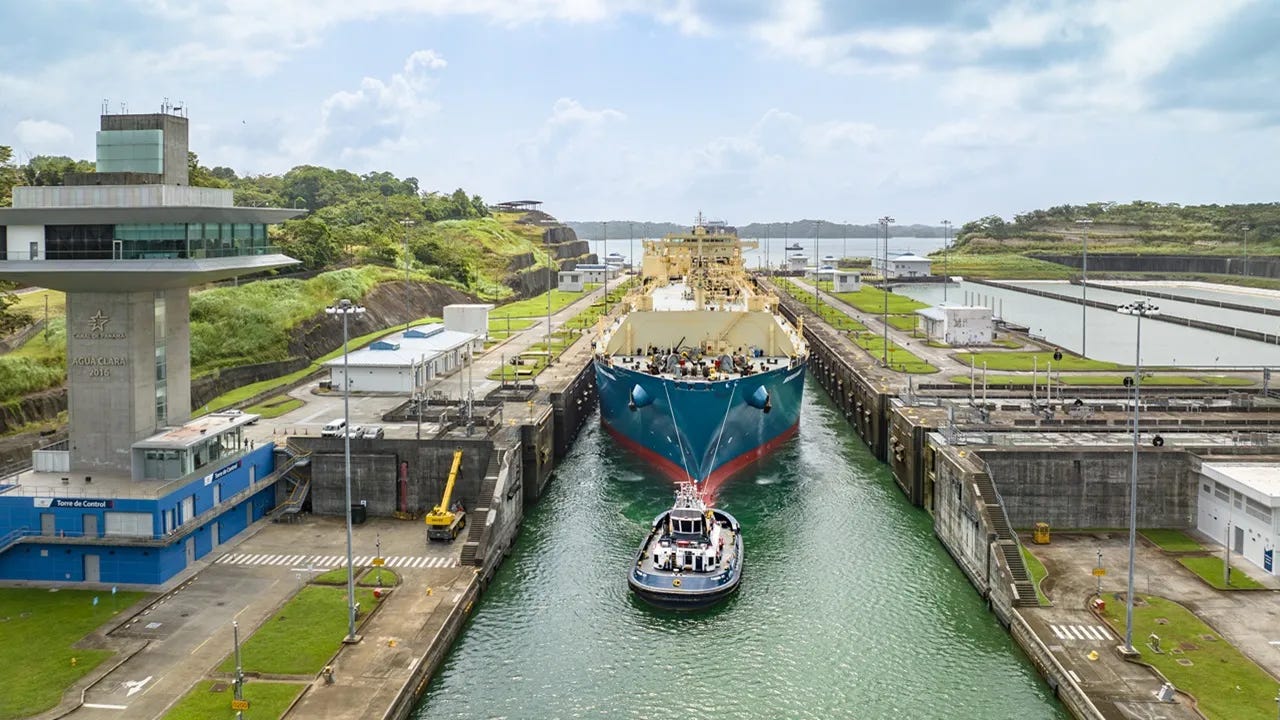
The abduction of Venezuelan President Nicolas Maduro on the orders of US President Donald Trump likely means China has no ability to prevent US dominance of the Panama Canal, which Beijing was attempting to frustrate since last June by blocking the sale of two canal ports and dozens of others around the world by CK Hutchison Holdings, the conglomerate controlled by Hong Kong’s richest tycoon Li Ka-shing, to a conglomerate led by the US-based BlackRock, Inc, the world’s largest asset manager.
In a move smacking of imperialism that shocked world capitals, Trump announced the US would take over the Latin American country’s oil sector, which would give the US an advantage over China in oil and in the dollar over the Chinese currency. China was taking 80 percent of Venezuelan crude, some 746,000 bpd, often arriving via Malaysia’s ship-to-ship transshipment hubs or through rebranding practices designed to hide their origin, according to Reuters.
In a combined land, sea, and air operation on the night of January 3, US special forces broke into the compound in the Venezuelan capital Caracas where Maduro and his wife Cilia Flores slept, seized them, then flew them to a New York detention center where they face charges of narco-terrorism. The raid occurred only hours after a delegation of Chinese officials met Maduro in Caracas, where Maduro hailed the “unbreakable bond” between China and his nation.
The US coup in Caracas underscores China’s impotence in the face of US military might in the Western Hemisphere and likely signifies Beijing’s inability to prevent the US from asserting dominance in the strategic Panama Canal, a professed Trump goal. In a striking parallel, US forces arrested Panamanian President Manuel Noriega on January 3, 1990, and flew him to the US where he was convicted and imprisoned on drug trafficking, racketeering, and money-laundering charges. Maduro likely faces a similar fate.
Beijing’s fear of losing access to the canal prompted it to block the sale by Hutchison Holdings last June, as Asia Sentinel reported. Beijing had hoped to influence Hutchison’s port deal with its December 31 appointment of Zhang Yong as deputy director of the Liaison Office, China’s representative office in Hong Kong. Zhang is a former executive vice president of China Cosco Shipping Corporation, the state-owned port and shipping behemoth. Cosco has been insisting on a majority stake in the ports to be sold by Hutchison, according to media reports. However, Cosco’s hopes of gaining significant control of the Panama Canal are likely to come to nothing against Trump’s assertion of the Monroe Doctrine.
“The Monroe Doctrine is a big deal, but we’ve superseded it by a real lot. They now call it the Donroe Doctrine…Under our new National Security Strategy, American dominance in the Western Hemisphere will never be questioned again,” Trump said at a press conference on January 3. The Monroe Doctrine, formulated by US President James Monroe in 1823, opposed the intervention in the political affairs of the Western Hemisphere by external powers.
“Trump and his administration have often said they want to revive the Monroe Doctrine, claiming the United States has the right to dominate the affairs of the hemisphere. They have spoken openly about controlling Venezuela’s oil reserves, the largest in the world. This is rank imperialism. It recalls the darkest chapters of US interventions in Latin America, which have left a terrible legacy,” US Democratic Senator Bernie Sanders tweeted on January 4.
Venezuela has approximately 303 billion barrels of crude oil, accounting for about 20 percent of the world’s oil resources, according to the US Energy Information Administration.
Trump pips China on oil and dollar supremacy
In a move similar to past US roughshod dominance of Latin America and the Caribbean, the US will “run” Venezuela until a “safe, proper and judicious transition” can be ensured, Trump said at the press conference. We’re going to have our very large United States oil companies, the biggest anywhere in the world, go in, spend billions of dollars, fix the badly broken infrastructure, the oil infrastructure, and start making money for the country,” Trump added.
During the press conference, Trump said Venezuelan oil would be sold to other countries including China, at larger amounts than under Maduro. China is Venezuela’s main oil market. From 2023 through 2025, China often accounted for between 55 percent and 80 percent of Venezuelan oil exports, according to Reuters. In September 2017, Venezuela stopped using US dollars in its oil trade in response to US sanctions and started quoting its oil prices in Chinese yuan. But given Trump’s plan to have US oil companies manage Venezuela’s oil sector, the US will probably compel Venezuela to export oil in US dollars again.
“US control over Venezuela’s massive, proven oil reserves reinforces the power of the US petrodollar. That is the most significant victory for US monetary power in decades. China’s monetary power has been checkmated,” an ex-banker told Asia Sentinel. “The US has reasserted the US petrodollar and thus strengthened the US reserve currency status.”
Trump’s National Security Strategy seeks to maintain the US dollar as the world’s reserve currency, Asia Sentinel reported on December 8, 2025.
“The prevailing narrative in policy circles and on Wall Street is that the era of King Dollar is ending, that the petrodollar is in terminal decline, BRICS currency schemes are ascendant, and US power is slowly being priced out of the system,” tweeted James E. Thorne, chief market strategist of Wellington-Altus Private Wealth, a US wealth management firm, on January 4. “That story is seductive, but wrong. The Trump Doctrine is not presiding over the funeral of the dollar; it is actively re‑engineering the foundations of dollar primacy, especially across energy and strategic commodities.”
BRICS is a China-led group of 10 countries comprising Brazil, Russia, India, China, South Africa, Egypt, Ethiopia, Indonesia, Iran, and the United Arab Emirates.
“Control over Venezuela’s energy flows does not just add another barrel to global supply; it hard‑wires yet another major producer back into a dollar‑centric energy and sanctions regime,” Thorne added.
Toh Han Shih is a Singaporean writer in Hong Kong and a regular contributor to Asia Sentinel.
Great reporting and analysis, thank you!