
'Ketuanan Melayu' will Erode Malaysia’s Meritocracy
A Malaysian academician speaks out against his country’s condition
By: B A Hamzah
Once a bastion of political and economic stability, Malaysia has become the sick man of Southeast Asia. The country was a tiger, the fastest growing economy in the region in the late 1980s. In 1974, it was ahead of Singapore and South Korea in per capita GNP and technology development. The ringgit was at par with Singapore’s dollar, interchangeable dollar for dollar. Today, no batik trader in Arab Street, Singapore’s Itaewon for Malaysian shoppers, for example, wants to keep any ringgit, which has depreciated in value against the Singdollar by more than 300 percent since the 1980s.
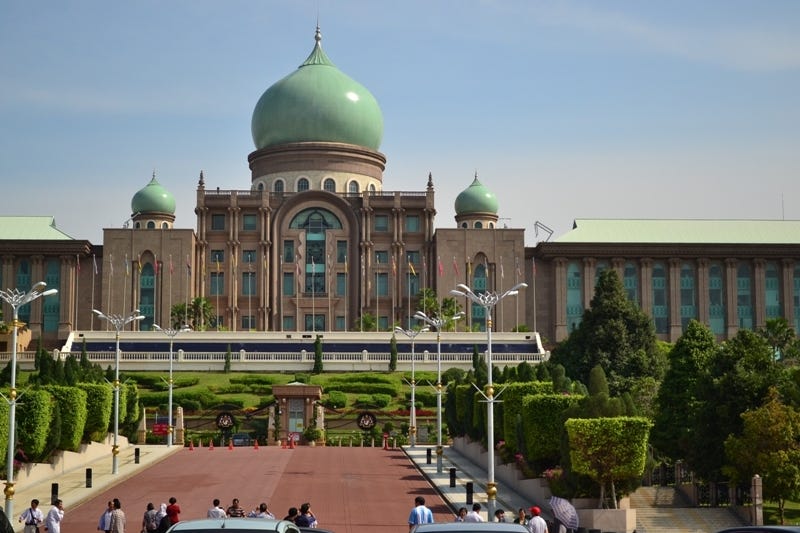
Besides a weak currency reflecting macroeconomic disconnects, many things have gone wrong with the socio-cultural and political fabric. Critics often cite widespread unhappiness over endemic corruption among political leaders and bureaucrats in Putrajaya, the country’s administrative capital (above), weak institutions like the judiciary and the parliament, increasing incidence of poverty among the hard-core poor, inequitable distribution of wealth, and concentration of national wealth in the hands of a few families and corporate bodies. Indeed, 10 percent of the population own 80 percent of the national wealth.
Mistrust among the races is due mainly to unequal access to economic resources and political power, and all the above grouses have turned the country upside down. Racial tensions continue to simmer underneath a thin artificial layer of peaceful coexistence between the communities. Fixing the racial divide and eradicating corrupt practices are key to future well-being…