
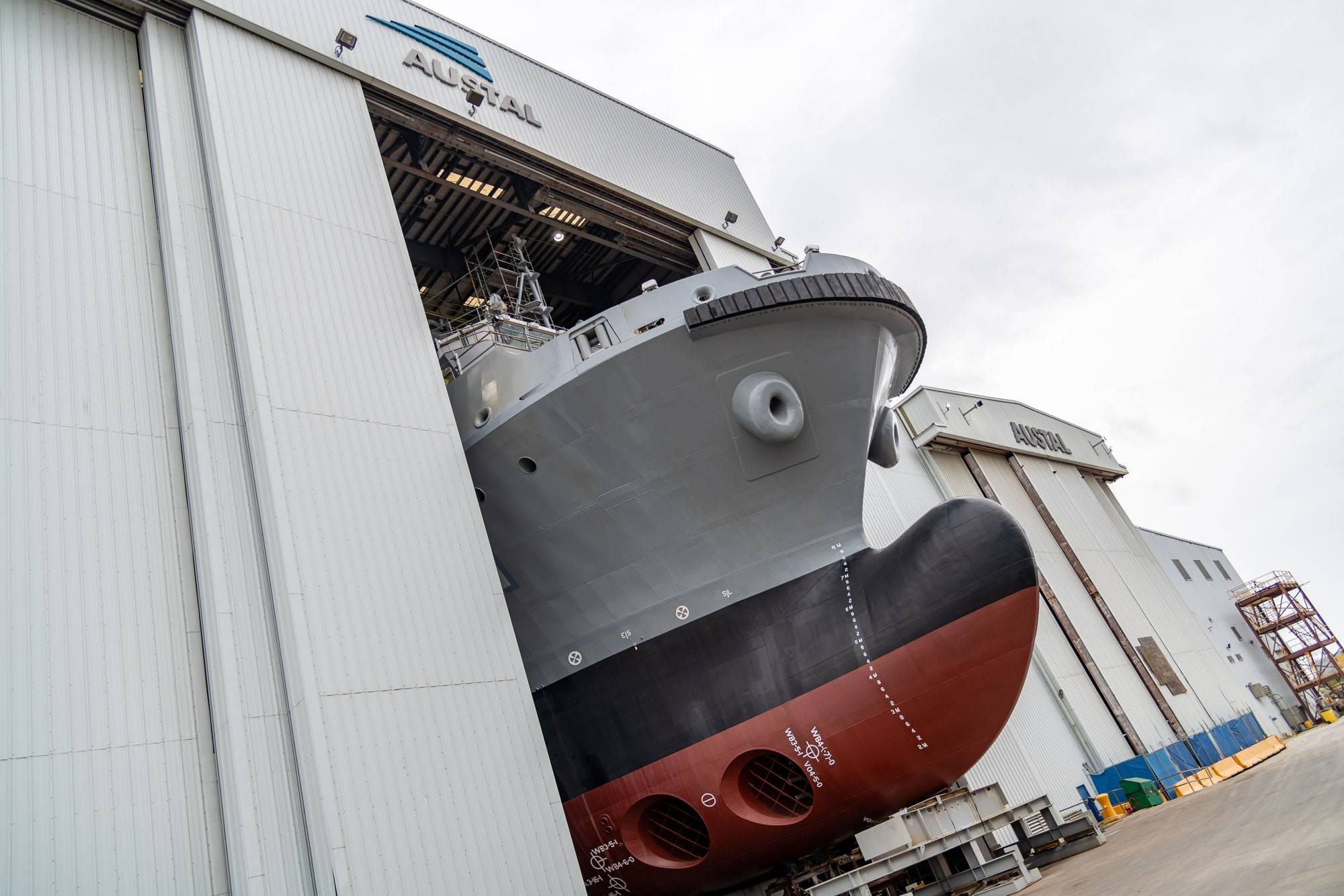
Reports last week that US President Donald Trump is considering asking Congress for a waiver to the Merchant Marine Act of 1920, more commonly known as the Jones Act mandating that cargo shipped between two US ports must be carried by ships built and primarily owned and staffed by Americans, is recognition that US shipbuilding is mostly dead and gone and has been for decades.
When Trump returned to office in his second term, he launched a sweeping effort to revitalize the US maritime industry with an executive order called “Restoring America’s Maritime Dominance” aimed at reversing decades of decline. He was forced to back off almost immediately from an ill-considered proposal to levy fees on China-built ships up to US$1.5 million per port call in an effort to kill global demand for Chinese cargo ships, which caused a massive backup at US ports as exporters sought alternatives to transport goods overseas when Chinese-built ships stopped calling.
In February this year, the administration released a strategic roadmap called the Maritime Action Plan whose key components include “maritime prosperity zones” to incentivize private and allied investment in domestic shipyards, a Maritime Security Trust Fund and tax-deferred accounts that allow shipyards to reinvest earnings into infrastructure and equipment and funds to upgrade dry docks, cranes, and digital shipyard infrastructure and other features.
The president’s decision to go to war with Iran, however, has forced a shift of resources toward immediate military needs and away from what had been a plan to build 250 new merchant vessels over 10 years to restore maritime dominance. Although the waiver is being framed as a national defense necessity to secure fuel supplies in the US domestic market during a time of war, in fact the conflict is accelerating long-term arguments for the permanent repeal or major reform of the century-old protectionist act.
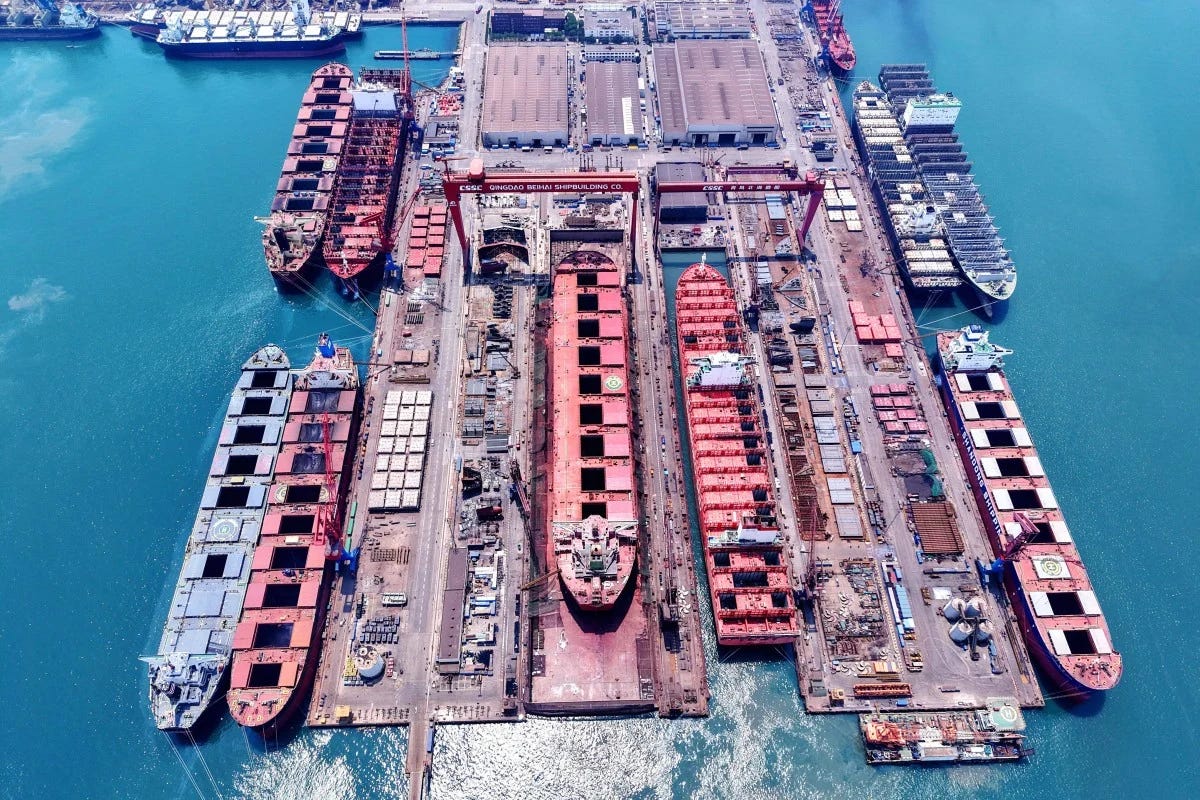
As Asia Sentinel reported last April, the US had a minuscule 0.1 percent of global shipbuilding capacity in contrast to China’s 53.3 percent. US Navy intelligence data from 2023 showed Chinese shipyards as being more than 200 times more capable of building surface warships and submarines than American shipyards.
That has gone a long way to enable the massive naval buildup by the People’s Liberation Army-Navy (PLAN) in overtaking the US Navy to become the world’s largest in terms of hull numbers in that same year. At the time, the US-based Geiger Investments described the destruction of America’s industrial base as a “massive national security threat.”
As things currently stand, a key issue is how to incentivize increased overall demand in a more evenly distributed manner across all current and future US commercial shipyards. The plan now seems to be to let Asians do it on US soil, with domestic shipyards partnering with the Koreans and Japanese.
As a May 6, 2025 report by the Santa Monica-based think tank Rand Corporation noted, “The United States cannot compete with China alone. To rebuild the shipyard industrial base, as well as to make US vessels commercially competitive in the global market in the long run, the United States must turn to allies who already possess the industrial capacity, expertise, and motivation to help close the gap.”
Last week, the South Korean legislature passed a bill to invest US$350 billion in strategic industries in the US including shipbuilding among other industries, to partner to revitalize the industry by sharing digital technology, enhancing efficiency and potentially assisting with nuclear-powered submarine construction, a useful strategy in leveraging cooperation as a useful bargaining chip in trade negotiations now nullified by the Supreme Court’s February 20 decision outlawing Trump’s sweeping tariffs. South Korea’s Hanwha Ocean has already engaged in US Navy Maintenance, Repair, and Overhaul (MRO) projects. Reforms and waivers such as those related to the Jones Act are under consideration to facilitate cooperation.
In 1943, America’s once-mighty shipbuilding industry was producing three Liberty ships a day. That has all but vanished since the 1980s. According to Geiger Investments, one shipyard in China made more commercial ships in 2024 than the total number the US has produced since World War II. Optimism that South Korea and Japan, which rank second and third globally behind China in shipbuilding, can restore US primacy needs to be tempered with realistic assessments of the state of the shipbuilding industries of the two to meet US demands for more non-Chinese built commercial ships or even build US-ordered commercial and naval vessels.
According to a senior Japanese executive at NYK Lines, Japanese shipbuilding is maxed out in terms of capacity up to 2028 at the earliest, and South Korean shipbuilding is in a bad financial spot similar to the US, owing to the rise of Chinese shipbuilding.
As Asia Sentinel noted in its 2025 report, according to some planners and naval officers, there is a strong case to be made for the GOCO (Government Owned, Contractor Operated) model to be more widely adopted to rebuild US shipbuilding capacity. This is a middle-ground framework whereby the government would own the physical infrastructure and assets but contracts with private companies to use them to fulfill production orders from the government. US shipbuilding infrastructure and assets would be insulated from market volatility or contractor business failures, both of which have been key factors in the precipitous four-decade decline of US shipbuilding in the face of the rise of Asian shipbuilding in countries like South Korea, Japan, and now China.
GOCO would be the closest the US government can get to emulating China’s fully state-owned shipbuilding industry, allowing for some degree of free market competition for shipbuilding companies to earn their own keep and turn a profit from commercial shipbuilding, made easier by these companies having fewer liabilities and assets on their books to finance and upkeep. In the same way as demonstrated by China’s shipbuilding industry, with more experience gained from building commercial ships, US shipbuilders would then be better placed to apply them in a dual-use scenario to build naval ships.
However, shipbuilding is something that demands long time durations with heavy sustained capital investments, both conditions being dependent on stable constant political will from those in power. When a lifetime in politics can be defined in as short a time span as a week, it remains to be seen if the current bipartisanship on revitalizing US shipbuilding and rebuilding the US Navy’s battle fleet will survive the next three years of the second Trump presidency and his reshaping of the global economic order.