
By: Ainur Rohmah

As global tensions ripple through energy markets and financial systems, President Prabowo Subianto’s flagship child nutrition program is coming under intensifying scrutiny at home. What began as an ambitious pledge has evolved into a flashpoint in a broader debate about fiscal discipline, economic resilience and the limits of state spending in uncertain times.
In recent weeks, economists, civil society groups and even segments of the public have called on the government to temporarily suspend – or even reconsider the Free Nutritious Meals Program, known by its Indonesian acronym MBG. Their concerns are rooted not only in the program’s massive cost, but also in a confluence of global and domestic pressures that threaten to test Southeast Asia’s largest economy over the next two years.
The sense of urgency has been sharpened by geopolitical instability, particularly the ongoing conflict involving Iran, the United States and Israel, which has shown little sign of abating. The war has already begun to push up global oil prices and disrupt energy markets, raising fears of imported inflation in countries like Indonesia that remain vulnerable to commodity shocks.
“The conflict in Iran is creating inflationary pressure across the board — from fuel and electricity to food and housing loans,” said Bhima Yudhistira, executive director of the Center of Economic and Law Studies (Celios), a Jakarta-based think tank. “So far, there has been no comprehensive policy response, even as the effects are being felt within days by lower- and middle-income households.”
Gathering Economic Headwinds
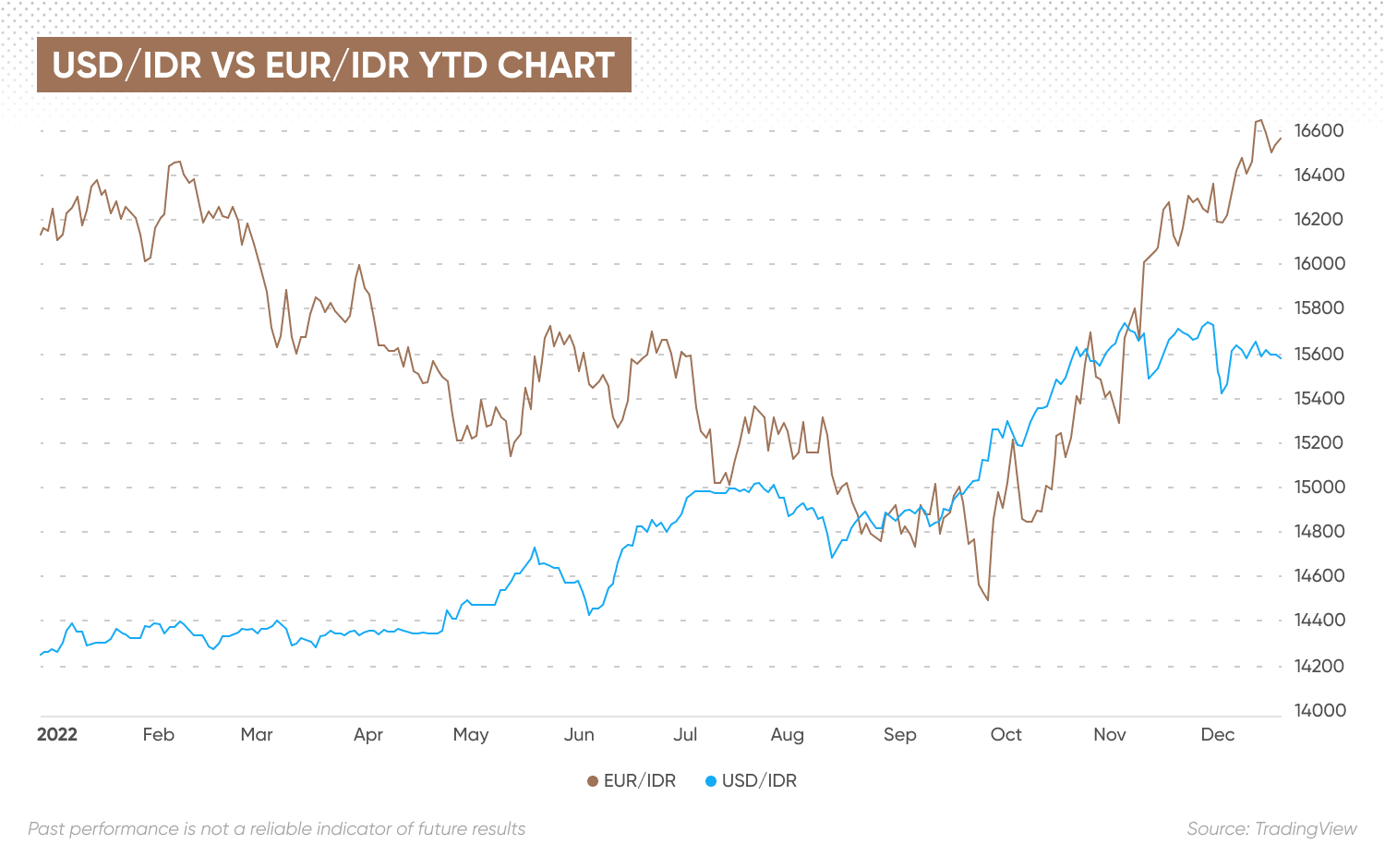
The warning signs for Indonesia’s economy have been mounting. The rupiah briefly weakened past the psychologically significant threshold of 17,000 per US dollar earlier this month before settling slightly stronger, a development that rekindled concerns about financial stability. Currency depreciation not only reflects market volatility but also risks feeding into inflation, eroding purchasing power and increasing the cost of servicing foreign-denominated debt.
At the same time, Indonesia’s benchmark stock index has endured a punishing start to the year, falling sharply and ranking among the worst-performing major indices globally, according to data compiled by Bloomberg. The sell-off underscores waning investor confidence at a time when emerging markets are already under pressure from higher global interest rates and geopolitical uncertainty.
Credit rating agencies have also begun to signal caution. Fitch Ratings recently revised Indonesia’s sovereign outlook from stable to negative, citing concerns about fiscal pressures, the Danantara sovereign investment fund and the government’s long-term debt trajectory. Although the country retains its investment-grade rating, the shift serves as a warning that investor sentiment could deteriorate if fiscal risks are not contained.
Indonesia’s debt metrics are also drawing closer scrutiny. The debt-to-GDP ratio is projected to approach 41 percent by 2026, while the debt service ratio — the share of government revenue used to pay interest and principal — has climbed to around 47 percent. In practical terms, nearly half of the state’s income is being absorbed by debt obligations, leaving less room for discretionary spending.
As debt servicing costs rise, fiscal space narrows. Governments in such conditions often face difficult trade-offs, balancing social spending against the need to maintain investor confidence. In extreme cases, economists warn, countries can fall into a “debt trap,” relying on new borrowing to service existing liabilities — a cycle that can erode credibility and drive up borrowing costs over time.
A Costly Flagship Program
It is within this tightening fiscal landscape that the Free Nutritious Meals Program has come under renewed examination. Touted as a long-term investment in human capital, the initiative aims to provide daily meals to tens of millions of Indonesians, particularly schoolchildren. But the scale of the program is staggering. Estimates suggest that over an eight-year period, the initiative could cost as much as Rp4,000 trillion (US$235.3 billion), a figure that has raised alarm among fiscal analysts.
The Center of Economic and Law Studies (Celios) think tank warned as early as 2024 that fully implementing the program could push Indonesia’s budget deficit beyond the legally mandated ceiling of 3 percent of GDP, potentially reaching 3.34 percent even under baseline conditions. With oil prices rising and economic risks intensifying in 2026, the deficit could widen further. Expanding the deficit ceiling, some analysts argue, would offer only temporary relief while creating longer-term risks.
“Relaxing fiscal limits is not a solution — it can become an addiction,” Celios said in a recent statement, emphasizing the importance of maintaining fiscal discipline. Instead, the think tank has called for a reallocation of spending, including a reassessment of the MBG program. The argument is stark: continuing the program in its current form could strain public finances, while suspending or scaling it back could free up resources for more targeted interventions to protect household purchasing power.
Mounting Criticism and Public Backlash
The debate has not been confined to academic circles. Protests have erupted in several regions, with demonstrators demanding its evaluation. Reports of food poisoning and concerns about the nutritional quality of meals have further fueled public dissatisfaction.
On March 10, a coalition of civil society organizations under the banner “MBG Watch” filed a judicial review with Indonesia’s Constitutional Court, challenging the legal framework underpinning the program’s budget allocation. The coalition argues that the policy may violate constitutional provisions, particularly in the way funds are allocated within the national budget.
Critics have also raised concerns about the program’s impact on small and micro enterprises, many of which are run by women. Instead of empowering local businesses, they say, the program has favored large-scale vendors, effectively sidelining smaller players.
“Indonesian women do not need MBG – they need jobs,” said Novia Sari of Solidaritas Perempuan Indonesia, underscoring the argument that employment opportunities would provide more sustainable economic benefits than food assistance alone.
Another contentious issue is the classification of MBG spending within the education budget, which by law must account for at least 20 percent of total government expenditure. Critics argue that including the program in this category reduces funding available for improving teaching quality and teacher welfare.
The Numbers Behind the Program
The rapid expansion of the program has amplified its fiscal impact. As of early 2026, MBG is estimated to reach more than 60 million beneficiaries through tens of thousands of service units across the country.
The daily cost is enormous. Government spending on meals and kitchen operations alone is estimated at over Rp900 billion per day, with additional incentives pushing the total to more than Rp1 trillion daily. By late February, less than two months into the fiscal year, the program had already disbursed approximately Rp36.6 trillion, nearly 11 percent of its annual allocation of Rp335 trillion. The pace of spending has raised concerns about cash flow pressures and the sustainability of financing such a large program.
The broader fiscal picture reflects these strains. In January, government revenue totaled Rp172.7 trillion, while expenditure reached Rp227.3 trillion, resulting in a monthly deficit of Rp54.6 trillion. Spending rose sharply compared to the previous year, driven in large part by the rollout of the lunch program. Without it, analysts suggest, the increase in government spending would have remained within more manageable levels. Instead, it has emerged as a dominant factor in the widening deficit.
Questions Over Effectiveness
Beyond fiscal concerns, questions have also been raised about the program’s effectiveness. Research by Celios points to issues ranging from targeting errors to limited impact on household welfare. According to the study, a significant share of parents reported no noticeable improvements in their children’s focus or activity levels. A majority – 73 percent – indicated a preference for direct cash assistance rather than prepared meals.
The study also found a substantial inclusion error rate, suggesting that a considerable portion of benefits may be going to unintended recipients. Such inefficiencies, if left unaddressed, could translate into substantial financial losses over time.
Government Response and Policy Debate
Faced with mounting pressures, the government has explored options to stabilize the fiscal outlook. One proposal, presented by Coordinating Minister for Economic Affairs Airlangga Hartarto, involves raising the budget deficit ceiling above 3 percent of GDP in response to crisis conditions.
Under worst-case scenarios, the deficit could reach as high as 4 percent, driven by rising oil prices and increased spending needs. Implementing such a change would require revising existing fiscal rules, potentially through emergency regulations. The proposal has sparked debate within government and among economists. Finance officials have emphasized that the idea remains under consideration, noting that Indonesia’s deficit limit is relatively conservative compared to other countries.
Critics, however, warn that abandoning the 3 percent cap could undermine fiscal credibility. Since the aftermath of the Asian financial crisis in 1998, Indonesia has adhered to strict fiscal rules as a cornerstone of economic stability. Deviating from these norms, they argue, could trigger negative reactions from investors and rating agencies, leading to higher borrowing costs and currency pressure.
Many economists advocate a different approach: tightening spending and prioritizing programs with the highest economic impact. In this context, scaling back or postponing the program has emerged as a key recommendation.
Political Undercurrents
The debate is unfolding against a backdrop of political tension. President Prabowo has dismissed some criticisms as overly pessimistic, suggesting that they don’t reflect a constructive or patriotic outlook. Without offering further detail, Prabowo said the government would “bring order” to those it deems to be inciting unrest or amplifying negative narratives about the national economy.
The remark quickly drew criticism from civil society groups and free speech advocates, who warned that such language could signal a narrowing space for dissent. The concern has been heightened by a recent development involving Indonesia’s security apparatus: four members of the Army’s Strategic Intelligence Agency, known as Bais, have been named suspects in an alleged acid attack against Andrie Yunus, an activist with the Commission for the Disappeared and Victims of Violence, or KontraS.
Yunus has long been a prominent voice on human rights and democratic accountability, frequently speaking out on issues ranging from past abuses to legislative transparency. He had also taken part in protests criticizing what activists described as opaque deliberations over revisions to the military law, which were conducted largely behind closed doors.
While the case remains under investigation, the attack occurred shortly after a directive from Indonesia’s military commander placed forces on what is known as “Alert Level 1,” the highest state of readiness. Military officials said the move was intended to respond to shifting global dynamics, but activists have expressed concern that it could be used to justify a more assertive posture toward critics and political opposition.