
By: Tita Valderama
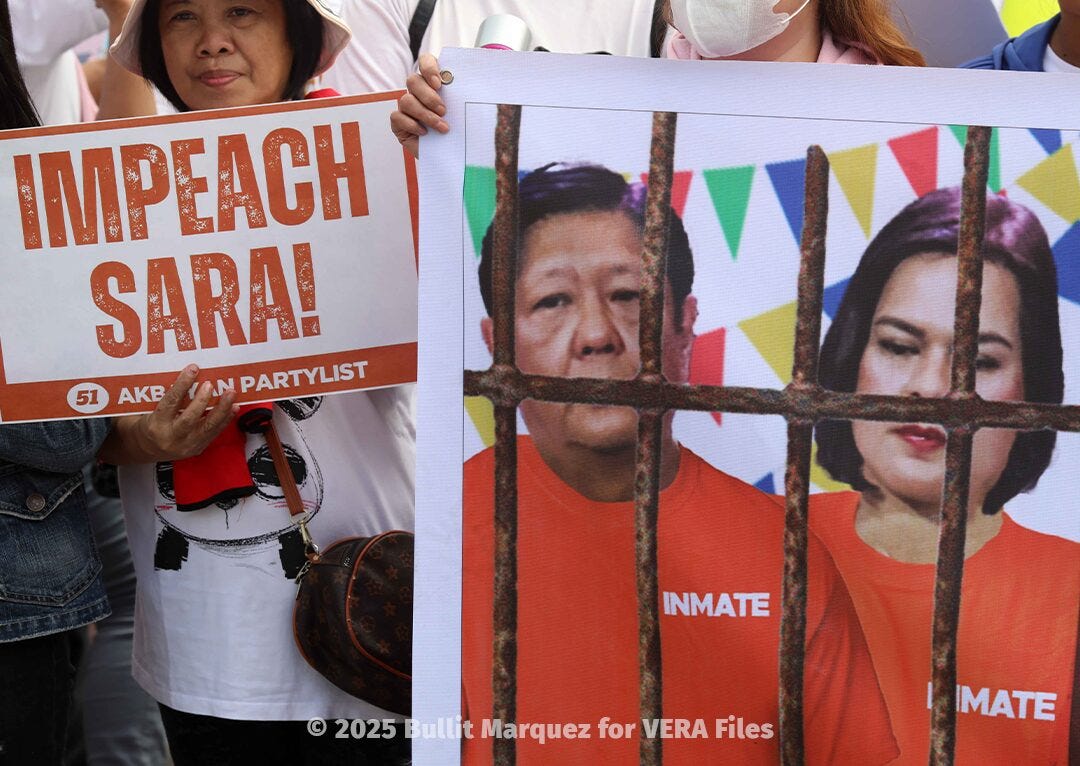
With the Philippines mired in a massive scandal that has brought down President Ferdinand Marcos Jr.’s anointed successor, his cousin Martin Romualdez, the political landscape remains strikingly thin, with 29 months to go before the next presidential polls. Neither of the country’s powerful warring clans has produced a strong consensus candidate, leaving a vacuum that, for now, makes Vice President Sara Duterte appear Marcos’s only plausible successor, a possibility that has the political establishment twisting with anxiety, with whispers of restive military officers.
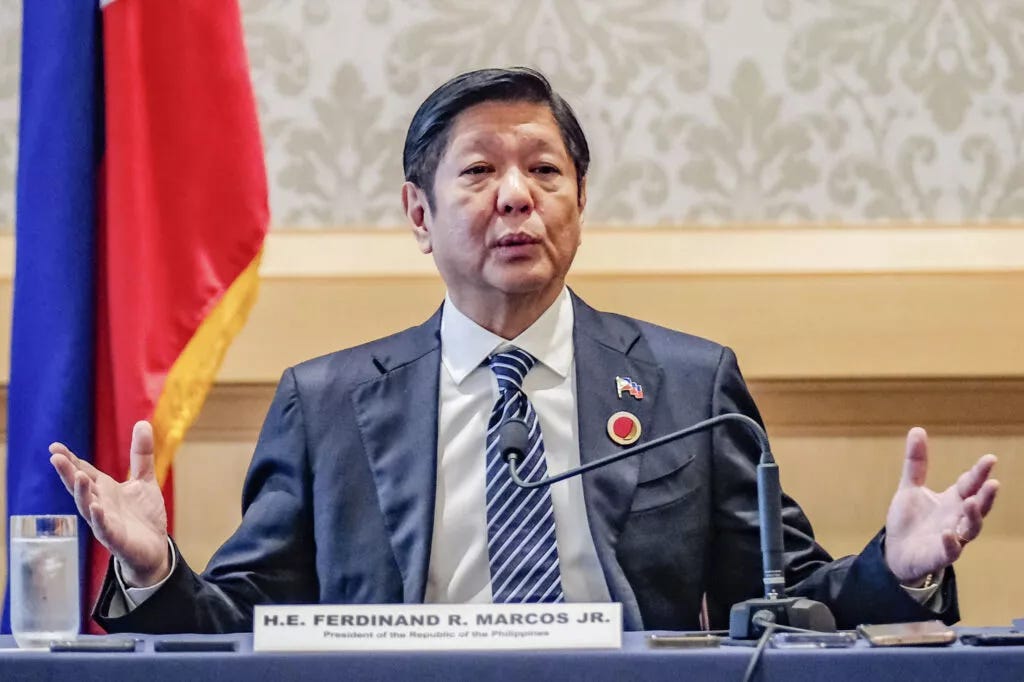
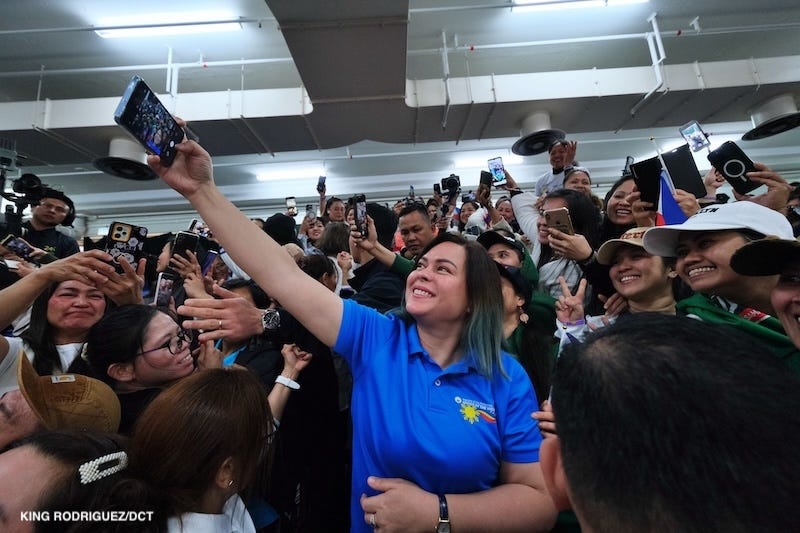
Duterte and her allies have recently escalated calls for Marcos to resign, accusing him of incompetence and saying he “does not know how to be president.” Repeating that Filipinos “deserve better,” she declared there is “no question” about her readiness to assume the presidency should Marcos step down. Marcos, the scion of one of the country’s most powerful and corrupt political families, has refused and shows little sign of being forced to, despite periodic allegations of corruption and disunity within his alliance.
Pox on both political houses
Although Marcos’s many critics dislike Duterte just as much – some even more – fueling the deep divisions among various groups demanding transparency and accountability in government, no candidates independent of the two powerful political clans have emerged, with time beginning to run short for the 2028 sweepstakes. The debate is no longer just about corruption but whether either of the country’s top leaders should be forced out. But systemic barriers favor established politicians and well-funded campaigns, making it difficult for newcomers to compete effectively. Political dynasties control vast local and national networks, leaving little room for new or independent candidates. That limits genuine competition and concentrates power within a few families. Political parties often act as temporary alliances rather than strong, distinct ideologies or platforms. Any electoral change sees members of losing parties fleeing for the victors.
The rough-hewn 47-year-old Duterte raises hackles – once punching out an official in court in the family’s Davao stronghold – because she unashamedly vows to follow in the footsteps of her father, the 80-year-old Rodrigo Rua Duterte, currently facing charges at the International Criminal Court in The Netherlands for crimes against humanity of murder and attempted murder, torture and rape for his murderous drug war, which took the lives of thousands of mostly poor drug peddlers and users in extrajudicial killings. She herself has been accused of committing “gross abuse of discretionary powers” over ₱612.5 million of confidential funds of the vice president’s office and the Department of Education.
Weekly mass anti-corruption protests including a two-day November 16-18 event that drew an estimated 200,000 people in at least 17 cities across the country, and a smaller one on November 30, reflect both rising anger and strategic disagreement. While tens of thousands have demanded accountability for the corruption-riddled ₱545.6 billion (US$11.08 billion) flood control program, with kickbacks and commissions leaving only 30 to 40 percent of funds for actual construction, groups differ on how far to push.
No call for ouster
Church-led organizations at the “Trillion Peso March 2.0” on November 30 near the EDSA People Power Monument in Quezon City stressed they weren’t calling for Marcos’s resignation, arguably because of their concerns that Sara would take over. Instead, they challenged the president to accelerate the ongoing probe and prosecute what may be the biggest corruption scandal in recent Philippine history. Progressive groups at the Sunday “Baha sa Luneta 2.0” rally in Rizal Park took a harder line: chanting: “Ikulong na ’yan, mga kurakot! (Jail the Corrupt)” and “Marcos, Duterte, walang pinag-iba! (are no different),” they demanded the resignation of both Marcos and Duterte and openly floated the idea of a National Transition Council. Bayan secretary-general Raymond Palatino said a transitional council, if ever pursued, should be a temporary civilian body offering “inclusive, transparent governance” to rebuild democratic institutions.
The administration has dismissed the noise. Acting Communications Secretary Dave Gomez said Marcos “is not blinking” and “will finish the job.” He added that it was Marcos himself who exposed the flood control anomalies in his SONA: “Mahiya naman kayo (Have some shame).”
Marcos has also sought support from the military, dining last Friday with the AFP Council of Sergeants Major and urging them not to be swayed by political turbulence. “Our Republic endures because those who protect it do not fall,” he said. First Chief Master Sgt. Feliciano Lazo replied: “We reaffirm our pledge to the Constitution and our duly elected commander in chief, and that is you, sir.”
The military’s loyalty became a talking point earlier, after Senate President Pro Tempore Panfilo Lacson revealed that some retired officers had approached him to join a proposed “civilian-military junta” to replace Marcos—an offer he said he immediately rejected.
Catholic Church says no to coup
The Catholic Church, which played a pivotal role in the 1986 ouster of Marcos’s father, has also drawn a hard red line. CBCP president Cardinal Pablo Virgilio David told protesters the church would never endorse a junta or transitional government: “We don’t want the Philippines to become a banana republic.” Even if offered positions in such a government, he said, bishops must not be “tempted to become a Taliban,” their role being moral and spiritual leadership.
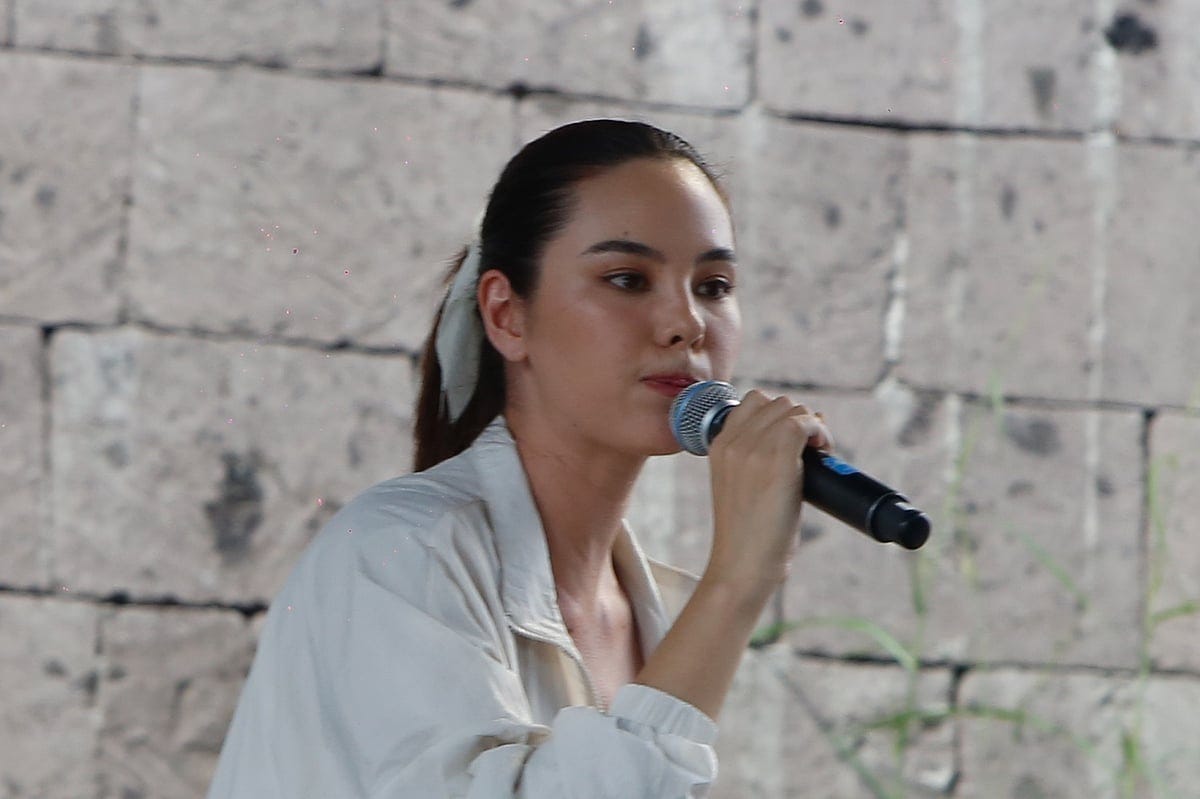
The call for accountability even extended to celebrity voices. Miss Universe 2018 Catriona Gray prayed publicly that “the full weight of justice” fall on those who plundered public funds, and that the country be led by people with “integrity, courage, and conviction.”
While the EDSA groups didn’t seek Marcos’s removal, they urged the Senate to proceed with Sara Duterte’s impeachment trial to hold her accountable for alleged corruption, unexplained wealth, and conduct unbecoming of a high official.
Meanwhile, the political stakes surrounding Duterte’s father continue to rise. Duterte has been detained in The Hague since March, and his lawyers are trying to buy more time to delay the start of his International Criminal Court trial. They plan to file a second appeal once his medical evaluation is completed, arguing he is elderly, ailing and neither a flight risk nor a threat to witnesses—even as the ICC Appeals Chamber has never granted interim release in crimes-against-humanity cases.
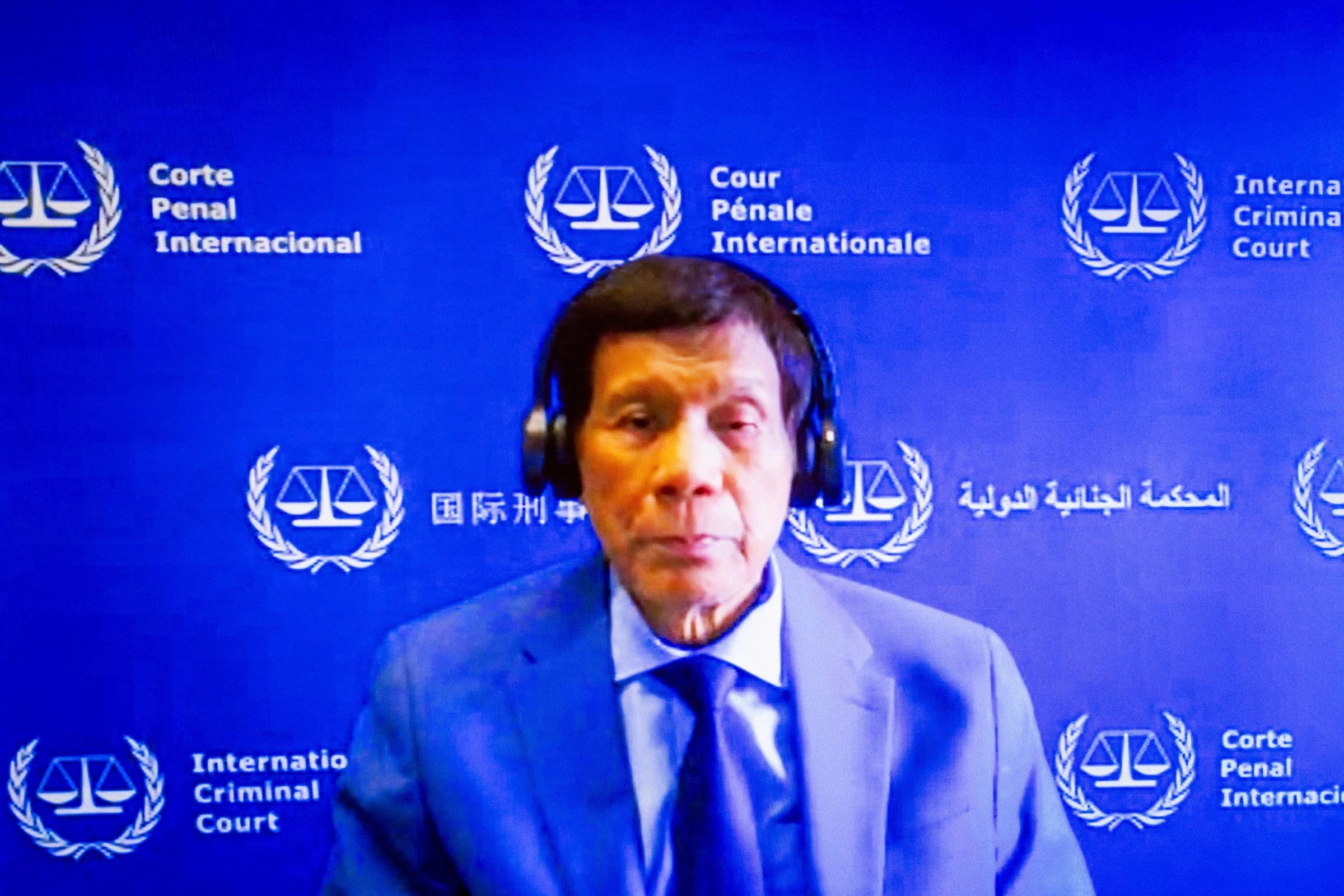
On November 28, the Appeals Chamber upheld the Pre-Trial Chamber’s earlier ruling, saying Duterte’s defense “failed to demonstrate errors” in denying his request for immediate release. Previous appeals cited supposed medical ailments and even proposed that he be flown to an undisclosed country willing to receive him. As Duterte’s legal team stretches the clock at The Hague, the implications ripple back home—shaping not only the former president’s fate but the political maneuvering ahead of 2028, where his daughter and allies position themselves while the ICC inches closer to trial.