
By: Salman Rafi Sheikh
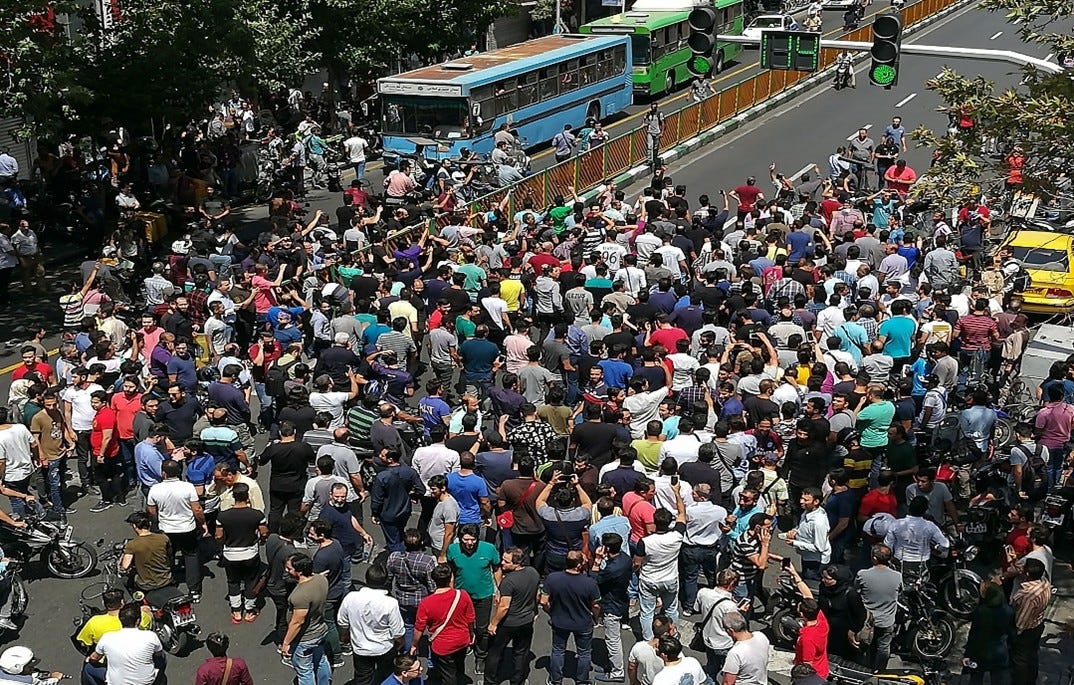
A quagmire caused by a US military strike on Iran wouldn’t just reshape Tehran. In the worst-case scenario. It could reverberate from the Gulf to South Asia, from global oil markets to fragile faultlines within Pakistan and Afghanistan. As massive protests roil Iran and Washington publicly weighs “very strong options” driven by the hubris of an unrestrained and increasingly irrational US president, the world edges closer to a confrontation that few actors truly want, but many fear might be inevitable.
Iran’s government has cracked down on demonstrations that have resulted in an estimated 3,000 deaths and up to 20,000 arrests, with Washington signaling readiness to use force if it deems necessary, a development with global implications. The US already engaged militarily with Iran in mid-2025, striking nuclear facilities alongside Israel in a major escalation that shocked regional security dynamics. Nuances of this confrontation, from the durability of Iran’s armed forces to the deeper geopolitical consequences, suggest that the cost of US intervention would be high for Iran, for the wider Middle East and South Asia, and for the US itself.
Even under the assumption that US forces could significantly degrade Iranian military infrastructure, the question remains: what is the endgame? Regime-change strategies have a deeply mixed history, and there is little consensus about how US military action would translate into a viable political outcome. Unlike past interventions in smaller states where asymmetries in force were decisive, Iran’s size, capabilities and regional entrenchment suggest prolonged engagement with uncertain results. Also, there is a big question mark on whether Iran’s people would simply accept a US-backed leader, i.e., Reza Pahlavi, the son of the deposed Shah, who was forced to flee an enraged populace in 1979. Such an imposition would likely only prolong the internal conflict and exploit its regional consequences.
Resilience and the Limits of Military Pressure
To assess the potential impact of renewed US military involvement, it helps to understand what happened before. Last June, the US joined Israel in striking key Iranian nuclear sites after weeks of tension, a move that was met with Iranian defiance and global alarm. Despite heavy losses, Tehran’s regime didn’t fall, and its leadership framed the conflict not as defeat but as survival against external aggression. Even Supreme Leader Ayatollah Ali Khamenei portrayed the outcome as proof of Iran’s resilience.
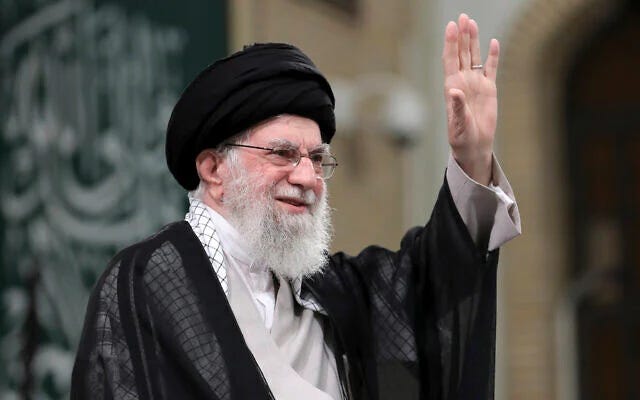
Iran’s geopolitical posture is shaped by several realities that not only make it very different from countries like Venezuela but also deeply complicate US strategic assumptions. First, while the economy is under severe strain, its Revolutionary Guards (IRGC) are deeply embedded economically and politically. The regime’s stakes are national, not peripheral. Thus, a US-led military campaign would not simply decapitate a weak state, but risk mobilizing a populace already inclined toward long-term defiance.
As protests have turned bloody, Tehran has accused external forces of stoking unrest to justify foreign intervention. Trump’s direct threats are not helping the protesters but allowing the regime to cement its claims of an ongoing external intervention. With protests spreading, it might be best for states like the US to let the change emerge from within rather than impose it from outside. US experiments in Libya, Afghanistan, and Iraq are only too recent to be forgotten so quickly: externally imposed regimes can fall as quickly as they emerge.
Second, despite its recent losses in 2024 and 2025 in Syria and Lebanon, Iran still has networks extending across the region. Its missile and drone inventories, coupled with asymmetric warfare capabilities, would make any extended conflict costly. Iranian commanders have threatened to treat US installations and shipping assets as legitimate targets if attacked, raising the specter of a wider military conflagration.
Third, in the event of a US intervention aimed directly at the regime, the latter would likely attempt to block or disrupt the Strait of Hormuz. It remains Iran’s key strategic lever. While Tehran must balance the economic cost of such a move, the Strait remains a chokepoint through which nearly 20 to 30 percent of the world’s oil supply flows. Any disruption, even the threat of it, ripples ripple through energy markets far more dramatically than US policymakers might calculate. Taken together, these factors underscore that military intervention in Iran – even if operationally feasible – faces h probabilities of strategic ineffectiveness and unintended escalation. Bombing raids to kill a few individuals or Revolutionary Guard facilities would do not more than allow Trump to claim “decisive action.”
Regional Fallout: Middle East and South Asia
A wider US intervention would likely not be contained within Tehran’s borders. A key concern is that Tehran’s partners would likely respond asymmetrically, either through militia operations or by leveraging strategic chokepoints like the Red Sea and the Strait of Hormuz to exert pressure on global oil markets.
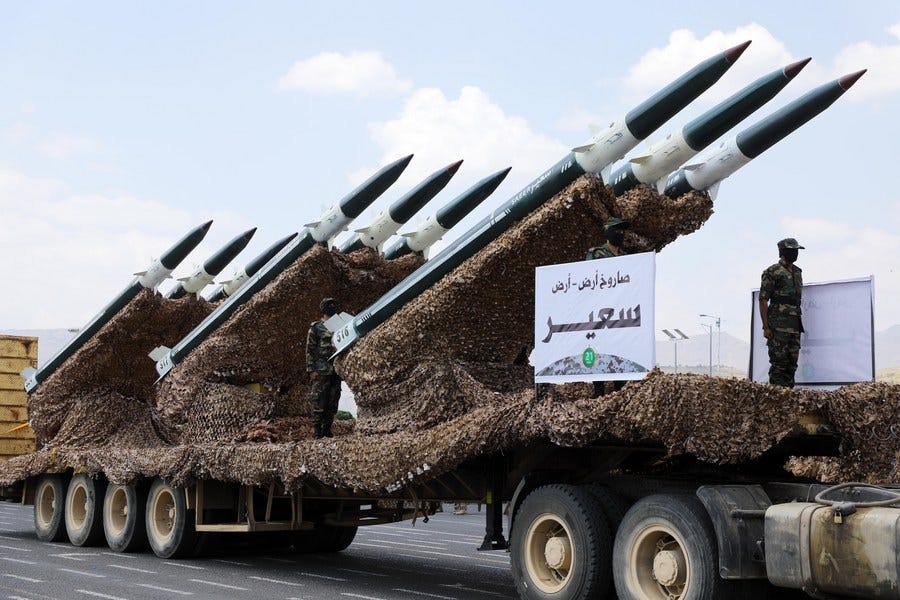
While Israel and the Gulf states may view diminished Iranian influence as strategically desirable, they are equally wary of an open-ended conflict that enables non-state actors, even the weakened Hezbollah or the Houthis, to exploit instability. A wider conflict in the region involving violent regime change also puts Gulf states in the line of fire, not only because they would have to deal with the outcomes of a prolonged war in the region, but also because Gulf monarchies themselves could face internal instability. Their economies are also vulnerable to regional instability which could be exacerbated by differing local interests of the Saudis, Emiratis and Qataris.
A prolonged conflict on Iran’s eastern flank could intensify sectarian tensions within Pakistan, particularly affecting its Shi’ite minority and fueling narratives of regional oppression. Islamabad also shares a long, porous border with Iran across Balochistan, an area already beset by a separatist insurgency. In Afghanistan, which still grapples with internal insecurity and cross-border and transnational militant networks, there is a real possibility that fighters might seek to join the conflict against perceived US intervention in a fellow Muslim country.
A wider conflict in Iran could strain alliances, possibly disrupt global energy flows, and present Washington with dilemmas that stretch far beyond simple battlefield metrics. Any calculus that underestimates Iran’s resilience, the complexity of regional dynamics, and the global interconnectedness of modern geopolitics will find itself facing a very different reality from the one envisioned in Pentagon planning rooms.
Dr Salman Rafi Sheikh is an Assistant Professor of Politics at the Lahore University of Management Sciences (LUMS) in Pakistan. He is a long-time contributor on diplomatic affairs to Asia Sentinel.
The Architecture of a Crisis Manufactured by Hostile Foreign Powers.
An exclusive exposé on the hidden forces, intelligence networks, and propaganda machinery fueling turmoil in Iran.
https://felixabt.substack.com/p/the-architecture-of-a-crisis-manufactured
Peace