
By: Tim Daiss
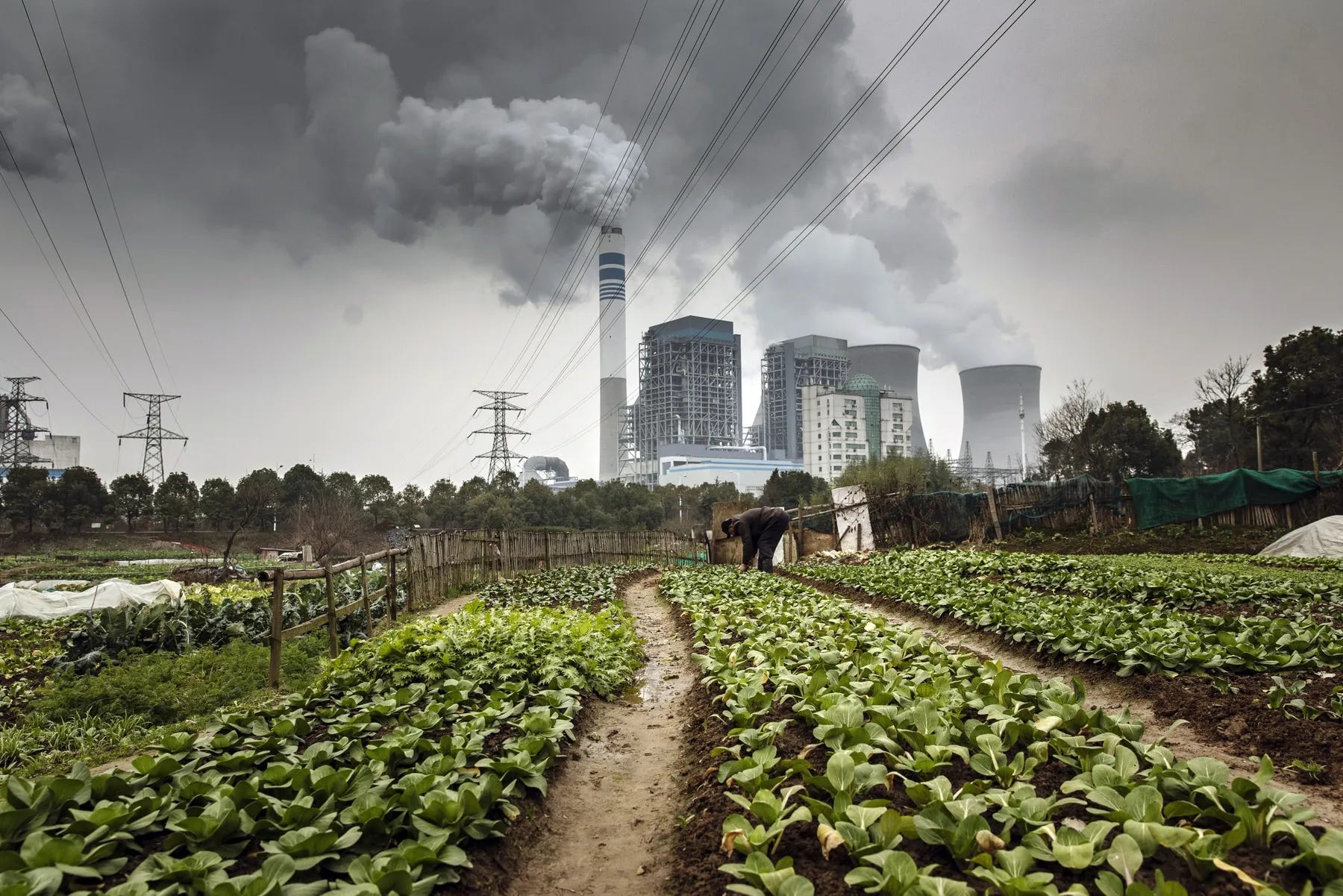
New data from the International Energy Agency (IEA) suggests that global coal demand has reached a plateau and could begin edging lower by 2030, driven by rising competition from renewables, natural gas, and nuclear power. Nowhere is that conclusion more politically sensitive nor more easily misunderstood than in China, the world’s largest coal consumer and producer.
At first glance, China appears to defy the narrative. The country continues to approve new coal-fired power plants at a pace unmatched anywhere else. Provincial governments remain enthusiastic backers of coal capacity, citing energy security, grid stability, and local employment. Pure local political cadence. Moreover, paper coal still dominates China’s power mix, supplying roughly 60 percent of electricity generation in 2023.
But beneath the headline numbers, China’s coal story is entering a far more complex phase. Coal isn’t disappearing, but gradually losing its role as the directional force in China’s power system. Power market reforms, grid constraints, falling renewable energy costs, and the rapid build-out of nuclear power are reshaping how, and how often, coal plants actually run.
More coal capacity, fewer coal hours
One of the defining features of China’s power sector today is the widening gap between installed coal capacity and coal utilization. While provincial authorities continue to greenlight new plants, average operating hours for coal generators have been trending downward over the past decade. This paradox reflects a system that still values coal as insurance, but increasingly relies on other sources for growth. Coal plants are being built less as baseload generators and more as flexibility assets, designed to ramp up when wind and solar output drops, or when transmission bottlenecks constrain regional power flows. In practice, this means many coal plants are operating fewer hours, earning thinner margins and relying more heavily on capacity payments, regulated tariffs, or provincial support to stay viable. The political logic of approving coal projects hasn’t disappeared, but the economic logic is weakening.
China’s power grid is now one of the most complex in the world, and its limitations are increasingly shaping fuel choices. Renewable capacity has surged faster than transmission infrastructure can absorb it, leading to stubborn grid curtailment in some regions and congestion in others. These grid constraints are quietly undermining coal’s traditional dominance. In regions with strong renewable resources, such as Inner Mongolia, Gansu, and Xinjiang. Wind and solar are often the cheapest marginal sources of power, even after accounting for intermittency. When grid access allows, they are dispatched ahead of coal. At the same time, ultra-high-voltage transmission lines are enabling power to flow across provinces more efficiently, reducing the need for local coal generation in coastal demand centers. This weakens the long-standing argument that coal plants must be built close to load centers to ensure reliability. Therefore, coal still matters for system stability, but it’s no longer automatically first in the dispatch order.
Market reforms dilute provincial control
Perhaps the most underestimated shift is the gradual reform of China’s power market itself. Over the past five years, Beijing has expanded electricity spot markets, long-term power contracts, and market-based pricing mechanisms. These reforms don’t eliminate political influence, but they do dilute it. Coal generators increasingly have to compete on price against renewables, hydro and nuclear power. In several pilot markets, coal plants are finding it harder to pass through higher fuel costs or secure guaranteed operating hours. This is a subtle but notable change. For decades, provincial officials effectively controlled both supply approvals and dispatch outcomes. Today, central regulators and market mechanisms are playing a larger role in determining which plants run, when, and at what price. Albeit, coal plants still exist within this system, but they no longer define it.
Additionally, China’s renewable expansion remains the central driver of change. In 2023 alone, the country added more solar capacity than the rest of the world combined. Wind power continues to scale rapidly, and offshore wind is emerging as a meaningful contributor in coastal provinces. At the same time, nuclear power is quietly reclaiming its role as a strategic baseload option. China now has more reactors under construction than any other country, with plans to continue expanding capacity through the 2030s. Unlike coal, nuclear aligns with Beijing’s long-term decarbonization goals while offering dispatchable, low-carbon power. Together, renewables and nuclear are absorbing the bulk of incremental demand growth. Coal, by contrast, is increasingly confined to balancing roles, important – yes - but reactive.
Why coal approvals continue anyway
None of this means coal approvals will suddenly stop. Provincial governments still have strong incentives to support coal projects, particularly in regions with heavy industry, weak grids or limited fiscal alternatives. Coal plants offer predictable construction jobs, local tax revenue and perceived energy security. In times of economic uncertainty, those benefits carry political weight. But approving capacity is not the same as controlling the system’s future direction. The more China’s power sector becomes governed by markets, grids and cost curves, the less decisive provincial coal approvals become. This is why the IEA’s conclusion about a coal plateau is plausible --even if it looks counterintuitive when measured solely by new capacity announcements.
The emerging reality is a power system where coal still exists, but no longer sets the agenda. It’s being boxed in by economics, policy and infrastructure rather than eliminated by decree. Coal plants will continue to run, especially during peak demand and low renewable output. They will remain politically protected in some provinces and strategically valuable in crisis scenarios. But they are no longer the engine of growth, investment, or innovation in China’s power sector. For global energy markets, this matters. A plateau in coal demand does not require coal’s disappearance, only its demotion. China appears to be moving in that direction, not through a dramatic policy pivot, but through a slow reordering of priorities. In that sense, coal’s future in China may be less about how much capacity is built, and more about how little influence that capacity ultimately wields.