
By: Toh Han Shih
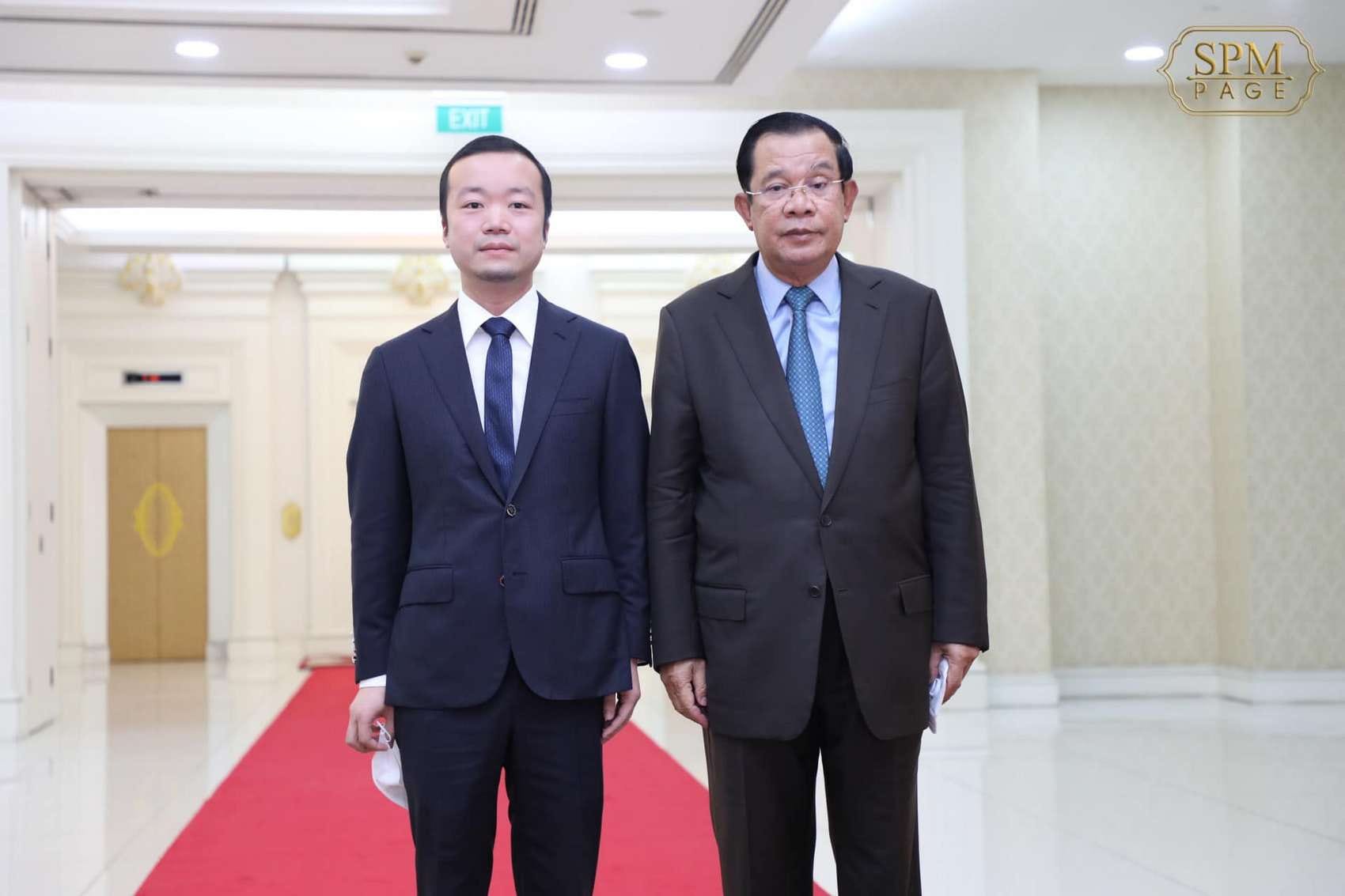
The January 7 extradition to China of Vincent Chen Zhi, the mastermind behind Cambodian scam compounds, has removed embarrassment for the Chinese government, which has grown increasingly uneasy with high-powered mainland actors bilking millions across the globe with lovelorn and “pig-butchering” scams from havens in Laos, Myanmar, Cambodia, and scattered Pacific islands beyond the reach of the law.
The other benefit of the extradition of the well-connected Chinese national, who took Cambodian citizenship, may be to prevent him from falling into the hands of US justice officials for fear he might divulge embarrassing details of powerful figures in both countries. Chen is known to be close to the very top of the Cambodian power structure including Hun Sen, the former prime minister, his son Hun Manet, the current premier, Sar Kheng, the former Deputy Prime Minister and Interior Minister, his son Sar Sokha, and Heng Samrin, the former National Assembly president.
His associations in China are unknown. However, last June, an exhaustive 73-page report by Jacob Sims, a Visiting Fellow at Harvard University’s Asia Center and an adviser to a variety of government agencies and NGOs, alleged that transnational organized cybercrime centered in Cambodia is now “the world’s fastest growing and most dangerous illegal industry.” The report directly implicated Hun Manet and his deputy premier, Vongsey Vissoth along with 28 other top Cambodian government and business leaders as well as officials of the Chinese Communist Party in Beijing. The UN estimates there are 100,000 slaves in Cambodian scam compounds.
“The presence of these scam centers being run by Chinese criminals has been an embarrassment for China,” said Matthew Friedman, chief executive officer (CEO) of the Mekong Club, a Hong Kong-based anti-trafficking NGO. “For this reason, China is very serious about fighting scam centers in Southeast Asia, as evidenced by the extradition of Chen Zhi. This action shows their commitment to addressing these issues and holding offenders accountable.”
It isn’t the first time China has acted against criminal activity in Cambodia. In 2019, an angry President Xi Jinping pressed the Cambodian government to issue an online gaming ban that resulted in the sudden exodus of thousands of Chinese from the resort city of Sihanoukville, leaving numerous subpar construction projects suspended amid inappropriate master planning worsened by inadequate government supervision and rampant urban development from Chinese mainland investment.
“Seasoned observers would be cynical and opine that it is to prevent Chen from falling into American hands and thereby divulging details of his shady dealings with what many rumored to be the highest echelon of China’s powers that be,” an analyst told Asia Sentinel. “Disclosure of such details would not be only embarrassing to China’s highest leaders but potentially shaking the legitimacy of their leadership.”
An indictment was unsealed last October 14 in a US court charging Chen with wire fraud and money laundering conspiracy for directing forced-labor scam compounds across Cambodia of Prince Holding Group, a powerful Cambodian conglomerate which he founded. US prosecutors allege Chen and his co-conspirators bribed officials of various countries, including Chinese spies and police officials, Asia Sentinel reported last October. The US Justice Department estimates losses to online investment scams to American citizens total as much as US$16.6 billion.

“Precisely because those allegations were made, he must not be allowed to verify those allegations as he likely would if he falls into American hands, thus adding to the veracity of negative American narrative about China,” said the analyst, who declined to be named.
Chinese investigations found Chen’s criminal syndicate was involved in many criminal activities including opening casinos, fraud, illegal businesses and concealing the proceeds of crime, said the ministry. A video shows him being taken by police from a plane in a Chinese airport.
At a press conference of the Chinese Foreign Ministry in Beijing on January 8, the ministry’s spokeswoman Mao Ning said, “For some time, China has been actively cooperating with Cambodia and other countries in fighting cross-border online fraud, and has achieved notable results. China is willing to increase cooperation in law enforcement with countries in its backyard including Cambodia.”
On January 7, Cambodia’s Interior Ministry announced Cambodian authorities had arrested Chinese nationals Chen, Xu Ji Liang, and Shao Ji Hui, and extradited them following an operation carried out on January 6 after months of joint investigation by Cambodian and Chinese authorities, the ministry revealed. Chen’s Cambodian citizenship has been revoked, the ministry said. The National Bank of Cambodia followed that on January 8 with an announcement that Prince Bank, the group’s bank, has been liquidated.
“The extradition of Chen Zhi and the closure of Prince Bank are critical steps in combating scam centers in Southeast Asia, as they target both key individuals and the financial systems enabling these operations to be maintained and expanded. These actions signal increased regulatory oversight and cooperation needed to deter scammers and restore trust in the region’s financial institutions,” said 1Friedman.
“China wields far more influence in Cambodia than the US, compelling the Cambodian government to prioritize Chinese requests for extradition above others. This decision underscores the deep-rooted bilateral ties between China and Cambodia, characterized by ongoing collaboration that consistently favors Chinese interests. Therefore, it is hardly surprising that Cambodia opted to extradite Chen Zhi to China rather than acquiescing to US demands,” Friedman added.
“It would appear that China does hold a bigger sway over Cambodia in comparison to the US. The latest China-brokered ceasefire between Cambodia and Thailand still holds, whereas that crafted by the US broke down in a week or so,” said the analyst.
In a meeting at Cambodia’s Interior Ministry in Phnom Penh on February 25, 2025, Chinese Assistant Minister of Public Security Liu Zhongyi and Cambodian Interior Minister Sar Sokha – a close friend of Chen’s – agreed that their countries would strengthen partnerships in law enforcement.
Friends in high places
Chen was an adviser to Sar Sokha and to Sar Sokha’s father Sar Kheng when he was Interior Minister from 2017 until August 2023. Two weeks after Chen’s appointment as adviser to then Cambodian Interior Minister Sar Kheng in 2017, Chen and Sar Sokha established a Cambodian company, Jinbei (Cambodia) Investment, reported Radio Free Asia. In 2018, Sar Sokha divested his shares in Jinbei (Cambodia) Investment, according to Cambodian Ministry of Commerce records. This company was dissolved in 2021, as reported by Radio Free Asia.
In a statement on November 11, 2025, Prince Group “categorically rejects the notion that it or its Chairman, Chen Zhi, has engaged in any unlawful activity.” The defiant denial and Chen’s arrest two months later raise the question of whether he was protected by powerful people in Cambodia, who gave him up.
“The judicial independence in the US is such that Chen’s collusion with Cambodian authorities would also likely be revealed,” said the analyst.
“There are different factions in the Cambodian government,” a source told Asia Sentinel. “Some have benefited financially from the Prince Group. It makes sense for them not to want Chen Zhi extradited, but they are unable to prevent it,” said the source. “Hun Manet has been trying to play both sides. He needs to. The US is the biggest market of Cambodia, while China is its biggest FDI (foreign direct investment) source.”
Cambodian Prime Minister Hun Manet said relations between Cambodia and the US were improving, with both countries moving toward deeper cooperation in trade and other sectors after signing a new bilateral trade agreement, Hun Manet said on his Facebook page in early November 2025. Hun Manet said his meeting on November 4 with US Assistant Secretary of State for East Asian and Pacific Affairs, Michael George DeSombre, focused on expanding bilateral ties in areas including fighting transnational crime.
Earlier in January, DeSombre announced the US would provide US$45 million in assistance to Cambodia and Thailand to ensure peace between the two Southeast Asian neighbors, who recently clashed, and help both countries combat scam operations and drug trafficking.
“As alleged, the defendant (Chen) was the mastermind behind a sprawling cyber-fraud empire operating under the Prince Group umbrella, a criminal enterprise built on human suffering. Trafficked workers were confined in prison-like compounds and forced to carry out online scams on an industrial scale, preying on thousands worldwide, including many here in the United States,” said US Assistant Attorney General for National Security John A. Eisenberg.
Toh Han Shih is a Singaporean writer in Hong Kong and a regular contributor to Asia Sentinel