
By: Salman Rafi Sheikh
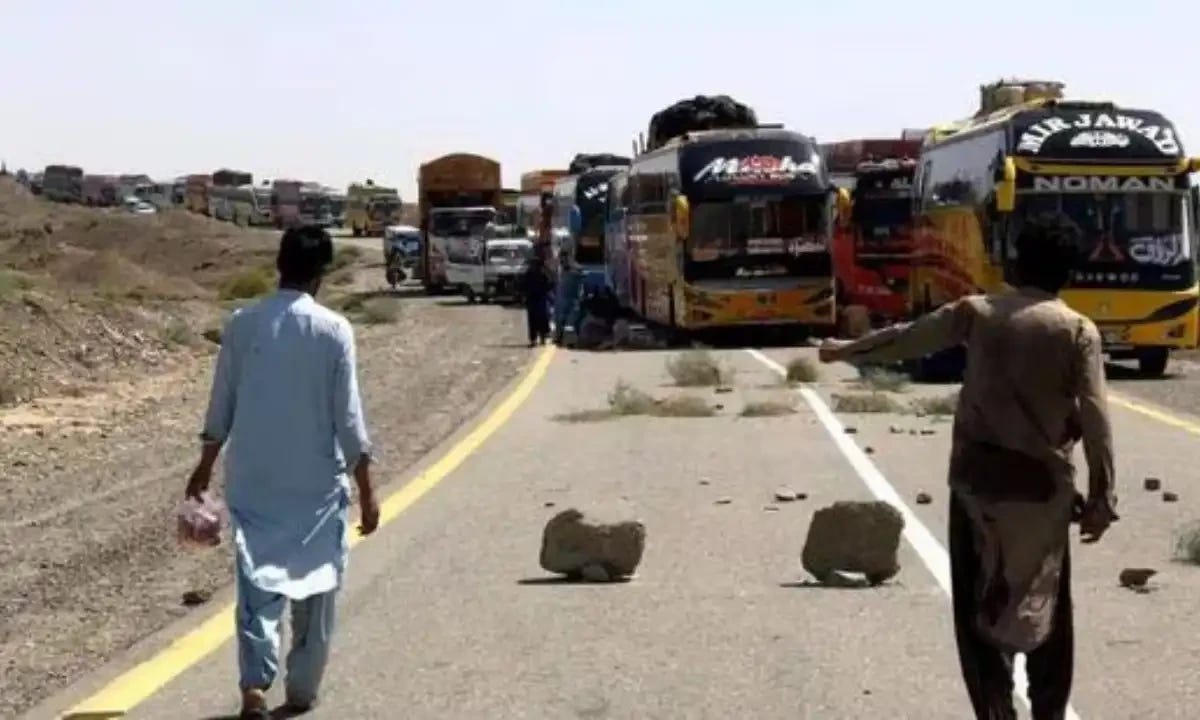
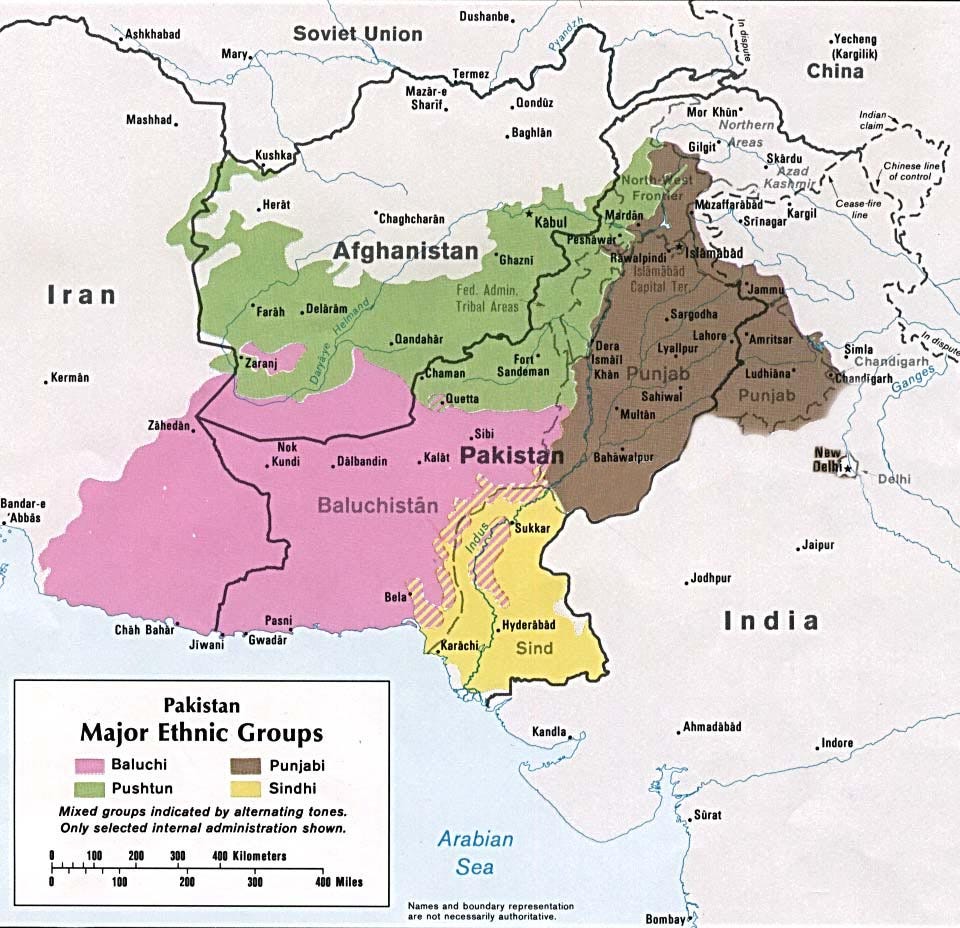
The recent wave of coordinated attacks by the Balochistan Liberation Army (BLA) across more than 10 cities in the troubled province of Balochistan, which takes up 44 percent of the entire country of Pakistan, wasn’t just another insurgent spectacle; it was a clear strategic escalation. The scale, timing, and coordination of the assaults showed that the province’s long-running conflict has entered a more dangerous phase. What was once a localized separatist insurgency has evolved into a crowded militant ecosystem, where ethnic rebels, jihadist outfits, and transnational networks now intersect.
In 2025, there were 1557 attacks in the province. This is not merely a security crisis. It is the accumulated consequence of decades of political neglect, economic extraction, and an overreliance on military force in a province that demanded political accommodation instead. It has significant international implications including suspicions of Indian conniving, with threats to the security of the China-Pakistan Economic Corridor, and bears on relations with Iran and Afghanistan, with insurgents often operating across porous borders.
The Escalation That Changed the Equation
The BLA offensive marks one of the largest coordinated attacks in the province in years. Militants struck security installations, civilian targets and government infrastructure across multiple cities, triggering days of fighting and leaving dozens of civilians and security personnel dead. Pakistani forces responded, claiming to kill more than 200 militants, according to official accounts. But the sheer scale and synchronization of the attacks surprised analysts, contradicting earlier claims that the separatist militancy was under control. These claims were reflected in the more than 75,000 intelligence-based operations Pakistan conducted in 2025 only. Pakistan military called 2025 a “landmark” year.
The insurgency is not new. Baloch separatist groups have fought the state in multiple phases since the early years of Pakistan. Yet the current phase, ongoing since the early 2000s, has become more urban, more technologically adaptive, and more willing to target infrastructure and foreign investments. What distinguishes the latest attacks from the past is not just their brutality, but their coordination – evidence of improved planning, communications and recruitment capacity among insurgent networks.
This shift exposes the limits of a strategy that has relied overwhelmingly on kinetic force. For more than two decades, successive governments have treated Balochistan primarily as a security problem. The results are visible: cycles of insurgency, heavy militarization, and persistent political alienation.
Separatist Insurgency to Militant Convergence
One clear outcome of this failure is that Balochistan is no longer just a theater of ethnic separatism. It has become a crossroads of multiple militant currents. Recent reporting indicates that the Tehrik-i-Taliban Pakistan (TTP) has expanded its presence in the province, establishing operational networks beyond its traditional strongholds and making inroads into ethnic politics. This development signals a growing overlap between ethnic and jihadist militant spheres. The Islamic State–Khorasan Province (IS-K) has also demonstrated an operational footprint in Balochistan. For instance, an IS-K bombing targeting a bus carrying Balochistan Constabulary personnel in Mastung in April 2025 killed three and injured twenty others. This was not an isolated phenomenon. Security reports note that major militant organizations—including the TTP, BLA, and IS-K—collectively account for the overwhelming majority of terrorist deaths in Pakistan.
The presence of these diverse actors creates an unusual convergence. The BLA is an ethno-nationalist insurgent group seeking independence. TTP and IS-K are jihadist organizations with transnational ideological agendas. They share little ideological affinity. Yet they now intersect around overlapping targets. The BLA has repeatedly targeted Chinese projects and personnel, including the port in Gwadar, accusing Beijing of exploiting Balochistan’s resources. The TTP and IS-K, meanwhile, frame China as an enemy due to its policies toward Muslim minorities in Xinjiang.
The result is a convergence of operational interests, even without formal alliances. Each group benefits from the instability created by the others. In such an environment, Balochistan becomes less an ethnic insurgency zone and more a multi-layered militant ecosystem. This evolution dramatically raises the stakes. It turns a domestic political conflict into a node within wider regional jihadist and geopolitical rivalries.
Regional Tensions and Externalization of the Conflict
Pakistan’s deteriorating relations with the Taliban-led government in Afghanistan have further complicated the situation. Islamabad has repeatedly accused Afghanistan of serving as a sanctuary for militants, including BLA, targeting Pakistan. Recent reports on the Balochistan attacks note official Pakistani claims that militants were operating from across the Afghan border.
At the same time, the regional geopolitical environment has grown more volatile. Pakistan’s tensions with India, particularly following the Pahalgam attack and the brief India-Pakistan war in 2025, have deepened mutual suspicions. Pakistani officials have long alleged Indian support for Baloch insurgents, often claiming such assistance flows through Afghan territory. Recent statements following the BLA attacks again pointed to alleged Indian involvement, though without publicly presented evidence. These claims are difficult to verify independently. Yet the strategic logic is clear: when domestic conflicts persist unresolved, they invite regional interference—something that Pakistan itself did from the late 1980s onwards in the Indian held Kashmir as well.
A thaw in India-Afghanistan relations creates new diplomatic space. Combined with Pakistan-Afghanistan tensions, it increases the possibility—real or perceived—of proxy maneuvering. In such a setting, Balochistan risks becoming a geopolitical battleground. While separatist insurgents frame their struggle in ethnic and economic terms, Jihadist groups exploit the security vacuum, and regional rivals see opportunities to exert pressure. The conflict thus shifts from a primarily internal dispute to a multi-layered regional contest.
Ignoring the problems
But Pakistan’s response is not finding a cure for underlying structural drives, decades of Baloch marginalization and separatism. Pakistan, on the other hand, wants to introduce another layer of geopolitics into the region. This was reflected in Islamabad’s recently reported offer to Washington to build a port in Balochistan’s Pasni region. This port would ostensibly help the US import rare earth minerals from Pakistan. It would use American presence in the region as a deterrent against Afghanistan’s and India’s support for BLA and TTP. Any attack on American interests could draw the US military into the conflict.
China, on the other hand, has never shown any interest in committing its military resources to addressing the problem. Pakistan has not been keen to develop such an alliance with China, i.e., allowing China to establish a security footprint within Pakistan. Whether or not the US will develop a port in Pakistan remains to be seen, but Pakistan’s moves clearly show that it remains disinterested in resolving the conflict through political means.
Province at the Crossroads
In short, Balochistan today sits at the intersection of insurgency, regional rivalry and great-power interests. It is no longer just a troubled province; it has become a strategic space where militants, neighboring states, and external actors all pursue their own agendas. In such a crowded environment, every new security operation or foreign partnership risks adding another layer to an already complex conflict.
The deeper danger is that the original political dispute—over autonomy, resources, and representation—will be buried beneath these competing calculations. What began as provincial grievance in the early 1950s could harden into a permanent arena of proxy competition, with no clear path back to a political settlement. This trajectory carries long-term consequences for Pakistan’s federal structure. A province managed primarily through security doctrines and external alignments cannot become politically stable. It instead turns into a guarded frontier, strategically vital but perpetually unsettled.
Avoiding that outcome requires Islamabad to rethink what stability in Balochistan means. It cannot be defined solely by fewer attacks or more investment. It must rest on credible institutions, genuine provincial ownership, and a political process that restores trust between the center and the province. Without such a shift, Balochistan will remain a contested geopolitical space rather than a stable part of the federation.