
By: David Scott Mathieson
The Association of Southeast Asian Nations (ASEAN) seems finally to have tired of the civil war and violence in Myanmar. Five years of feckless diplomacy, never ASEAN’s forte, have produced nothing. A new approach is now being tried. Engagement,
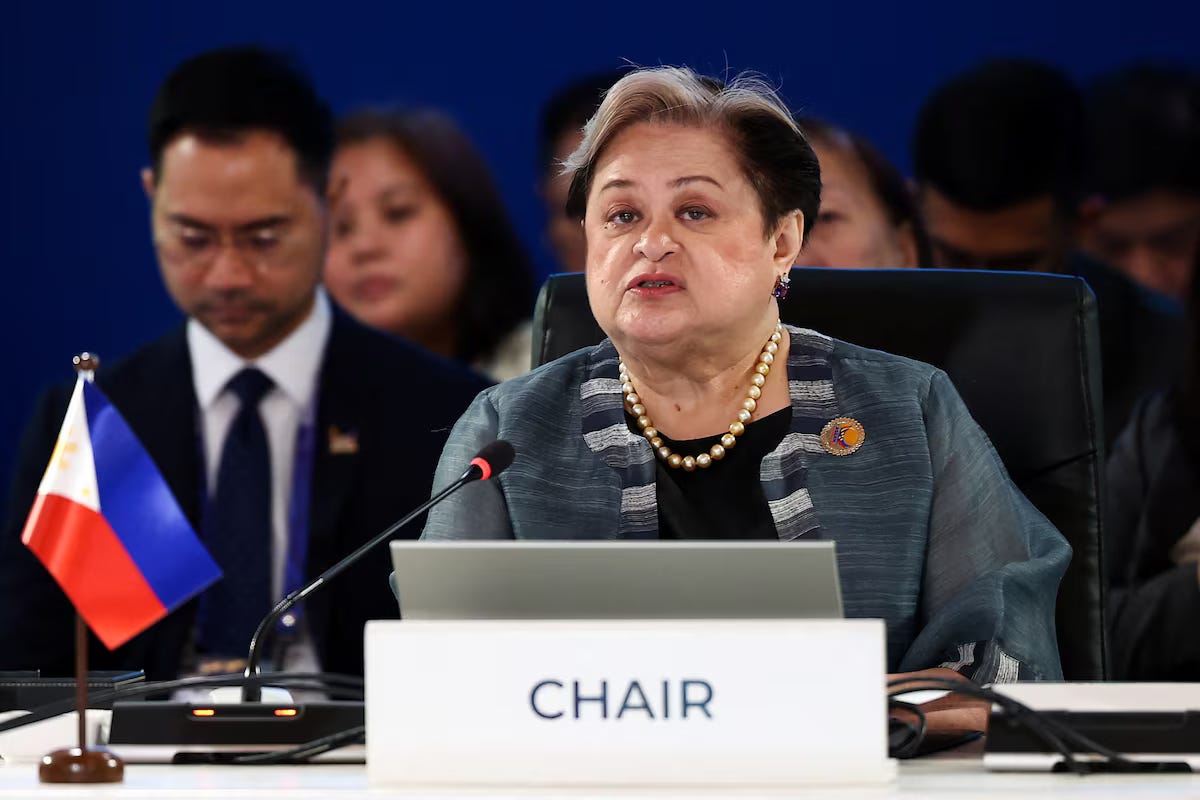
On July 12, Philippine Foreign Minister Theresa P. Lazaro hosted an informal gathering of ASEAN foreign ministers in Bangkok hosted by her Thai counterpart Sihasak Phuangketkow. The meeting included a briefing from Myanmar’s foreign minister Tin Maung Swe on recent developments inside the country. The Myanmar side claimed that detained former leader Aung San Suu Kyi is in good health, following years of ASEAN leaders trying to obtain access to her, a significant sticking point in ASEAN high-level contact with the Myanmar military leadership.
The statement released by the Thai ministry signaled a significant shift in ASEAN’s direction. “The meeting recognized the need for direct engagement and dialogue between ASEAN and Myanmar to help build confidence, foster meaningful progress, and create the conditions for calibrated re-engagement between ASEAN and Myanmar. ASEAN will continue to follow developments in Myanmar closely and remains united in its shared objective of helping Myanmar achieve peace and stability through dialogue and consensus-building.” This informal gathering is clearly the brainchild of Thailand. Sihasak and Tin Maung Swe met bilaterally on Saturday.
The gathering is the highest level recognition of the Myanmar regime since ASEAN released the Five Point Consensus (5PC) in April 2021 following a military coup just months before. Military chief Min Aung Hlaing attended that emergency meeting in Jakarta, and was subsequently prohibited from attending annual ASEAN summits. His subsequent diplomatic strategy was to stonewall the regional grouping and reject all efforts to implement the 5PC. Sunday’s meeting may indicate that playing the long game of obstinacy has paid off for the dictator. The meeting comes ahead of the annual ASEAN Foreign Ministers Meeting in Manila from 21-23 July.
There is a significant impasse on the Five Point Consensus between the regional grouping and Myanmar. In May, the statement following the ASEAN Summit in Cebu, “reaffirmed our united position that the consensus remains our primary reference to address the political crisis in Myanmar” while noting its “minimal progress on the implementation” and discussed the creation of a dedicated Special Envoy for Myanmar.
ASEAN remains divided over the consensus. Following Sunday’s meeting, Singapore’s foreign minister Vivian Balakrishnan posted on Facebook, “(w)e reaffirmed the importance of the Five Point Consensus – it was and it remains valid.” Malaysia, too, is exasperated by Naypyidaw’s truculence. But it may be all too late.
Yet on July 9, the joint houses of the Myanmar parliament, the Pyidaungsu Hluttaw, following days of debate, passed a motion calling on the new ‘government’ to review the consensus. This is merely a parliamentary stamp on five years of the military regime rejecting ASEAN’s diplomatic efforts. By any measure, it has been a dismal failure since it was foisted on Min Aung Hlaing in April 2021. Every ASEAN meeting, and there are multiple ones annually, reaffirms the consensus as the cornerstone of the grouping’s approach, including by its many ‘dialogue partners.’
The political masquerade of the past year in Myanmar is ample evidence for ASEAN of reform. Three rounds of charade elections, the convening of national and regional parliaments, Min Aung Hlaing’s assumption of the presidency, the reshuffling of the top military leadership, the announcement of 100 days of peace to lure armed groups to negotiations and several rounds of peace talks with armed groups that signed the 2015 Nationwide Ceasefire Agreement (NCA).
The Union Consultative Council formed in February may appear to be a reconstituted State Administration Council (SAC) which was formed after the coup and abolished in mid-2025, but in reality, Myanmar is a dictatorship. This arrangement likely won’t raise too many eyebrows in ASEAN, itself a grouping of authoritarian states and illiberal democracies, and Min Aung Hlaing as a ‘civilian’ president may be more acceptable. His first state visit to Laos in early July could potentially herald more regional acceptance as a leader. A visit to China in June was another major step.
The foreign ministers’ informal meeting will further demoralize an already divided and increasingly hapless political opposition, particularly the exiled National Unity Government (NUG) and Ethnic Armed Organizations (EAOs). The unity government’s statement released on Sunday was plaintive, insisting on inclusion as an equal partner but obviously not realizing ASEAN doesn’t take them seriously. Their chance for diplomatic reform and recalibration years ago was squandered.
Indonesia and Malaysia hosted multiple opposition stakeholder meetings in 2024 and 2025, lauded for the inclusiveness of multiple actors and groups. Yet these meetings also revealed the complexity of inter-group tensions, the confusing array of opposition political claims, and competing diplomatic entreaties from the NUG and groups such as the Euro-Burma Office (EBO) and various EAO leaders.
ASEAN will also likely be aware of reversals on the military front in Myanmar. Over the past 18 months, the army and air force have increased counter-offensives backed by air strikes and increasingly sophisticated drone strikes in multiple locations. The dubious nature of claims to ‘effective territorial control’ of more than half of Myanmar that emerged from 2022 appears even less credible now. Fighting between EAOs, and increasingly between various People’s Defense Forces (PDFs), supports the narrative of potential state collapse. There is an increasing urban-rural divide of reality. Visitors to Yangon would barely register that Southeast Asia’s most destructive civil war is raging close by.
For ASEAN, the military appears to have weathered the storm. It may be with a resigned shrug, but the grouping appears set on rehabilitating the revamped regime.
David Scott Mathieson is an independent analyst working on conflict, humanitarian, and human rights issues in Myanmar.