
By: Salman Rafi Sheikh
Afghanistan, in a desperate domestic struggle for mere survival amid an ongoing humanitarian catastrophe, a severe economic collapse, and a profound human rights crisis, is now caught in a dangerous geopolitical squeeze. India is maneuvering to exploit Kabul’s standoff with Islamabad, the United States is eyeing a return to Bagram amid its rivalry with China, and China remains Kabul’s closest ally, although its support is largely symbolic. Russia is the only state to formally recognize the Taliban, lending political legitimacy but offering little in the way of economic relief.
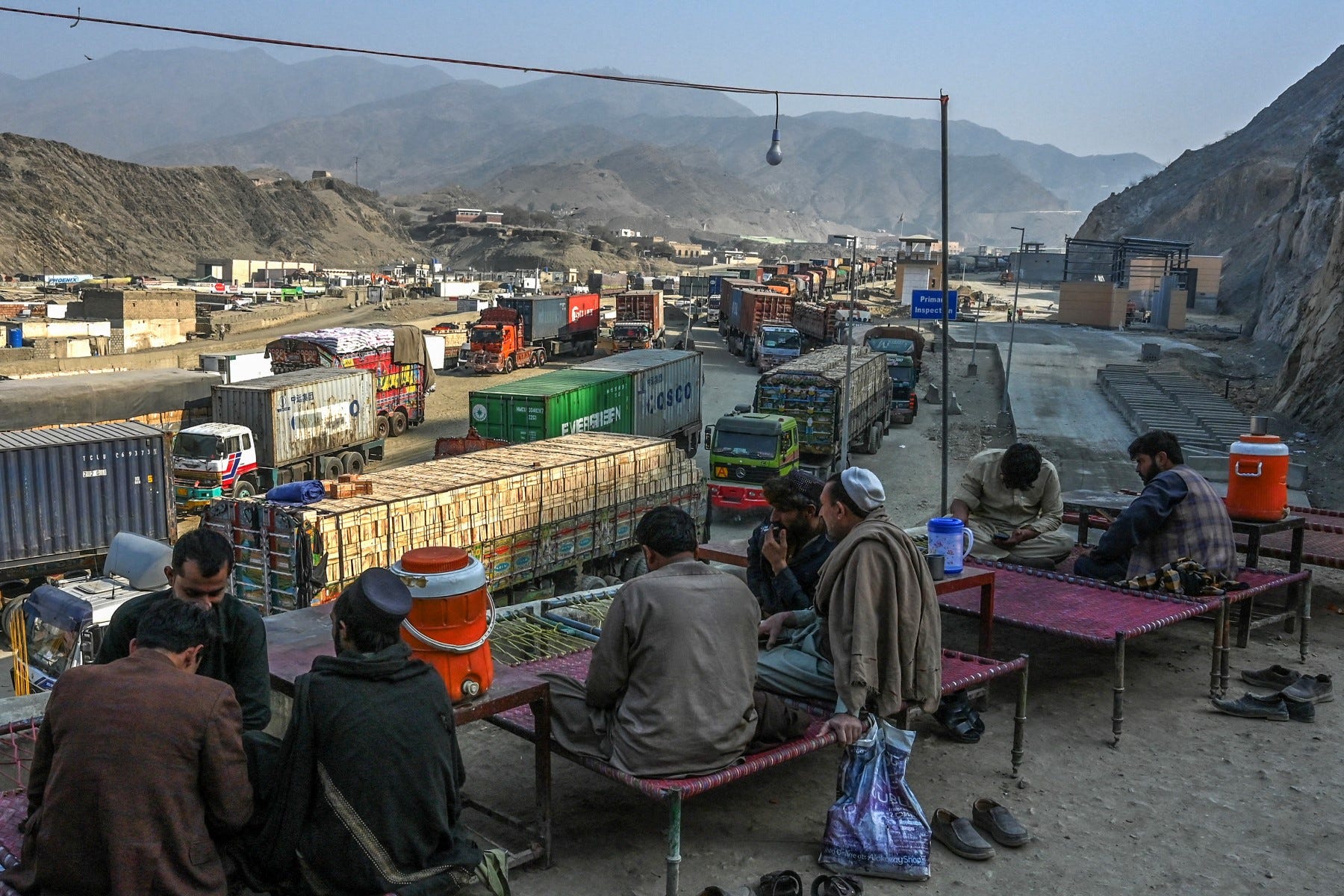
Meanwhile, Pakistan’s ongoing border closures are bleeding Afghanistan’s economy, cutting trade revenue by hundreds of millions of dollars every month. In response, the Taliban are seemingly pivoting toward Iran and Central Asia in search of alternative trade routes. But these routes come with high costs, fragile logistics, and uncertain returns. Every move risks tipping the delicate balance between sovereignty and dependence, resistance and isolation, forcing Kabul to navigate a perilous path in a region where every alliance, every border, and every negotiation carries enormous stakes.
Balancing ideology with statecraft
At the heart of Afghanistan’s current standoff is a high-stakes gamble. The Taliban are attempting to balance ideology with statecraft, supporting militant groups like the Tehrik-i-Taliban Pakistan (TTP) – who aided them in reclaiming Kabul in 2021 – while signaling that they cannot be dictated to by Islamabad, Washington, or any external power. In mid-November, Kabul suspended trade with Pakistan, a bold move designed to assert national interests and independence. The decision directly responded to Pakistan’s earlier closure of its border for trade.
Islamabad took this decision after its talks, mediated by Turkey and Qatar, failed to yield any result vis-à-vis the management of the TTP. By suspending all trade, the Taliban raised the stakes considerably, exposing a fundamental tension: they seek to project the image of sovereign rulers, yet their militant allegiances and regional rivalries turn that assertion into a dangerous gamble.
With trade with Pakistan remaining suspended, the move has already begun to inflict serious economic pain, and the damage may be difficult to reverse quickly. Estimates suggest that Afghanistan is losing roughly US$200 million per month. To compensate, Kabul is reportedly exploring alternative routes, including the India-managed Chabahar port in Iran and corridors through Central Asia. But geography, infrastructure, and regional politics impose hard limits on what the Taliban can realistically achieve.
Afghanistan’s northern trade routes to Central Asia remain commercially fragile. Infrastructure is weak, roads and rail links are underdeveloped, and transit-processing capacity is limited, making transport slow and costly. Demand for Afghan exports, including foodstuffs, textiles and carpets, coal, and gemstones, in Central Asia is constrained, as many countries in the region produce similar goods. Crucially, making these northern corridors commercially viable would require Kabul to slash tariffs.
But customs duties and trade-related fees constitute a major portion of government revenue. According to a World Bank report, in FY2024, customs duties accounted for roughly 53 percent of domestic revenue. Cutting these duties to boost trade would therefore risk undermining the government’s fiscal stability. Crucially, with Central Asia itself being landlocked, it cannot offer Afghanistan any connection with global supply chains for the latter’s goods to reach alternative destinations.
Chabahar no remedy
Iran’s Chabahar port offers an alternative route, but it is no panacea either. Afghanistan’s trade via Iran reached an estimated US$1.6 billion in the past six months – slightly exceeding trade with Pakistan – but the route comes with significant limitations. Afghan goods travelling to Chabahar face longer overland distances, higher transport costs (roughly US$2,000-2,500 per container), and slower transit times, often taking 45 to 60 days compared with 22 to 25 days via Karachi. Although Iran is offering Afghanistan concessions, it remains that the port infrastructure remains underdeveloped. Additionally, Iran is burdened by sanctions, and cold-chain logistics are limited, complicating the shipment of perishable goods. In short, while Chabahar can provide an alternative, it is neither cheaper nor faster than Pakistan’s routes.
Complicating matters further, the US Department of State recently revoked a sanctions exemption for Chabahar, effective September 29, 2025, under the Iran Freedom and Counter-Proliferation Act (IFCA). This waiver had previously allowed India, which operates the port’s Shahid Beheshti terminal—and by extension Afghan transit through Iran—to function without triggering US financial or legal penalties. With the waiver gone, port operators and anyone involved in shipping or financing now face potential sanctions. Added pressure from the US on India, the main partner in operating the port, introduces further uncertainty. New Delhi may reduce its involvement or slow operations to avoid exposure to sanctions. For Afghanistan, a trade lifeline once considered a strategic bypass to Pakistan could now become a liability, threatening Kabul’s fragile economic independence.
This situation raises a critical question: can Kabul afford to play India against Pakistan as a means of punishing Islamabad, given India’s limited capacity to intervene? India’s ability to support Afghanistan is constrained by geography, logistics, and mounting pressure from Washington. Overland access through Iran is limited, air corridors are constrained, and New Delhi must now walk a diplomatic tightrope.
During the US-led “War on Terror,” India and Washington largely aligned in opposing the Taliban and Pakistan’s role in their resurgence. Today, that alignment has frayed, leaving New Delhi to chart an independent course in a complicated regional landscape. For Afghanistan, this produces a complex strategic dilemma. Leveraging India to pressure Pakistan may provide symbolic value, but it cannot compensate for the massive losses in trade and customs revenue resulting from Islamabad’s border closures.
Complex web of rivalries
Therefore, Kabul’s gamble of punishing Pakistan by leaning on India risks overplaying its hand, deepening economic vulnerability without delivering meaningful leverage. At the same time, India’s growing presence in Afghanistan could complicate Kabul’s relations with China, the country’s most influential ally, forcing the Taliban to navigate an increasingly complex web of regional rivalries.
The Taliban’s challenge is not limited to external pressures. Their struggle is also internal: the movement must transition from a militant organization to a governing authority capable of reconciling ideology with responsible statecraft. Until that transition occurs, Afghanistan’s leadership will remain caught between competing imperatives – balancing militant allegiances, economic imperatives, and the geopolitical ambitions and demands of neighboring powers. Without this transformation, the country risks perpetuating a cycle in which every decision, every border closure, and every diplomatic maneuver exacerbates economic fragility and heightens political risk.
Dr. Salman Rafi Sheikh is an Assistant Professor of Politics at the Lahore University of Management Sciences (LUMS). He holds a Ph.D. in Politics and International Studies from SOAS, University of London. He is a longtime regular contributor to Asia Sentinel.
So, a bunch of Muslim savages discover just how little anyone else cares about their plight when they don't have a lot of oil to sell.